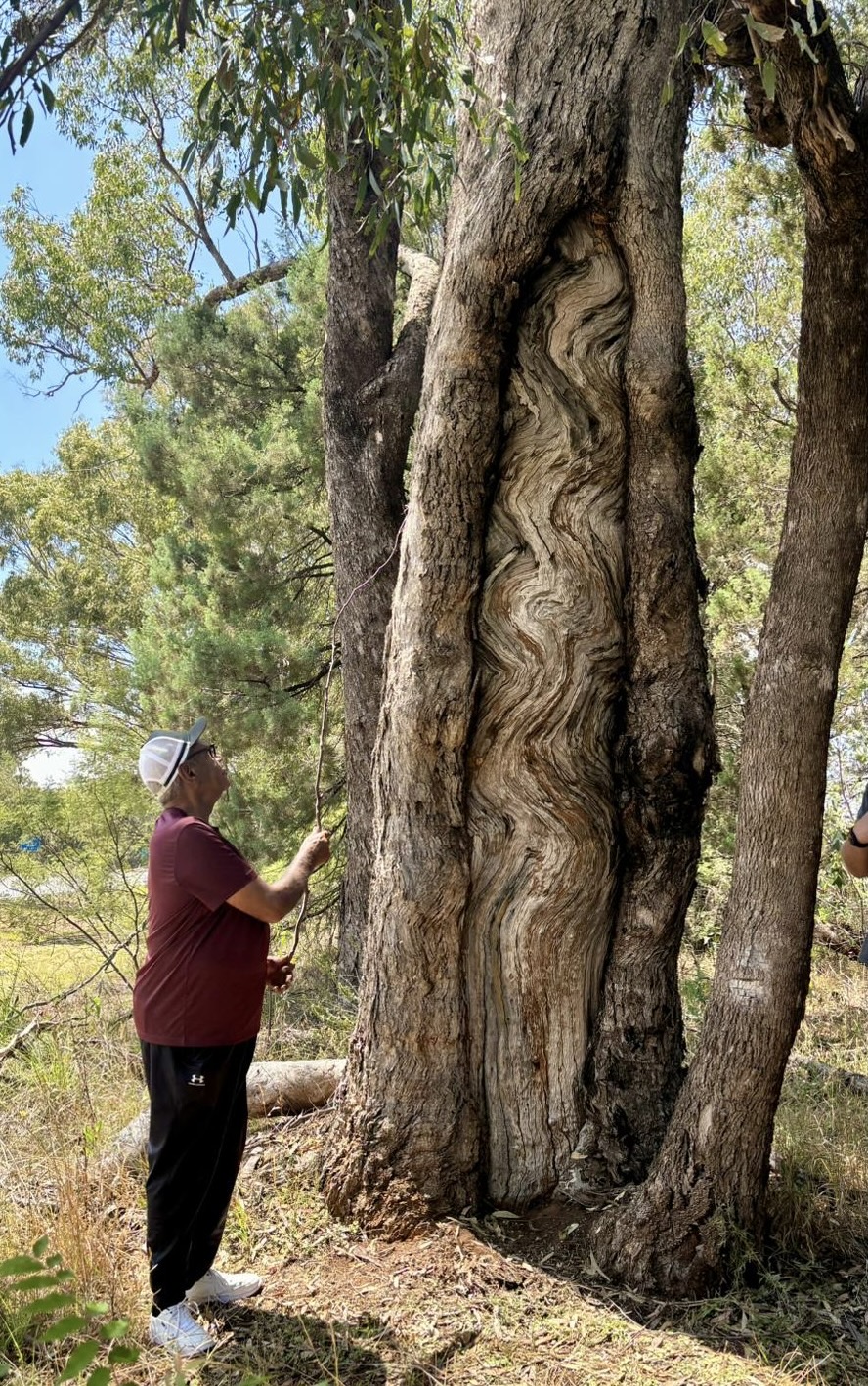
In this blog, I’m going to expand on my observations from working with Indigenous communities in Australia. I’ll adopt a more structured approach to reflective practice to crystallise the insights from my final project and the entire MBA journey.
In my last MBA term, I had the opportunity to engage in reflective journaling that followed a format of analysing a critical event and gleaning insights from it. Here, I share a story behind one of my journal entries that I hope will be of value to you.
I volunteered to be the communications lead for the final strategic consulting project. I was the main point of contact for our client, the CEO of an Indigenous business. I organised a meeting with them to gather more information for the rest of the team, update on the progress and gather feedback on the team’s preliminary thinking.
I struggled initially, as my perception of time was different from my client’s, who sometimes was late to meetings due to other commitments. After my MBA course, however, I had the chance to apply experiential learning cycle (Kolb et al 1995) and integrate cultural insights to appreciate the cross-cultural dynamics (Caligiuri 2012). This experience challenged my assumptions about time and values and allowed me to experiment with new approaches to leadership (Ibarra 2015).
As the communications lead, I felt responsible to progress the project and get the much-needed information out of our client. I felt I was failing my team, because there were still gaps in our understanding of the project brief.
This experience highlighted the difference between my and their time orientation (Nonis et al 2005). My focus was on sequential completion of tasks more aligned to monochronic view (Kaufman et al 1991), while my client’s approach was more fluid and flexible (Leonard 2023, Persing 1999), exhibiting traits of the polychronic perspective (Fulmer et al 2014). They prioritised relationships over adherence to schedules, which became evident during our dinner conversation. I realised that my expectations weren’t universally applicable – more self-awareness (Mayer et al 2008) was needed.
This event highlighted the need to be more adaptable, particularly when working with stakeholders who may have different values and cultural norms to mine (House 1999, 2013, Javidan et al 2016). The client arriving late was not disregard for my time, but rather an aspect of their leadership style rooted in community and relationships.
This insight allowed me to focus on building trust, rather than trying to get activities completed. Despite looming deadlines and sometimes slow progress on the project front, it’s much more important to build strong connections.
This Leadership Immersion course was not about the final deliverable, it was about transferring skills and knowledge to Indigenous communities and making incremental sustainable improvements. A lot of this happens through conversations with people – it’s also about giving people the confidence and tools to have their own voice.
Spending time with Indigenous leaders in Dubbo allowed me to appreciate the relational perspective of time that sees past, present and future intertwined (Yunkaporta 2019). The community storytelling traditions support this view, integrating rich history with the present day. It was also evident from my later interactions with the client, that this view guides their business decisions: their strategic choices balance the respect of ancestral wisdom with long-term sustainability. Unlike profit-driven, often short-term oriented Western view of growth at any cost (Hess 2010), my client’s perspective focused on the benefit to the whole community over next generations. This makes her a great role model for me to develop my own leadership ability (Kempster 2009).
The broader Executive Year section of the MBA created an outstanding holding environment (Kegan et al 2001) to facilitate vertical growth (Petrie 2011). The Indigenous perception of time is an example of a colliding perspective (Petrie 2014, 2015) which combined with heat experiences of presentation delivery and reflective journaling to accelerate development.
I had a chance to debrief with my peer coach and wider cohort on my experience which helped me enhance my adaptive leadership ability (Heifetz 2009). I experimented with my approach to uncomfortable challenges and learned to remain flexible (AGSM Adaptive Leadership Academy 2023).
Because I only got limited details from my client about our project, I learned to apply my learning from leading complex projects (Floris et al 2019) to make decisions based on incomplete information and sense my way through my team’s conflicting viewpoints. It was aided by my mindfulness practice (Sinclair 2016) and reinforced by learning about and participating in yarning circles. It helped me get better at being present and making space for people’s voices with a genuine intention to understand rather than confirm my assumptions or gather information. ‘Listening to understand’ is quite difficult to explain, but you can feel it when you are engaged in it in a yarn.
Going forward, I’ll build on developed self-awareness, adopt growth mindset (Dweck 2006) and engage in active experimentation (Heslin 2017). I’ll engage in self-directed learning to build my cultural intelligence (Living Institute 2013) and how Indigenous leadership principles can be integrated in my own leadership style, particularly related to perception of time and importance of relationships.
As part of this client project, I thought I was transferring skills and experience to an Indigenous organisation, however I realised that I was receiving much more in return. I felt very welcome in Dubbo; I got to know people in the community and their families. Adapting to an unfamiliar environment helped me build personal resilience, increase my tolerance for ambiguity and deepened my empathy and emotional and cultural intelligence (Brownlow 2022).
The experience challenged me in many ways, showed me a different perspective and opened new opportunities to contribute and add value. The main hypothesis that I’ll continue testing in my future action is that relationships, trust and community may be more important than task completion and meeting deadlines. Even if this means occasionally being late for a meeting.
References
- AGSM Adaptive Leadership Academy 2023, Making messy challenges manageable with adaptive leadership, University of New South Wales, 4 August, accessed 18 November 2024 https://www.unsw.edu.au/news/2023/08/messy-challenges-manageable-with-adaptive-leadership
- AGSM UNSW Business School 2023, Leadership, AGSM UNSW Business School 2023
- AGSM UNSW Business School 2024 Executive Accelerator: Final term, AGSM UNSW Business School 2024
- AGSM UNSW Business School 2024 Executive Accelerator: Middle term, AGSM UNSW Business School 2024
- AGSM UNSW Business School 2024 Executive Accelerator: Initial term, AGSM UNSW Business School 2024
- AGSM UNSW Business School 2024, Leadership immersion, AGSM UNSW Business School 2024
- Bertsch, A, Nguyen, H T H, Alford, A, Baran, W, Reynen, J, Saeed, M & Ondracek, J 2017, ‘Exploring the relationship between personality and preferred leadership’, Journal of Leadership , Accountability and Ethics, vol. 14, no. 1, 32– 45.
- Bluedorn, A.C. and Denhardt, R.B., 1988. Time and organizations. Journal of management, 14(2), pp.299-320.
- Boroditsky, L. and Gaby, A., 2010. Remembrances of times East: absolute spatial representations of time in an Australian aboriginal community. Psychological science, 21(11), pp.1635-1639.
- Brownlow, A., 2022. Measuring adult development and exploring its relationship to leadership: Parallel journeys through the lens of constructive-developmental theory (Doctoral dissertation).
- Caligiuri, P & Tarique, I 2012, ‘Dynamic cross-cultural competencies and global leadership effectiveness’, Journal of World Business, vol. 47, no. 4, pp. 612–622.
- Dweck, C.S., 2006. Mindset: The new psychology of success. Random house.
- Floris, M. and Cuganesan, S., 2019. Project leaders in transition: Manifestations of cognitive and emotional capacity. International Journal of Project Management, 37(3), pp.517-532.
- Fulmer, C.A., Crosby, B. and Gelfand, M.J., 2014. Cross-cultural perspectives on time. In Time and Work, Volume 2 (pp. 53-75). Routledge.
- Heifetz, R., 2009. The practice of adaptive leadership: Tools and tactics for changing your organization and the world.
- Heslin, P.A. and Keating, L.A., 2017. In learning mode? The role of mindsets in derailing and enabling experiential leadership development. The Leadership Quarterly, 28(3), pp.367-384.
- Heslin, P.A. and Klehe, U.C., 2023. Goal enablers: Evidence-based ways to turn your goals into reality. Organizational Dynamics, 52(1), p.100944.
- Hess, E.D., 2010. Smart growth: Building an enduring business by managing the risks of growth. Columbia University Press.
- House, R.J., 1999. Cultural influences on leadership and organizations: Project GLOBE. Advances in global leadership, 1.
- House, R.J., 2013. Strategic leadership across cultures: GLOBE study of CEO leadership behavior and effectiveness in 24countries. Sage Publications.
- Ibarra, H., 2015. Act like a leader, think like a leader. Harvard business review press.
- Javidan, M., Dorfman, P.W., De Luque, M.S. and House, R.J., 2016. In the eye of the beholder: Cross-cultural lessons in leadership from Project GLOBE. In Readings and cases in international human resource management (pp. 119-154). Routledge.
- Kaufman, C.F., Lane, P.M. and Lindquist, J.D., 1991. Exploring more than 24 hours a day: A preliminary investigation of polychronic time use. Journal of consumer research, 18(3), pp.392-401.
- Kegan, R., Broderick, M., Drago-Severson, E., Helsing, D., Popp, N. and Portnow, K., 2001. Toward a New Pluralism in ABE/ESOL Classrooms: Teaching to Multiple” Cultures of Mind.” Executive Summary. NCSALL Reports 19a. National Center for the Study of Adult Learning and Literacy (NCSALL).
- Kempster, S., 2009. Observing the invisible: Examining the role of observational learning in the development of leadership practice. Journal of Management Development, 28(5), pp.439-456.
- Kolb, Osland and Irwin 1995, Organizational behavior: An experiential approach, 6th edn, Prentice Hall
- Leahy, R.L., 2017. Cognitive therapy techniques: A practitioner’s guide. Guilford Publications.
- Leonard, C., 2023. A person-centred investigation of temporal individual differences at work (Doctoral dissertation, University of Guelph).
- Living Institute 2013, ‘CQ Wheel’ , 2 September [3:12], accessed 18 November 2024, <https://www.youtube.com/watch?v=JJ_LclEJU8k>.
- Mayer, J.D., Roberts, R.D. and Barsade, S.G., 2008. Human abilities: Emotional intelligence. Annu. Rev. Psychol., 59(1), pp.507-536.
- McDrury, J & Alterio, M 2002, Learning through storytelling: Using reflection and experience in higher education contexts, Dunmore Press Limited
- Nonis, S.A., Teng, J.K. and Ford, C.W., 2005. A cross-cultural investigation of time management practices and job outcomes. International journal of intercultural relations, 29(4), pp.409-428.
- Persing, D.L., 1999. Managing in polychronic times: Exploring individual creativity and performance in intellectually intensive venues. Journal of Managerial Psychology, 14(5), pp.358-373.
- Petrie, N., 2011. Future trends in leadership development. Center for Creative Leadership white paper, 5(5), p.36.
- Petrie, N., 2014. Vertical leadership development–part 1 developing leaders for a complex world. Center for Creative Leadership, pp.1-13.
- Petrie, N., 2015. The how-to of vertical leadership development–Part 2. 30 experts, 3 conditions and 15 approaches. Center for Creative Leadership, 26.
- Porter, J 2017, ‘Why you should make time for self-reflection (even if you hate doing it)’, Harvard Business Review.
- Schön, D.A., 2017. The reflective practitioner: How professionals think in action. Routledge.
- Sinclair, A., 2016. Leading mindfully: How to focus on what matters, influence for good, and enjoy leadership more. Allen & Unwin.
- Yukl, G A & Gardner III, W L 2020, Leadership in organizations (global edn), Essex, Pearson.
- Yunkaporta, T., 2019. Sand talk: How Indigenous thinking can save the world. Text Publishing.
 Cyber Security Leadership
1 Comment