CISO Interview: Psychology and the Role of a CISO

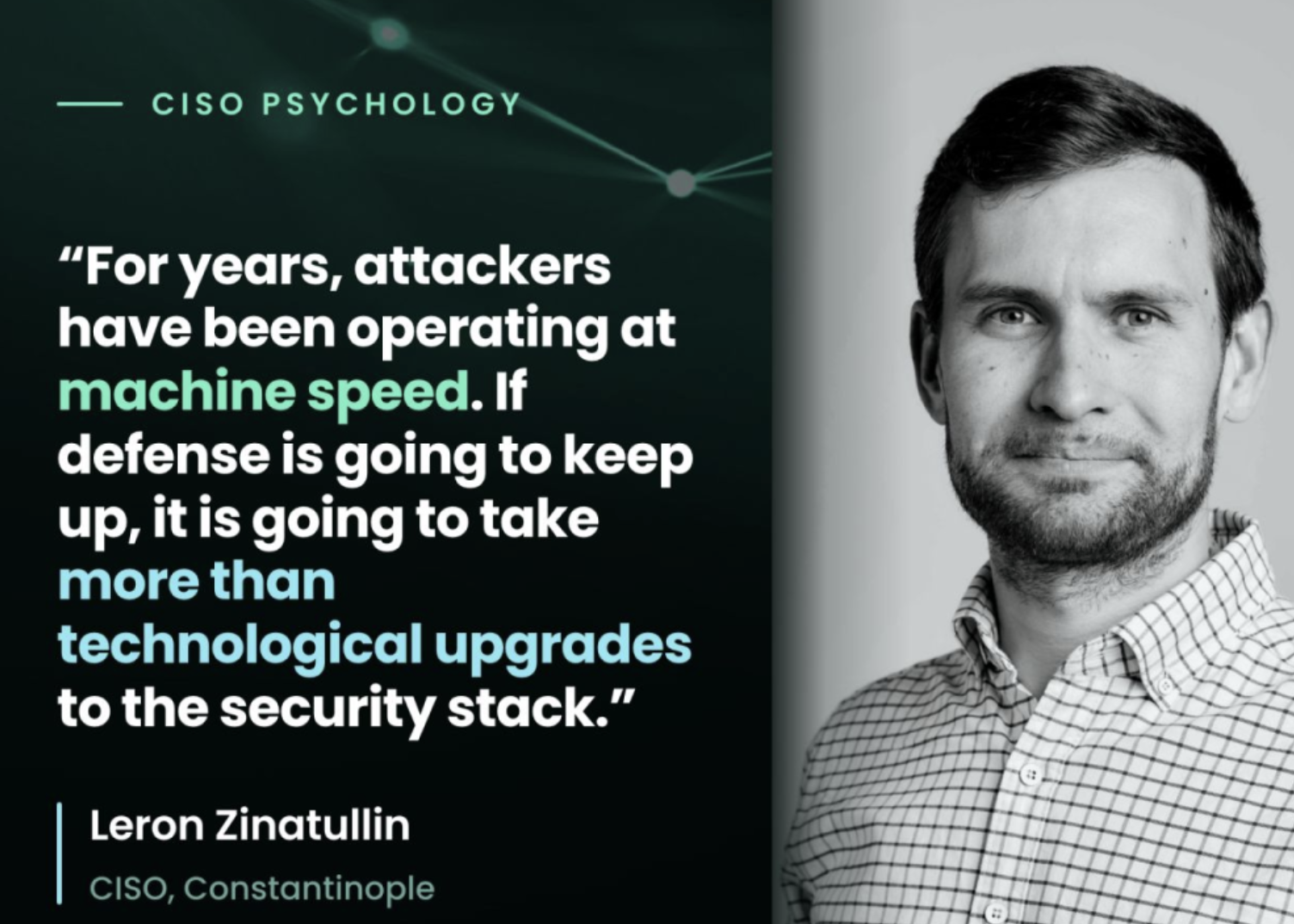
When both attackers and defenders use AI, it’s the people who become the edge.

Attackers already run at machine speed, and faster tools only close part of that gap.

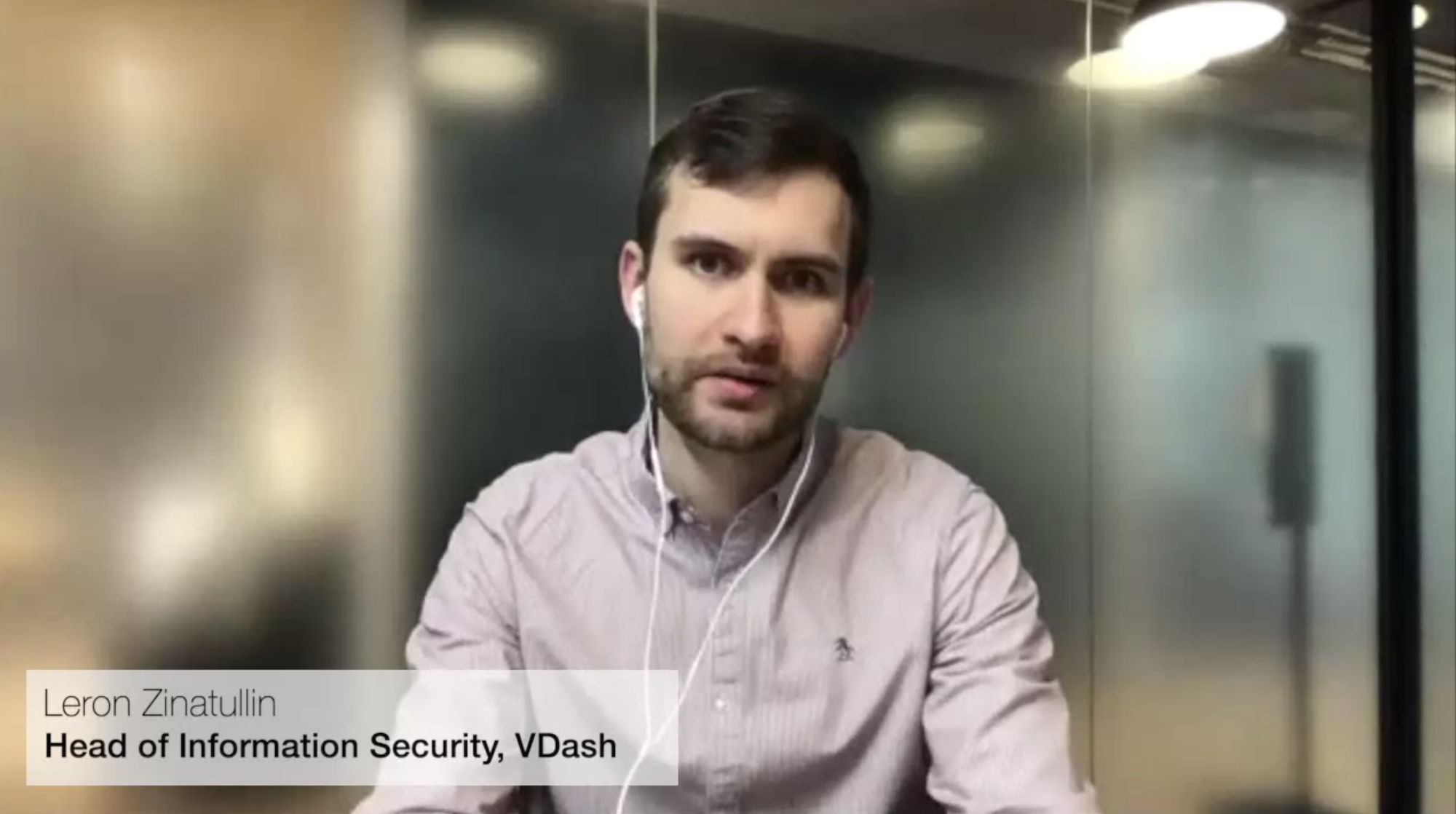
It was great to sit down with Dan Raywood to talk about building security culture and the evolving role of a CISO 👇

More

Navigating the endless sea of threats

Cyber security is a relentless race to keep pace with evolving threats, where staying ahead isn’t always possible. Advancing cyber maturity demands more than just reactive measures—it requires proactive strategies, cultural alignment, and a deep understanding of emerging risks.

I had an opportunity to share my thoughts on staying informed about threats, defining cyber maturity, and aligning security metrics with business goals with Corinium’s Maddie Abe ahead of my appearance as a speaker at the upcoming CISO Sydney next month.

More

CSO30 Conference – behavioural science in cyber security

I’ve been invited to speak at the CSO30 Conference today on applying behavioural science to cyber security.

I talked about the role behavioural science plays in improving cybersecurity in organisations, the challenges of applying academic theory in practice and how to overcome them.

I shared some tips on how to build the culture of security and measure the success of your security programme.

We also spoke about the differences in approaches and scalability of your security programme depending on the size and context you organisation, including staffing and resourcing constraints.

Overall, I think we covered a lot of ground in just 30 minutes and registration is still open if you’d like to watch a recording.

ISACA young professionals

I’ve been interviewed for the launch of the ISACA Young Professionals portal that contains a wealth of information for starting and accelerating your career in IT audit and cybersecurity.

I decided to contribute because ISACA played a role in my career development too.

I started attending ISACA London chapter events while I was studying for my Master’s degree in London. Although the university provided a great theoretical foundation on information security, I wanted to know about the real-world challenges that practitioners in the industry were facing.

At the time I had just finished writing my thesis after doing some great research at the university and I wanted to share my findings and the research of my colleagues with the community. The organisers were supportive, so we agreed a day and I delivered a talk on resolving conflicts between security compliance and human behaviour.

It was a rewarding experience as the participants provided some valuable insights and feedback; they helped to bridge the gap between academia and real practical experience. I already had a solid foundation from my postgraduate degree but I was missing was some anecdotes and real life stories about how this could apply in practice. This laid the foundation for my book The Psychology of Information Security.

It worked out for me, but should you get involved in broader activities beyond developing your technical skills? I would say yes.

The value of technical skills and knowledge can’t be overestimated. But there’s another side to this story. Prospective employers are not only looking for technical experts, they want people who are good team players, who can collaborate and communicate effectively with others, who can organise and get things done, who can lead. Getting involved with the community and volunteering gives you the chance to develop and demonstrate these non-technical skills and grow your professional network.

Regardless of where you are on your journey, ISACA provides great opportunities to advance your career through courses, networking and certification programmes, so I highly recommend getting involved!

Read my story on ISACA Blog.

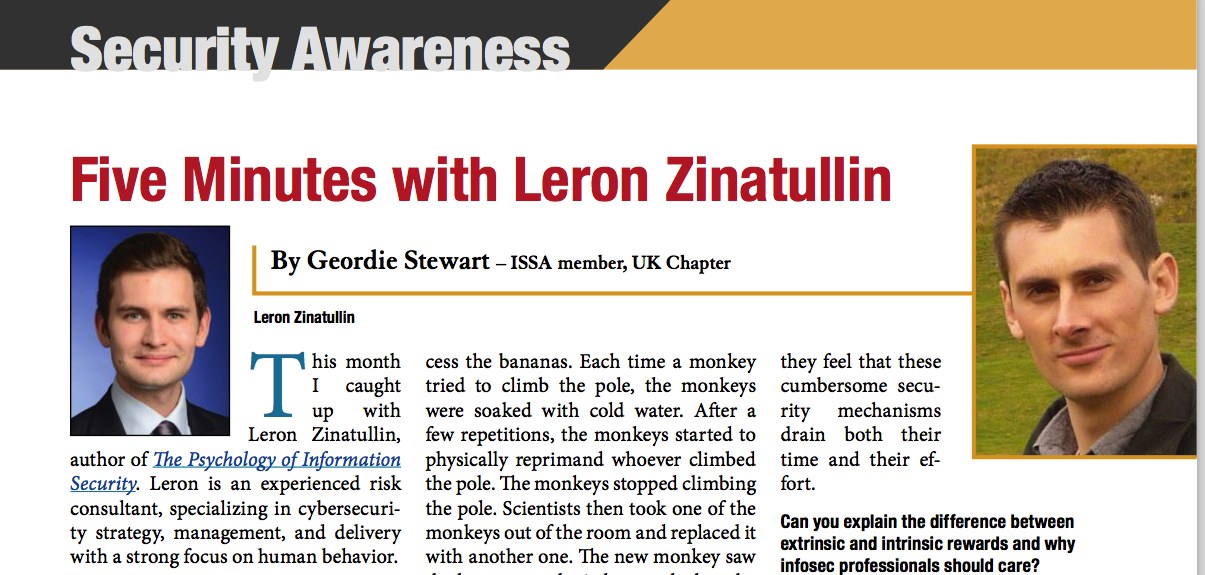
I’ve been interviewed by Javvad Malik about my career in InfoSec

I’ve been interviewed by Javvad Malik about my career in Information Security. He published the interview on his website

The difference between Leron and anyone else that has ever asked for advice is his willingness to learn and take on board as much knowledge as possible and then apply it. In a few short years, not only was Leron able to complete his MSc, but he landed a job (while turning down other offers), spoke at events, and wrote a book. Achieving more in 3 years than most people do in 10.

So, the roles are now reversed. I needed to catch up with Leron and pick his brains about his journey and see what I could learn from him.
Read the full story

The Psychology of Information Security book reviews

51enjkmw1ll-_sx322_bo1204203200_

I wrote about my book  in the previous post. Here I would like to share what others have to say about it.

“So often information security is viewed as a technical discipline – a world of firewalls, anti-virus software, access controls and encryption. An opaque and enigmatic discipline which defies understanding, with a priesthood who often protect their profession with complex concepts, language and most of all secrecy.

Leron takes a practical, pragmatic and no-holds barred approach to demystifying the topic. He reminds us that ultimately security depends on people – and that we all act in what we see as our rational self-interest – sometimes ill-informed, ill-judged, even downright perverse.

No approach to security can ever succeed without considering people – and as a profession we need to look beyond our computers to understand the business, the culture of the organisation – and most of all, how we can create a security environment which helps people feel free to actually do their job.”
David Ferbrache OBE, FBCS
Technical Director, Cyber Security
KPMG UK

“This is an easy-to-read, accessible and simple introduction to information security.  The style is straightforward, and calls on a range of anecdotes to help the reader through what is often a complicated and hard to penetrate subject.  Leron approaches the subject from a psychological angle and will be appealing to both those of a non-technical and a technical background.”
Dr David King
Visiting Fellow of Kellogg College
University of Oxford

More

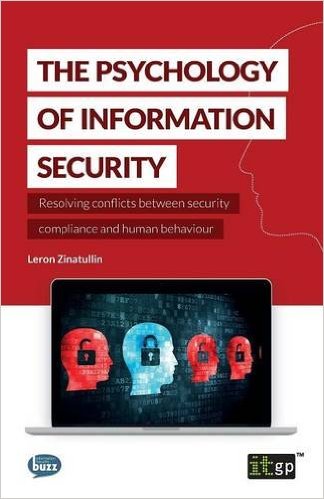
The Psychology of Information Security – Resolving conflicts between security compliance and human behaviour

ITGP

In today’s corporations, information security professionals have a lot on their plate. In the face of constantly evolving cyber threats they must comply with numerous laws and regulations, protect their company’s assets and mitigate risks to the furthest extent possible.

Security professionals can often be ignorant of the impact that implementing security policies in a vacuum can have on the end users’ core business activities. These end users are, in turn, often unaware of the risk they are exposing the organisation to. They may even feel justified in finding workarounds because they believe that the organisation values productivity over security. The end result is a conflict between the security team and the rest of the business, and increased, rather than reduced, risk.

This can be addressed by factoring in an individual’s perspective, knowledge and awareness, and a modern, flexible and adaptable information security approach. The aim of the security practice should be to correct employee misconceptions by understanding their motivations and working with the users rather than against them – after all, people are a company’s best assets.

I just finished writing a book with IT Governance Publishing on this topic. This book draws on the experience of industry experts and related academic research to:

  • Gain insight into information security issues related to human behaviour, from both end users’ and security professionals’ perspectives.
  • Provide a set of recommendations to support the security professional’s decision-making process, and to improve the culture and find the balance between security and productivity.
  • Give advice on aligning a security programme with wider organisational objectives.
  • Manage and communicate these changes within an organisation.

Based on insights gained from academic research as well as interviews with UK-based security professionals from various sectors, The Psychology of Information Security – Resolving conflicts between security compliance and human behaviour explains the importance of careful risk management and how to align a security programme with wider business objectives, providing methods and techniques to engage stakeholders and encourage buy-in.

The Psychology of Information Security redresses the balance by considering information security from both viewpoints in order to gain insight into security issues relating to human behaviour , helping security professionals understand how a security culture that puts risk into context promotes compliance.

It’s now available for pre-order on the UK, EU or US websites.