Using abstractions to think about risks is a useful technique to identify the ways an attacker could compromise a system.
There are various approaches to perform threat modelling but at the core, it’s about understanding what we are building, what can go wrong with it and what we should do about it.
Here is a good video by SAFECode introducing the concept:
Ensuring security is embedded in the development lifecycle of software, from start to finish, is pivotal in creating a more cyber secure world. This award recognises individuals who are spearheading this initiative so that the creation of applications can continue to be dynamic, without sacrificing cybersecurity.
I’m excited to make the shortlist and wish best of luck to all the contenders!
The Software and Security Engineering course taught at the University of Cambridge is available for free online. It includes video lectures, slide decks, reading materials and more.
Whether you are new to information security or a seasoned professional, this course will help you build solid foundations.
Lecture 9 covering critical systems is my favourite. It bring together previous discussions on psychology, usability and software engineering in the context of safety. It adds to the array of the case studies from Lecture 6, focusing on software failures and what we can learn from them. It also offers a fascinating analysis of the Therac-25 accidents and Boeing 737 Max crashes.
In the past year I had the opportunity to help a tech startup shape its culture and make security a brand differentiator. As the Head of Information Security, I was responsible for driving the resilience, governance and compliance agenda, adjusting to the needs of a dynamic and growing business.
Committing passwords, SSH keys and API keys to your code repositories is quite common. This doesn’t make it less dangerous. Yes, if you are ‘moving fast and breaking things’, it is sometimes easier to take shortcuts to simplify development and testing. But these broken things will eventually have to be fixed, as security of your product and perhaps even company, is at risk. Fixing things later in the development cycle is likely be more complicated and costly.
I’m not trying to scaremonger, there are already plenty of news articles about data breaches wiping out value for companies. My point is merely about the fact that it is much easier to address things early in the development, rather than waiting for a pentest or, worse still, a malicious attacker to discover these vulnerabilities.
Disciplined engineering and teaching your staff secure software development are certainly great ways to tackle this. There has to, however, be a fallback mechanism to detect (and prevent) mistakes. Thankfully, there are a number of open-source tools that can help you with that:
You will have to assess your own environment to pick the right tool that suits your organisation best.
If you read my previous blogs on integrating application testing and detecting vulnerable dependencies, you know I’m a big fan of embedding such tests in your Continuous Integration and Continuous Deployment (CI/CD) pipeline. This provides instant feedback to your development team and minimises the window between discovering and fixing a vulnerability. If done right, the weakness (a secret in the code repository in this case) will not even reach the production environment, as it will be caught before the code is committed. An example is on the screenshot at the top of the page.
For this reason (and a few others), the tool that I particularly like is detect-secrets, developed in Python and kindly open-sourced by Yelp. They describe the reasons for building it and explain the architecture in their blog. It’s lightweight, language agnostic and integrates well in the development workflow. It relies on pre-commit hooks and will not scan the whole repository – only the chunk of code you are committing.
Yelp’s detect-secrets, however, has its limitations. It needs to be installed locally by engineers which might be tricky with different operating systems. If you do want to use it but don’t want to be restricted by local installation, it can also run out of a container, which can be quite handy.
If you work for or (even better) co-founded a tech startup, you are already busy. Hopefully not too busy to completely ignore security, but definitely busy enough to implement one of the industrial security frameworks, like the NIST Cybersecurity Framework (CSF). Although the CSF and other standards are useful, implementing them in a small company might be resource intensive.
I previously wrote about security for startups. In this blog, I would like to share some ideas for activities you might consider (in no particular order) instead of implementing a security standard straight away. The individual elements and priorities will, of course, vary depending on your business type and needs and this list is not exhaustive.
Product security
Information security underpins all products and services to offer customers an innovative and frictionless experience.
Improve product security, robustness and stability through secure software development process
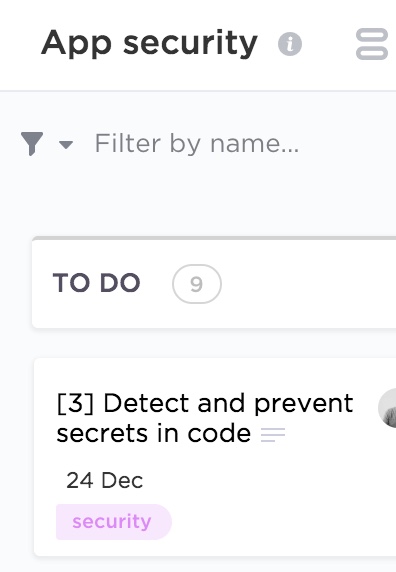
Automate security tests and prevent secrets in code
Upgrade vulnerable dependencies
Secure the delivery pipeline
Cloud infrastructure security
To deliver resilient and secure service to build customer trust.
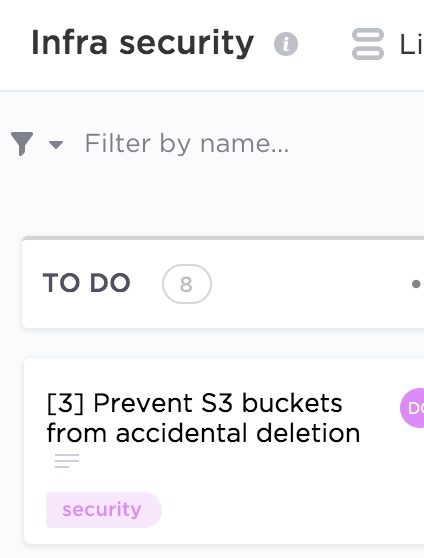
Harden cloud infrastructure configuration
Improve identity and access management practices
Develop logging and monitoring capability
Reduce attack surface and costs by decommissioning unused resources in the cloud
Secure communications and encrypt sensitive data at rest and in transit
Operations security
To prevent regulatory fines, potential litigation and loss of customer trust due to accidental mishandling, external system compromise or insider threat leading to exposure of customer personal data.
Enable device (phone and laptop) encryption and automatic software updates
Make a password manager available to your staff (and enforce a password policy)
Implement mobile device management to enforce security policies
Invest in malware prevention capability
Segregate access and restrict permissions to critical assets
Conduct security awareness and training
Cyber resilience
To prepare for, respond to and recover from cyber attacks while delivering a consistent level of service to customers.
Identify and focus on protecting most important assets
Develop (and test) an incident response plan
Collect and analyse logs for fraud and attacks
Develop anomaly detection capability
Regular backups of critical data
Disaster recovery and business continuity planning
Compliance and data protection
To demonstrate to business partners, regulators, suppliers and customers the commitment to security and privacy and act as a brand differentiator. To prevent revenue loss and reputational damage due to fines and unwanted media attention as a result of GDPR non compliance.
Ensure lawfulness, fairness, transparency, data minimisation, security, accountability, purpose and storage limitation when processing personal data
Optimise subject access request process
Maintain data inventory and mapping
Conduct privacy impact assessments on new projects
In the previous blog, I wrote about how you as a security specialist can succeed in the world of agile development, where the requirements are less clear, environment more fluid and change is celebrated not resisted.
Adjusting your mindset and embracing the fact that there will be plenty of unknowns is the first step in adopting agile security practices. You can still influence the direction of the product development to make it more resilient, safe and secure by working with the Product Owner and contributing your requirements to the product backlog.
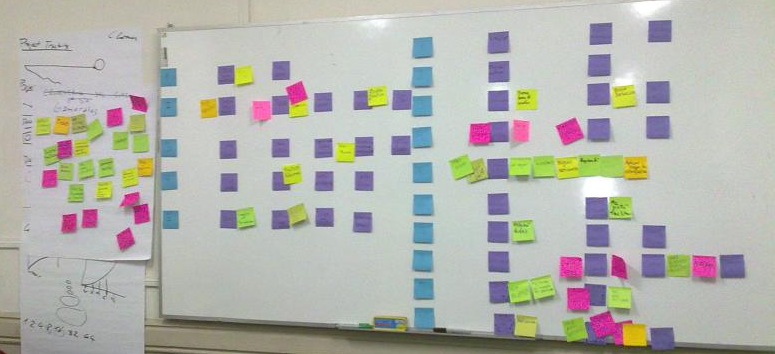
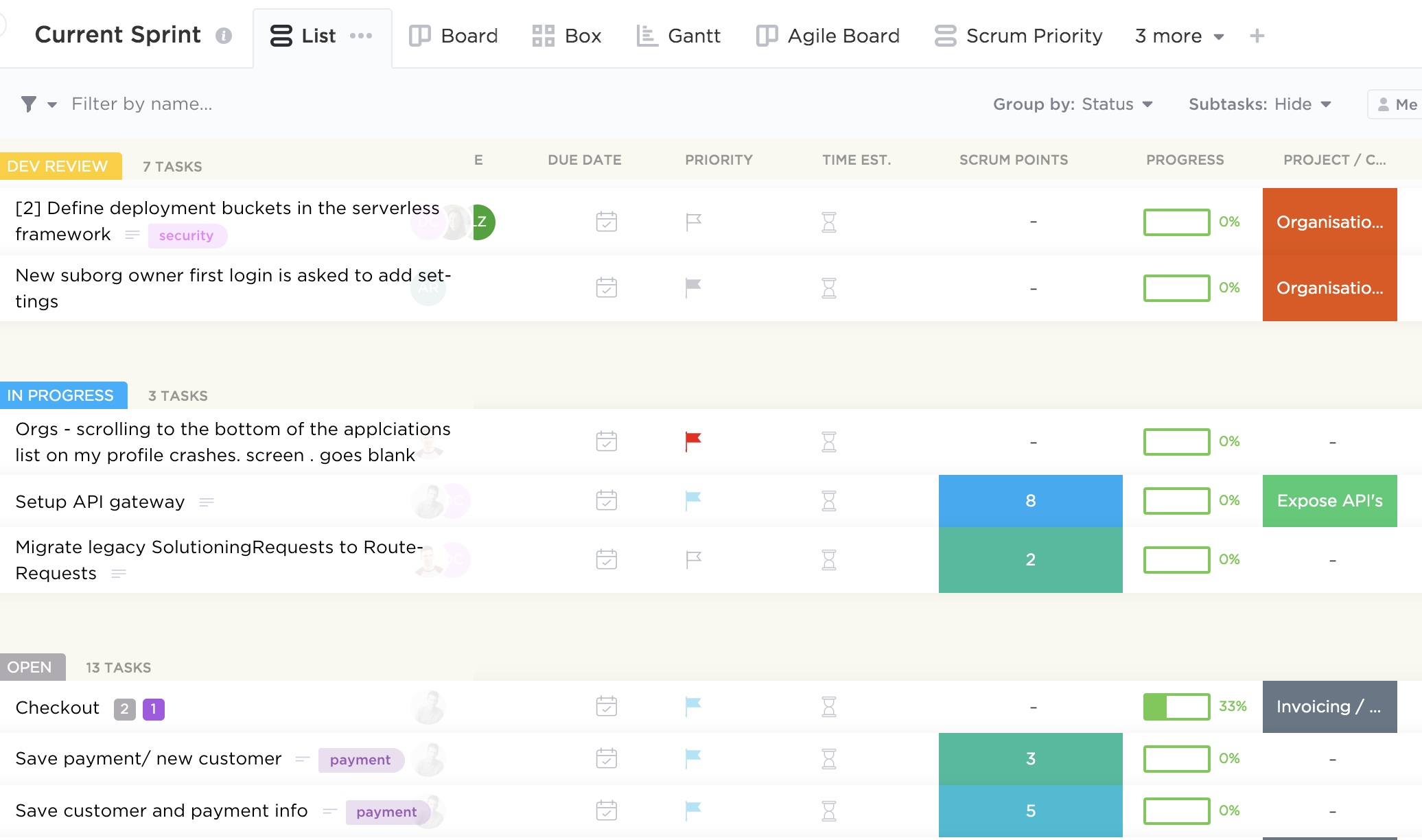
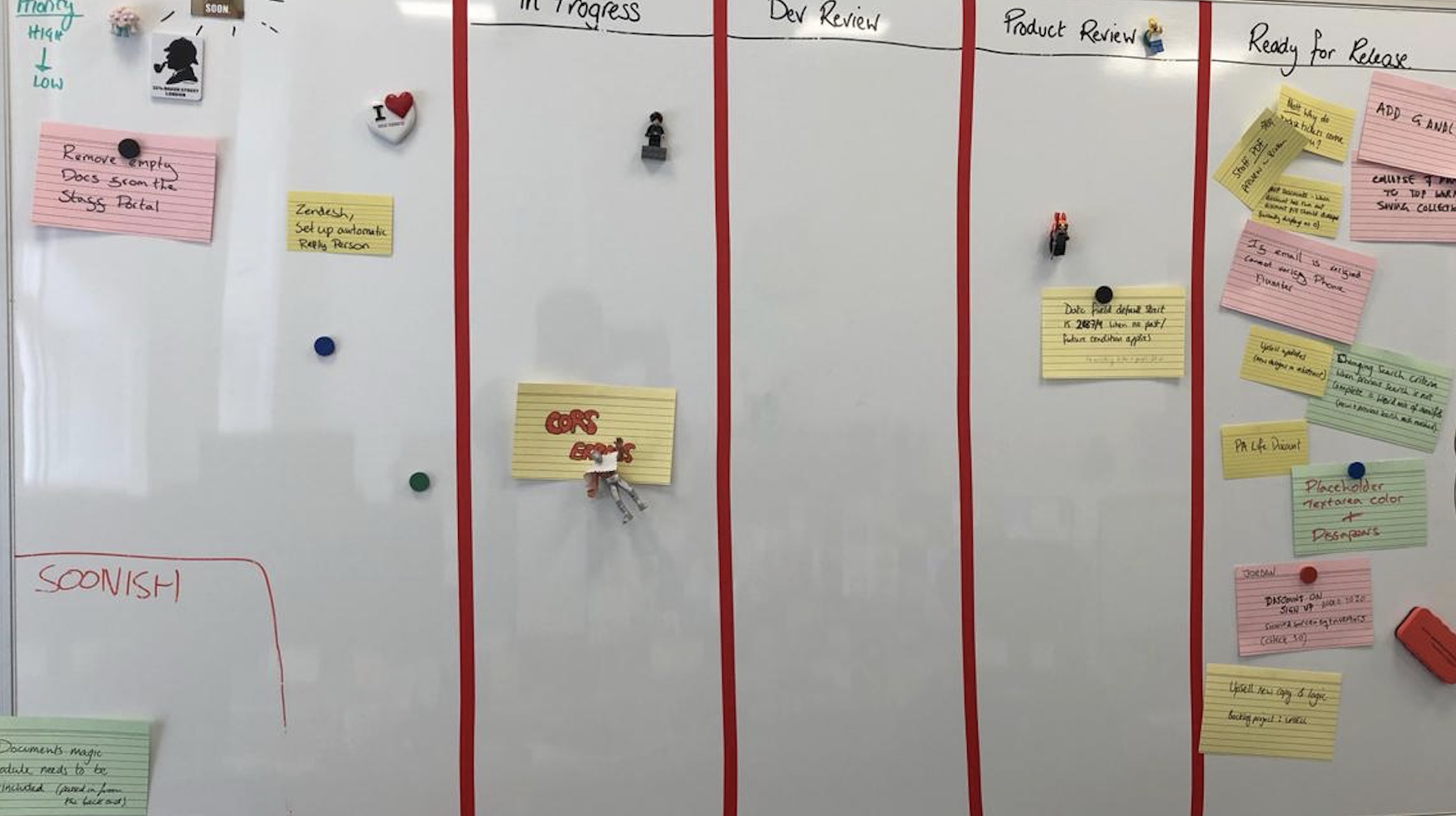
Simply put, product backlog is a list of desired functionality, bug fixes and other requirements needed to deliver a viable product. There are plethora of tools out there to help manage dependencies and prioritisation to make the product owner’s job easier. The image at the top of this post is an example of one of such tools and you can see some example requirements there.
As a security specialist, you can communicate your needs in a form of user stories or help contribute to existing ones, detailing security considerations. For example, ”Customer personal data should be stored securely” or “Secure communication channels should be used when transmitting sensitive information”. Below are a couple more examples from different categories.
When writing security user stories, you should try and elaborate as much as possible on the problem you are trying to solve, what value it will provide if solved and the acceptance criteria. Each story will then have points assigned which signifies how much effort a particular functionality will require. The process of arriving to the final number is quite democratic and usually involves playing planning (sometimes also called Scrum) poker in which every developer will estimate how long each story is going to take with some discussion and eventual consensus. You can do it with an app as on the image below, or the old school way with a deck of cards.
You don’t have to use the above number pattern, and opt-in instead for the Fibonacci sequence or T-shirt sizes.
It’s important that the security team is involved in sprint planning to contribute to the estimates and help the product owner with prioritisation. Other Scrum meetings, like backlog refinement and daily stand-ups are also worthwhile to attend to be able clarify your requirements (including value, risk, due dates and dependencies) and help remove security related impediments.
A culture of collaboration between teams is essential for the DevSecOps approach to be effective. Treating security as not something to workaround but as a value adding product feature is the mindset product and engineering teams should adopt. However, it’s up to security specialists to recognise the wider context in which they operate and accept the fact that security is just one of the requirements the team needs to consider. If the business can’t generate revenue because crucial features that customers demand are missing, it’s little consolation that security vulnerabilities have been addressed. After all, it’s great to have a secure product, but less so when nobody uses it.
Outline security requirements at the beginning of the project, review the design to check if the requirements have been incorporated and perform security testing before go-live. If this sounds familiar, it should. Many companies manage their projects using the waterfall method, where predefined ‘gates’ have to be cleared before the initiative can move forward. The decision can be made at certain checkpoints to not proceed further, accepting the sunk costs if benefits now seem unlikely to be realised.
This approach works really well in structured environments with clear objectives and limited uncertainty and I saw great things being delivered using this method in my career. There are many positives from the security point of view too: the security team gets involved as they would normally have to provide their sign-off at certain stage gates, so it’s in the project manager’s interest to engage them early to avoid delays down the line. Additionally, the security team’s output and methodology are often well defined, so there are no surprises from both sides and it’s easier to scale.
If overall requirements are less clear, however, or you are constantly iterating to learn more about your stakeholder’s needs to progressively elaborate on the requirements, to validate and perhaps even pivot from the initial hypothesis, more agile project management methodologies are more suitable.
Embedding security in the agile development is less established and there is more than one way of doing it.
When discussing security in startups and other companies adopting agile approaches, I see a lot of focus on automating security tests and educating developers on secure software development. Although these initiatives have their merits, it’s not the whole story.
Security professionals need to have the bigger picture in mind and work with product teams to not only prevent vulnerabilities in code, but influence the overall product strategy, striving towards security and privacy by design.
Adding security features and reviewing and refining existing requirements to make the product more secure is a step in the right direction. To do this effectively, developing a relationship with the development and product teams is paramount. The product owner especially should be your best friend, as you often have to persuade them to include your security requirements and user stories in sprints. Remember, as a security specialist, you are only one of the stakeholders they have to manage and there might be a lot of competing requirements. Besides, there is a limited amount of functionality the development can deliver each sprint, so articulating the value and importance of your suggestions becomes an essential skill.
Few people notice security until it’s missing, then the only thing you can notice is the absence of it. We see this time and time again when organisations of various sizes are grappling with data breaches and security incidents. It’s your job to articulate the importance of prioritising security requirements early in the project to mitigate the potential rework and negative impact in the future.
One way of doing this is by refining existing user stories by adding security elements to them, creating dedicated security stories, or just adding security requirements to the product backlog. Although the specifics will depend on your organisation’s way of working, I will discuss some examples in my next blog.
We learnt how to detect vulnerable packages in your projects using Snyk in the previous blog. Here, in the true DevSecOps fashion, I would like outline how to integrate this tool in your CI/CD pipeline.
Although the approach described in the previous blog has its merits, it lacks proactivity, which means you might end up introducing outdated packages in your codebase. To address this limitation, I’m going to describe how to make Snyk checks part of your deployment workflow. I’ll be using CircleCI here as an example, but the principles can be applied using any CI tool.
A step-by-step guidance on configuring the integration is available on both the Snyk and CircleCI websites. In the nutshell, it’s just about adding the Snyk Orb and API to CircleCI.
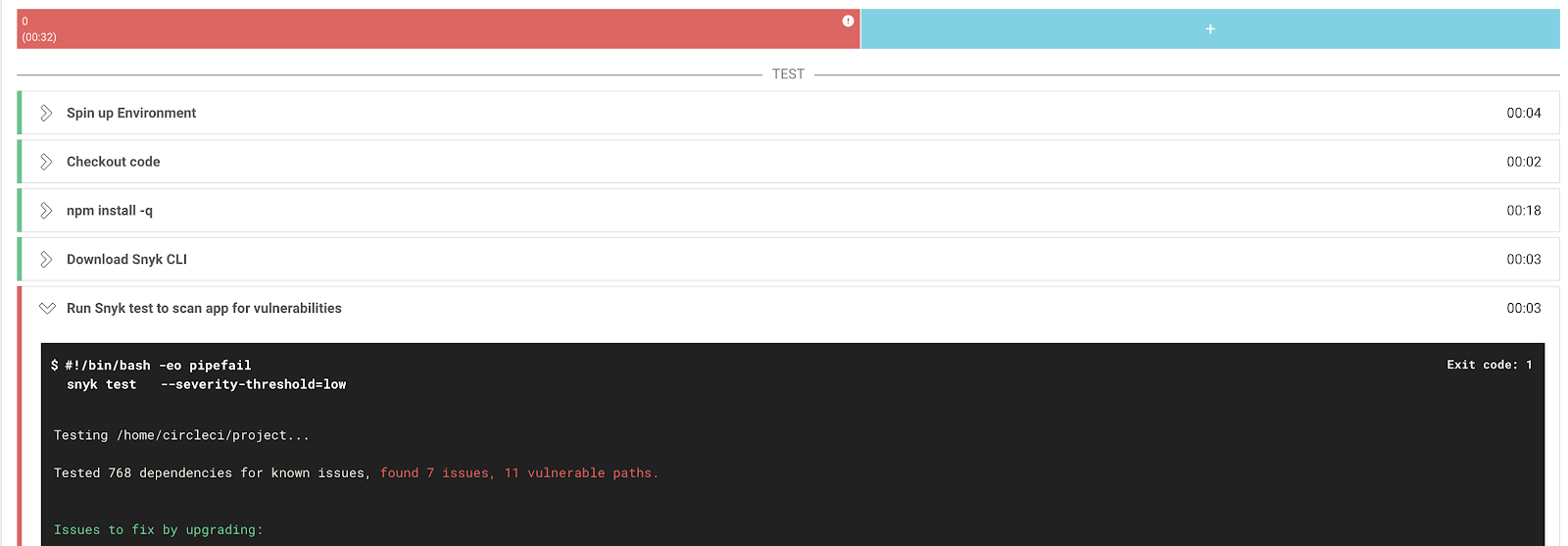
After the initial set-up, an additional test will be added to your CircleCI workflow.
If vulnerabilities are identified, you can set CircleCI to either fail the build to prevent outdated libraries to be introduced or let the build complete and flag.
Both methods have their pros and cons and will depend on the nature of your environment and risk appetite. It’s tempting to force the build fail to prevent more vulnerable dependencies being introduced but I suggest doing so only after checking with your developers and remediating existing issues in your repositories using the method described in the previous blog.
Snyk’s free version allows you only a limited number of scans per month, so you need to also weigh costs agains benefits when deploying this tool in your development, staging and production environments.
This approach will allow you to automate security tests in a developer-friendly fashion and hopefully bring development and security teams closer together, so the DevSecOps can be practiced.


 If you work for or (even better) co-founded a tech startup, you are already busy. Hopefully not too busy to completely ignore security, but definitely busy enough to implement one of the industrial security frameworks, like the NIST Cybersecurity Framework (CSF). Although the CSF and other standards are useful, implementing them in a small company might be resource intensive.



 Cyber Security Leadership