Database Security Project

ID-100187848

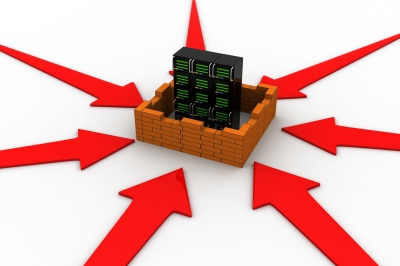
A company experienced a significant data breach from a malicious source which led to the loss of strategically sensitive information. I was called in to manage a security remediation project. Given that data at rest is a critical asset, remediating and hardening the company’s business critical databases was a key component of this program.

The client designed a solution for database security but was struggling to implement it and gain the required stakeholder buy-in. Furthermore, the client’s business critical landscape was highly dispersed – with application management spread across multiple business units based out of a number of countries and database management was overseen by third-party IT vendor.

I was a part of the project management team, which was established to coordinate multiple stakeholders in order to implement the end-to-end solution for database security consisting of monitoring, reporting and remediation of business critical databases.

I identified that the most significant obstacle was business application owner understanding of the system, the processes, and the benefits of implementation. I initially engaged in extensive stakeholder communication and business change management to ensure the required buy-in.

I drove the progress of system implementation through stakeholder management, delivery management, information gathering and providing technical expertise and management reporting. I worked within the client’s project management methodology whilst leveraging my experience and expertise in project management to ensure timely delivery.

As a result, the business critical databases in scope were brought into the known state of compliance, drastically reducing the attack surface. Moreover, awareness of the importance of application security and secure behaviours to support databases was raised significantly.

I embedded the processes to implement the system into the client’s run and maintain activities, ensuring that future changes to their business critical landscape do not introduce new database vulnerabilities. I also developed an asset inventory for business critical databases which improved upon any previous client efforts.

Image courtesy ddpavumba / FreeDigitalPhotos.net

Gamification for security

Oxford dictionary defines gamification as the application of typical elements of game playing (e.g. point scoring, competition with others, rules of play) to other areas of activity to encourage engagement with a product or service:

Bringing an element of fun helps to achieve lasting change in human behaviour, as demonstrated by The Fun Theory project. Here are some videos to get an idea how gamification can drive behavioural change to address social and business challenges:

Gamification can also be a powerful learning tool when applied to information security.

For example, CyberCIEGE enhances information assurance and cyber security education and training through the use of computer gaming techniques such as those employed in SimCity™. In the CyberCIEGE virtual world, users spend virtual money to operate and defend their networks, and can watch the consequences of their choices, while under attack.

In its interactive environment, CyberCIEGE covers  significant aspects of computer and network security and defense. Players of this video game purchase and configure workstations, servers, operating systems, applications, and network devices. They make trade offs as they struggle to maintain a balance between budget, productivity, and security. In its longer scenarios, users advance through a series of stages and must protect increasingly valuable corporate assets against escalating attacks.

CyberCIEGE includes configurable firewalls, VPNs, link encryptors and access control mechanisms.  It includes identity management components such as biometric scanners and authentication servers.   Attack types include corrupt insiders, trap doors, Trojan horses, viruses, denial of service, and exploitation of weakly configured systems.   Attacker motives to compromise assets differ by asset and scenario, thereby supporting scenarios ranging from e-mail attachment awareness to cyber warfare.

More information along with introduction and demonstration movies are also available on the official website.

Cybersecure: Your Medical Practice is another example of using gamification to educate people but not in the context of the HIPAA regulation compliance.

hipaa

This web-based security training module uses a game format that requires users to respond to privacy and security challenges often faced in a typical small medical practice.  Users choosing the right response earn points and see their virtual medical practices flourish.  But users making the wrong security decisions can hurt their virtual practices.  In this version, the wrong decisions lead to floods, server outages, fire damage and other poor outcomes related to a lack of contingency planning.

Gamification can also be applied in user awareness training to change the behaviour of users in the organisation. One instance of this might be helping to recognize phishing links.

Anti-Phishing Phil is an interactive game that teaches users how to identify phishing URLs, where to look for cues in web browsers, and how to use search engines to find legitimate sites.

phil

User studies have found that user education can help prevent people from falling for phishing attacks. However, it is hard to get users to read security tutorials, and many of the available online training materials make users aware of the phishing threat but do not provide them with enough information to protect themselves. Studies demonstrate that Anti-Phishing Phil is an effective approach to user education.

Apozy and Wombat Security Technologies also focus on gamification in raising awareness about security risks.

There is a free online course on gamification available. This course will teach you the mechanisms of gamification, why it has such tremendous potential, and how to use it effectively.

Cyber Attacks and Data Breaches Visualised

breaches 2

To keep up to date with the recent data breaches, one can use DataLossDB. It is a research project aimed at documenting known and reported data loss incidents world-wide.

For something more visual, Information is Beautiful presented world’s biggest data breaches as bubbles of various size depending on the amount of records lost. Short stories and explanations are also available for some of the incidents.

Breaches

For real-time information, Google developed the Digital Attack Map. It is a live data visualization of DDoS attacks around the globe, built through a collaboration between Google Ideas and Arbor Networks. The tool surfaces anonymous attack traffic data to let users explore historic trends and find reports of outages happening on a given day.

DDoS

Sherwood Applied Business Security Architecture

SABSA

I completed my SABSA Foundation training, passed the exam and earned the.SABSA Chartered Security Architect credential.

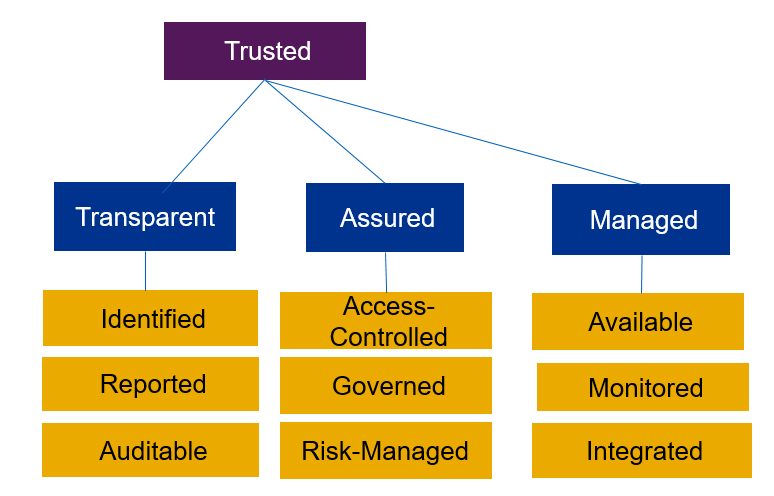
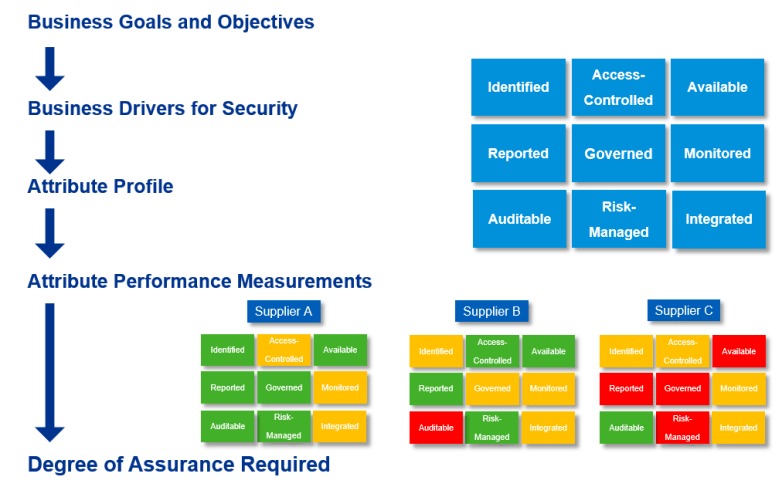
SABSA is a proven methodology for developing business-driven, risk and opportunity focused Security Architectures at both enterprise and solutions level that traceably support business objectives. It is also widely used for Information Assurance Architectures, Risk Management Frameworks, and to align and seamlessly integrate security and risk management into IT Architecture methods and frameworks.
SABSA is comprised of a series of integrated frameworks, models, methods and processes, used independently or as an holistic integrated enterprise solution, including:

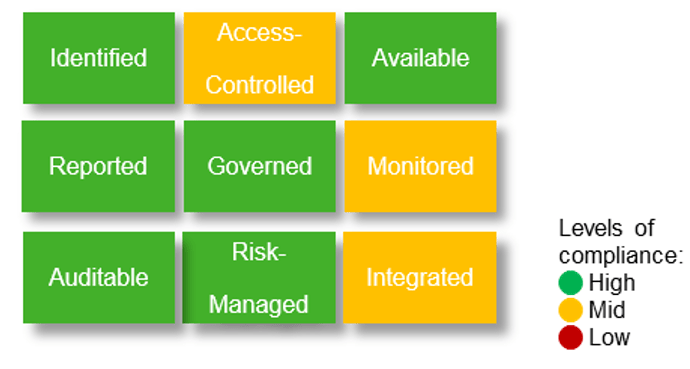
  • Business Requirements Engineering Framework (known as Attributes Profiling)
  • Risk and Opportunity Management Framework
  • Policy Architecture Framework
  • Security Services-Oriented Architecture Framework
  • Governance Framework
  • Security Domain Framework
  • Through-life Security Service Management & Performance Management Framework

Global Privacy Launch

IAPP

In the face of cyber attacks managing to breach industries as diverse as multimedia giants, global retailers and online social networks, the importance of securing our personal information has never been more in the spotlight. The growing demand to address these risks has been recognized across the information security field, and I was recently given the opportunity to participate in the launch of my firm’s own global privacy service line.

During this launch, I was lucky enough to meet many experienced privacy practitioners from all over the world, including New Zealand, South Africa, Japan and the USA. These security professionals generously shared their insights with me, based on their diverse experiences and individual challenges. Interestingly, I discovered that although privacy legislation varies country-by-country, the basic principles remain the same.

I was able to attend multiple interactive workshops, in which I learned how to perform privacy impact and maturity assessments. The week concluded with the IAPP Foundation and other certifications.

The experience I gained with data protection laws and the knowledge I obtained during these training sessions helped me to successfully obtain the Certified Information Privacy Manager and Certified Information Privacy Technologist credentials. These certifications will allow me to demonstrate my knowledge and skills and bring value to this truly exciting security arena.

PCI Data Security Standards Rock

The PCI Security Standards Council is an open global forum, launched in 2006, that is responsible for the development, management, education, and awareness of the PCI Security Standards, including the Data Security Standard (PCI DSS), Payment Application Data Security Standard (PA-DSS), and PIN Transaction Security (PTS) requirements.

The PCI Security Standards Council also develops and manages a number of programs to build awareness and to train, test, and qualify organizations and individuals to assess and validate adherence to PCI Security Standards.

They put together a short video explaining the basic principles.

Cake and Security

There is no doubt that security is necessary, but why is it so unpleasant to follow a security policy? Reminding yourself to stick to the rules feels like your partner telling you…. to eat your salad. You know they are right, but anticipating that bland taste and mindless chewing that awaits you simply puts you off. You decide to leave it for tomorrow, so much so that you never get to it.

Cakes, on the other hand, are yummy and require no effort whatsoever to indulge in our cravings for them. Nobody needs to force us to eat a piece.

In our day-to-day lives we prefer to do “cake” tasks without giving it a second’s thought. Things like storing confidential files on Dropbox or emailing them to our personal accounts…. you know, taking a little bite here and there. It’s “only for today”, “no biggie”… This one-time thing is so harmless, it’s like a comfort snack. We might later feel guilty that we bypassed a few “salad” controls. Maybe we used our personal USB drive instead of a company-issued encrypted one, but at the end of the day… who cares? Who will notice? As long as there is no dramatic impact on our health, a bite here or a bite there won’t cause any harm.

reward

And one day we realise that it’s not all rosy. The result of our laziness or lack of willpower eventually rears its ugly head when the doctor makes us stand on the scales and has a look at our blood pressure. So to add to your partner’s words of wisdom, is the doctor’s warning of an unhealthy present and a bleak future; something that would sound very similar during the company’s security audit.

“You have got to eat more salad and lay off the cakes!”

To make matters worse, even with our best intentions to have the salad at the office cafeteria, we discover that the one available is practically inedible. Pretty much like finding that the company’s secure shared drive doesn’t have the necessary space to store our files or that the encrypted pen drive is not compatible with the client’s Mac.

So if there are chefs coming up with ways to make salads more appealing, what can security professionals do to help us, the employees, maintain our “security diet”?

They could aim at making security more like a cake – effortless, even attractive, but still keep it as healthy as a salad. Sound simple? Perhaps not so much, but they should invest in usability studies to make sure that the secure solution is the easiest to use. It might involve discovering an entirely new culinary art on how to make a cake-tasting salad altogether. But if they fail to realise just how unpalatable the salads are to begin with, we should let them know. Security professionals need employees’ support.

Organisations are like families: everyone has to stay healthy, otherwise when a single member gets sick, the whole family is at risk of getting sick as well, whether it be catching an infectious disease or adopting an unhealthy lifestyle. It’s like having the slimmest, fittest family member refrain from adding biscuits to the grocery list in order not to tempt the couch-potatoes. It’s a team effort. In order for a company to stay healthy, everyone has to keep a healthy lifestyle of eating salad regularly, even when it is not that pleasant.

unpleasant but necessary measures

The whole company needs to know that security is important for achieving its goals -not as something that gets in the way-, just as we should all know that having a healthy diet of greens will guarantee a sound body. Employees contribute to the efficient operation of the business when they comply with security policies. Not only does security ensure confidentiality and the integrity of information, but it also guarantees that the resources are available for employees to complete their primary tasks.

We need to realise that we contribute to security; and we can inflict serious damage on a company when we don’t comply with security policies, no matter how insignificant or harmless they may seem. As employees, we are individually responsible for the organisation’s exposure to security risks just as we are responsible for exposing ourselves to illness. Our behaviour and daily regime significantly shape our quality of life, and our practices shape the quality of our business.

The health of the company is everyone’s business. Let’s all eat our salad while helping the security specialists to come up with better tasting ones.

Training offshore teams

IMG_20150105_195112 copy

I just returned from my trip to Bangalore, India, where I was asked to deliver a series of training activities to the KPMG offshore teams. Spending a week there came with lots of wonderful insights.

First of all, India is a beautiful country. I didn’t really have a lot of time to travel around, but I still had a chance to visit the Bangalore Palace, drive up and down the Mahatma Gandhi Road, see the Parliament and many beautiful parks.

Moreover, apart from delivering training sessions myself, the local leadership organised a presentation for the UK team, where we were described the services they offer globally. I was impressed by the level of innovation and standardisation, which clearly demonstrate the rapid technological growth in India.

IMG_20150106_163908

I’ve had a chance to work with some of the marvelous members of our offshore team before, and it was very valuable to finally meet them in person. I had an opportunity to interview a few people for a position in my programme and we are already on-boarding the successful candidate.

Not only I was able to share my knowledge and meet some lovely people, but I could enjoy a brief but wonderful taste of India and its warm hospitality. I’m sure the effectiveness of our communications and project work will increase substantially in going forward.

The Changing Face of Cyber Security – NextSec event

NextSec_EY

I was very happy to open our NextSec event in collaboration with EY. We had some great presentations followed by a well-facilitated discussion panel which offered a wonderful knowledge sharing session for everyone who attended.

The main themes of the evening were the changing threat landscape and widening the skills gap. The participants learned about the future of malware from Sian John, a security futurologist from Symantec, and how to address it by developing a security strategy with the help of Robert Coles, GSK. Elena Cinquegrana shared her perspective on being a consultant while Freddie Hult from CyberResilience Ltd. discussed the role of a CISO. Lucy Chaplin from KPMG concluded with a talk on privacy issues in the modern world.
speakers
I would like to say a special thanks to Chinwe and Annabel from EY for their contribution.