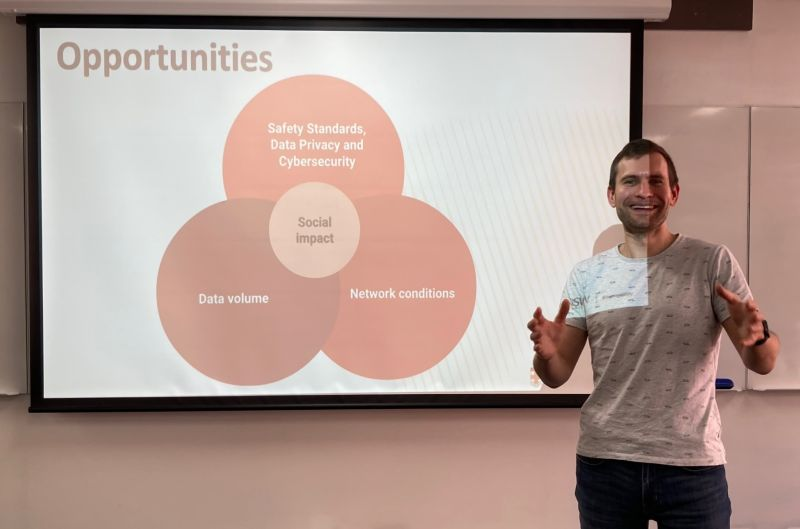

I had an absolute blast at the AI for Social Impact hackathon.
I had a chance to experiment with systems thinking, design thinking and other innovation tools to harness the power of AI for good.
A practical approach

Cyber security leaders have to be effective change agents to be successful. Cyber capability uplift and risk reduction initiatives often require significant transformation in the organisation. In this blog, I’ll introduce a tried and tested change management framework and demonstrate its application to cyber security in an illustrative case study.

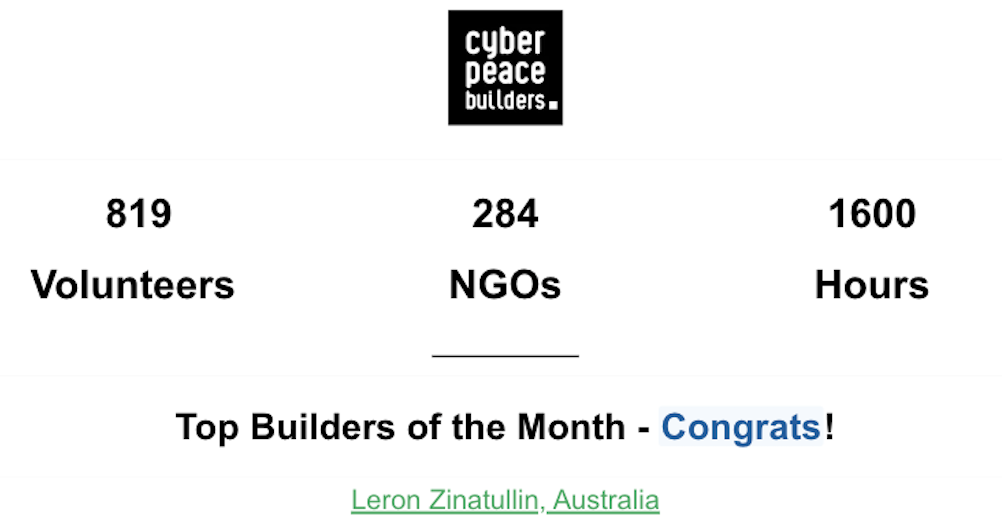
I’m proud to be named CyberPeace Institute‘s Volunteer of the Month.
A big shoutout to CyberPeace for this awesome recognition! It’s been such a rewarding experience to help them in their mission to make the digital world safer for everyone.
The CyberPeace Institute is a non-profit focused on reducing the harm caused by cyberattacks to individuals and communities. Through their CyberPeace Builders program, they offer free cybersecurity support to organisations that need it most, especially those where cyber threats can have a serious impact.
As a volunteer, I’ve had the chance to help for-purpose organisations respond to cyber attacks, develop incident response plans, run security awareness training, perform dark web monitoring and craft essential policies and procedures. Plus, I’ve provided general cyber advice along the way. It’s been an incredible journey being part of a team that’s making a real difference.

Scenario analysis is a powerful tool to enhance strategic thinking and strategic responses. It aims to examine how our environment might play out in the future and can help organisations ask the right questions, reduce biases and prepare for the unexpected.
What are scenarios? Simply put, these are short explanatory stories with an attention- grabbing and easy-to-remember title. They define plausible futures and often based on trends and uncertainties.

I recently had a chance to share my views on cybersecurity frameworks with one of the online publications. In this blog, I provide a brief summary of key insights.


I had a fantastic time on an international MBA exchange at one of the top universities in China, Fudan University in Shanghai, for the Global Network for Advanced Management program.
It was an chance to learn first hand about innovation in China and meet some amazing Executive MBA students from the world’s top business schools.
NIST released a new version of the Cybersecurity Framework with a few key changes:
I often use this framework to develop and deliver information security strategy. Although, other methodologies exist, I find its layout and functions facilitate effective communication with various stakeholder groups, including the Board.