Scenario analysis in cyber security: building resilience

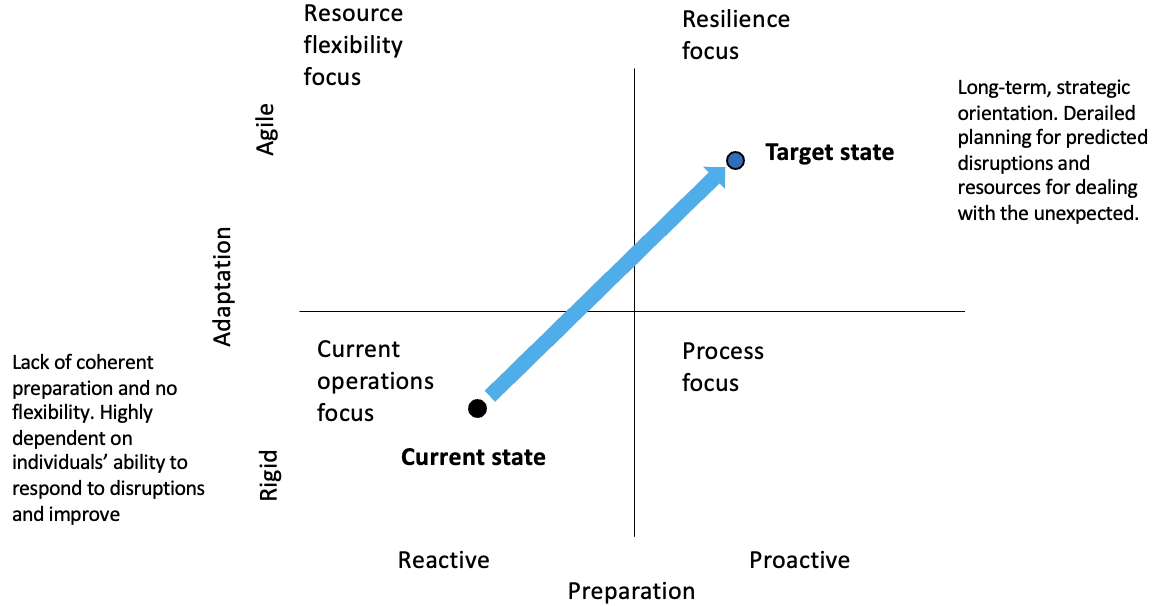
Resilience matrix, adapted from Burnard, Bhamra & Tsinopoulos (2018, p. 357).

Scenario analysis is a powerful tool to enhance strategic thinking and strategic responses. It aims to examine how our environment might play out in the future and can help organisations ask the right questions, reduce biases and prepare for the unexpected.

What are scenarios? Simply put, these are short explanatory stories with an attention- grabbing and easy-to-remember title. They define plausible futures and often based on trends and uncertainties.

More

Sustainable leadership in an accelerating world

I recently completed a masterclass on embedding sustainable leadership in organisations. The best part was the interactive simulation to identify the trade-offs necessary to achieve a balanced approach to decision making for both immediate business goals and long-term sustainability.

More

Cross-cultural leadership in China

I had a fantastic time on an international MBA exchange at one of the top universities in China, Fudan University in Shanghai, for the Global Network for Advanced Management program. 

It was an chance to learn first hand about innovation in China and meet some amazing Executive MBA students from the world’s top business schools.

More

How to adopt NIST CSF 2.0

CSF 2.0 Functions. Source: NIST

NIST released a new version of the Cybersecurity Framework with a few key changes:

  • It now can be applied beyond critical infrastructure, making it more versatile and straightforward to adopt.
  • It introduces a new core “Govern” function that includes categories from other sections, with increased focus on supply chain risk management and accountability.
  • It highlights synergies with the NIST Privacy Framework.

I often use this framework to develop and deliver information security strategy. Although, other methodologies exist, I find its layout and functions facilitate effective communication with various stakeholder groups, including the Board.

More

Cyber security for social impact

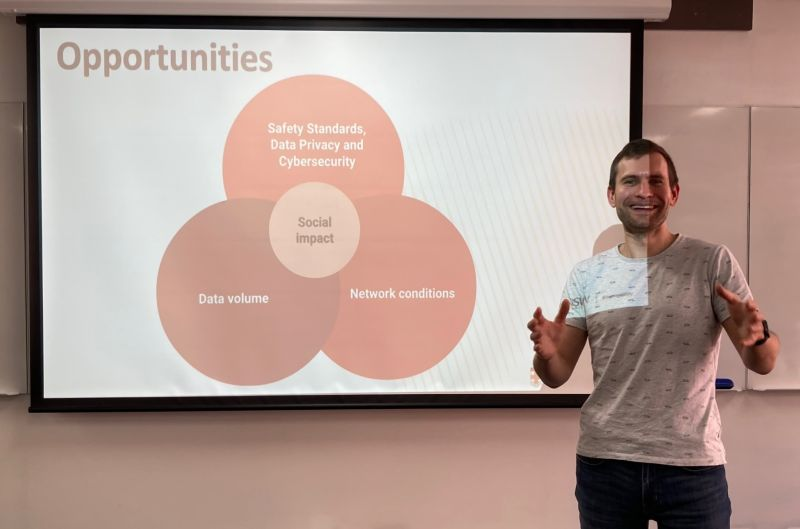
As a cyber security leader, I feel strongly about social issues related to human rights in the context of privacy, data protection and safe use of technology. I believe technology can be an enabler but also a potential cause of harm that needs to be considered.

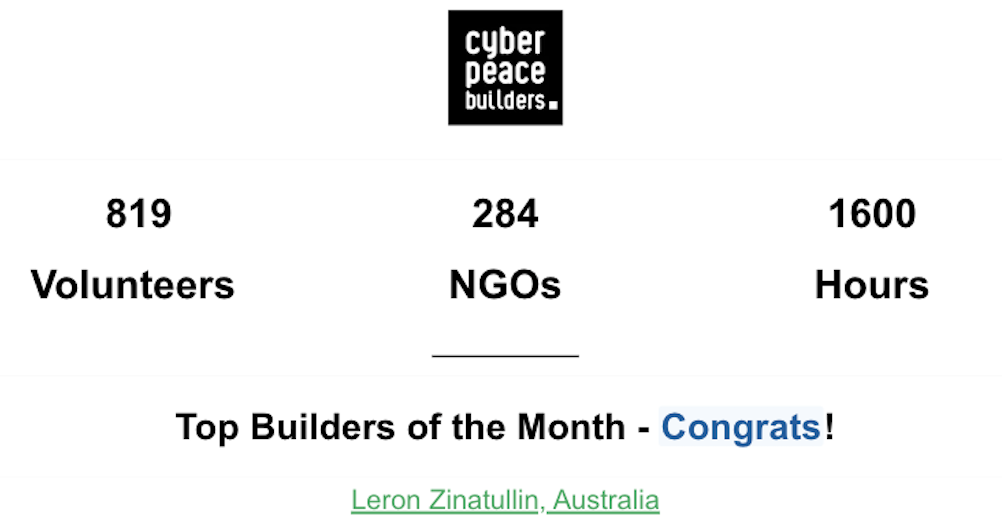
I started volunteering with the CyberPeace Institute to leverage my cyber and technology skills to empower not-for-profit organisations to combat cyber threats and protect the communities they serve.

More

How to measure social impact

I have a keen interest in the not-for-profit sector because its commitment to mission aligns with my personal values and goals. As part of my Executive MBA studies, I completed the Social Impact course that provided me with an insight into complex problems in society and how I can leverage my skills to help tackle them.

One of my biggest learnings from this course relates to demonstrating social impact.

I previously viewed social impact measurement as a distraction from doing actual work imposed by funders and regulators. It was easier for me to focus on outputs rather than long-term outcomes and impact, because they were readily available and straightforward to report on. This course broadened my perspective and helped me distinguish between outputs and lasting social, economic and environmental effects.

Applying course concepts, particularly Theory of Change and Logic Models helped me see the benefits of social impact measurement like learning and personal development, increased accountability, transparency and trust and overall organisational improvement. 

In this blog I’ll share some of the tools that can be used to analyse a particular problem. We will use homelessness as an example and compare how two organisations tackle this problem and demonstrate social impact.

More

Systems thinking in cyber security

Cyber security leaders deal with complex problems all the time, but only a few are well equipped to deal with such challenges effectively. Systems thinking is a discipline that can help CISOs improve their ability to see the bigger picture and move beyond simplistic linear cause-effect relationships and point-in-time snapshots.

Systems thinking is a mindset that encourages you to see interdependencies, processes and patterns of complex systems. Complex systems contain multiple interacting feedback loops and it is this feature that make them so challenging to understand, diagnose and improve.

In this blog I outline some examples of complex systems, recommend tools to begin to understand and influence them and demonstrate how these techniques can be applied to improve digital safety and security.

More

Inclusion and accessibility: shaping culture and driving business outcomes

I’m grateful to have had an opportunity to continue to learn and contribute to the important discussion on building the culture of diversity, inclusion and accessibility in cyber security.

I like being on panels like this because it gives me an opportunity to share my views and continue to educate myself not only through research but also through lived experiences.

I believe shaping the inclusive culture begins with creating awareness about the barriers to diversity and inclusion. Accessibility is an important consideration. Testing new systems and processes with people with accessibility needs is key to discovering where issues may exist.

The best way to make security more accessible is to engage with the people who interact with it. Treating usability and accessibility together with other security requirements rather than a separate item is useful to ensure it gets built-in from the start.