Volunteering with ISACA

It’s been fantastic to have an opportunity to give back to the community and volunteer with ISACA this year.

The Sydney Chapter hosted a number of professional development events for cyber, risk, governance and IT professionals with a common objective of building digital trust and securing our interconnected world. I had a chance to support these initiatives, ranging from fundraising for a mental health charity to helping organise conferences.

I found this experience incredibly rewarding and made some good friends along the way.

How to achieve SOC 2 Type 2 attestation

As a CISO who recently led an organisation through successful SOC 2 Type 1 and Type 2 audits, I’d like to share some insights and steps to help others on their journey toward SOC 2 attestation.

SOC 2 may not be for everyone (refer to my blog on compliance frameworks), but it can be useful for organisations dealing with sensitive customer data, particularly in SaaS, as it demonstrates a commitment to security, privacy, and data integrity. The journey toward SOC 2 attestation can be complex, but with careful planning and the right strategies, it’s achievable.

More

Navigating the ISO 27001:2022 transition

ISO/IEC 27001:2022 Summary of key changes

ISO 27001 is a widely adopted international standard that sets out systematic and adaptable approach to managing information security. It enables organisations to establish a culture of continuous improvement, staying ahead of emerging threats, and ensuring business resilience in the face of evolving cybersecurity challenges.

A new version of this standard – ISO 27001:2022 – was published on 24 October 2022. I recently led the transition to this version and wanted to share my key takeaways.

More

How to set up CloudTrail logging in AWS

I bet you already know that you should set up CloudTrail in your AWS accounts, if you haven’t already. This service captures all the API activity taking place in your AWS account and stores it in an S3 bucket for that account by default. This means you would have to configure the logging and storage permissions for every AWS account your company has. If you are tasked with securing your cloud infrastructure, you will first need to establish how many accounts your organisation owns and how CloudTrail is configured for them. Additionally, you would want to have access to S3 buckets storing these logs in every account to be able to analyse them.

If this doesn’t sound complicated already, think of a potential error in permissions where logs can be deleted by an account administrator. Or situations where new accounts are created without your awareness and therefore not part of the overall logging pipeline. Luckily, these scenarios can be avoided if you are using the Organization Trail.

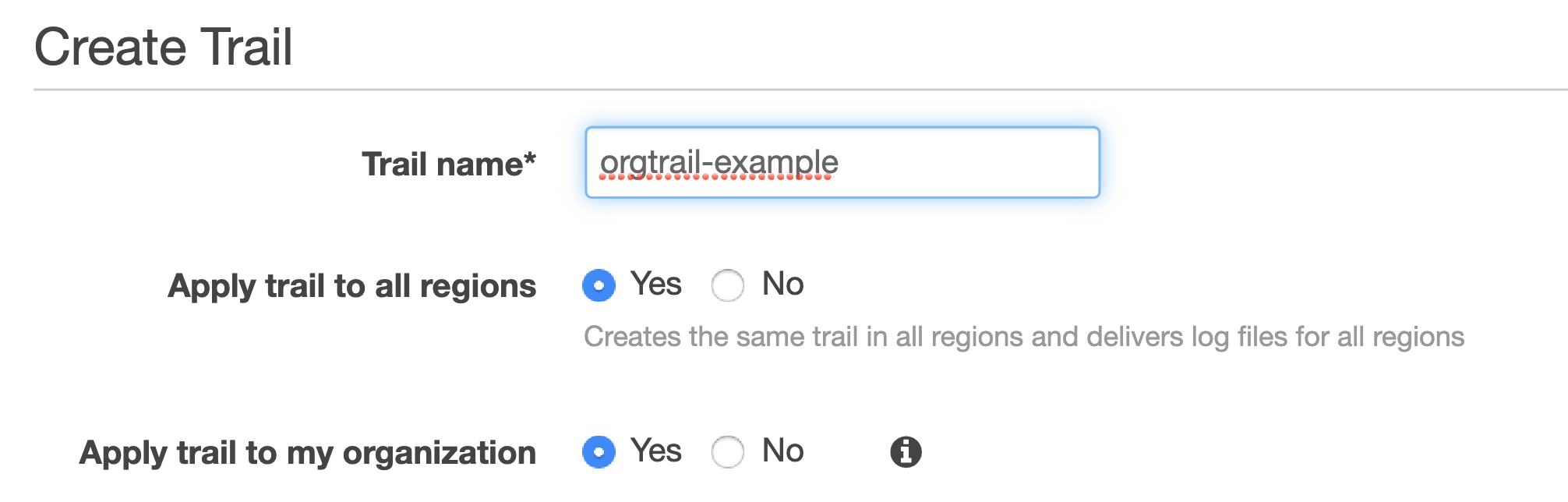
Create Trail

Your accounts have to be part of the same AWS Organization, of course. You would also need to have a separate account for security operations. Hopefully, this has been done already. If not, feel free to refer to my previous blogs on inventorying your assets and IAM fundamentals for further guidance on setting it up.

Establishing an Organization Trail not only allows you to collect, store and analyse logs centrally, it also ensures all new accounts created will have CloudTrail enabled and configured by default (and it cannot be turned off by child accounts).

Trails

Switch on Insights while you’re at it. This will simply the analysis down the line, alerting unusual API activity. Logging data events (for both S3 and Lambda) and integrating with CloudWatch Logs is also a good idea.

Where can all these logs be stored? The best destination (before archiving) is the S3 bucket in your account used for security operations, so that’s where it should be created.

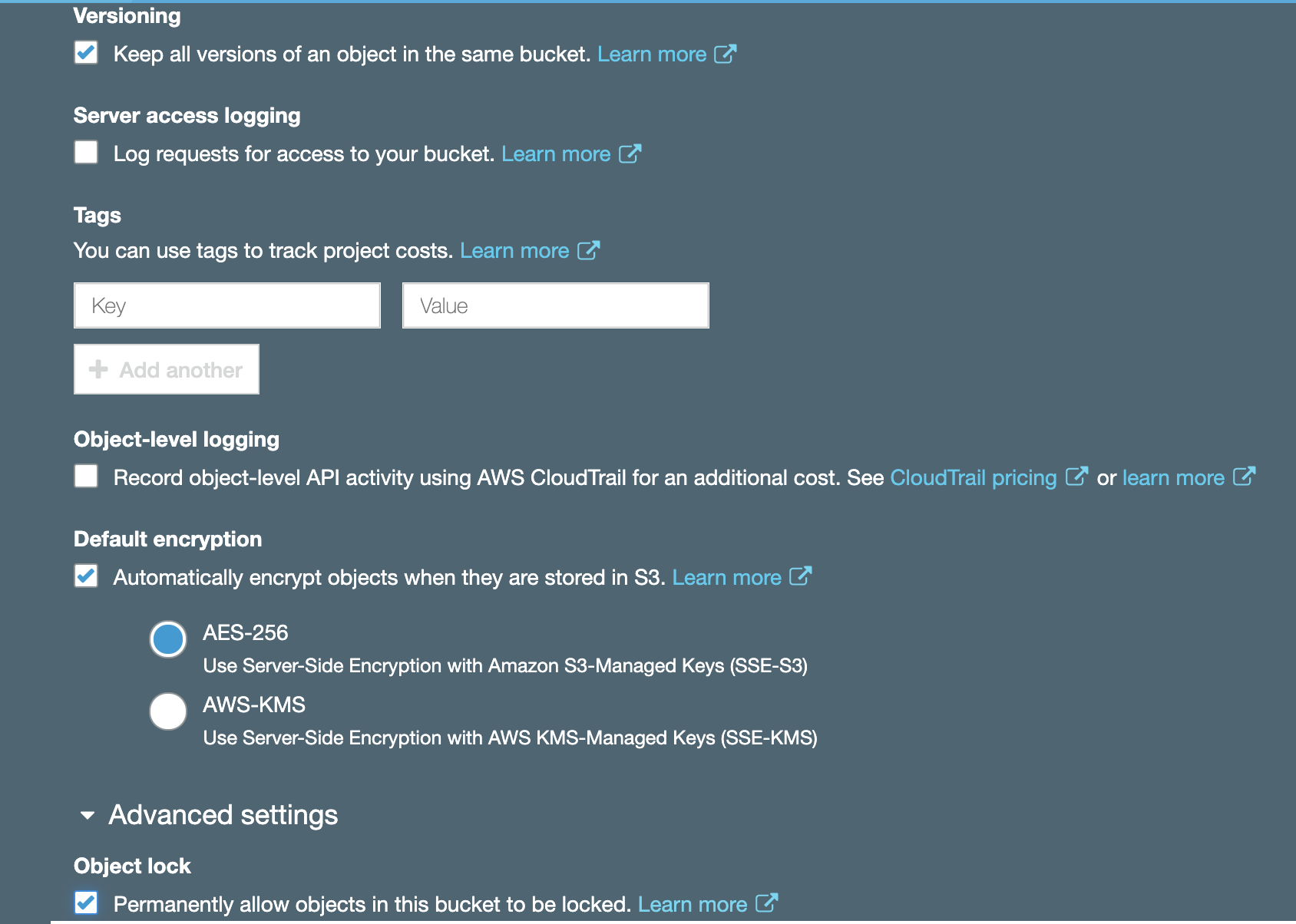
S3 bucket

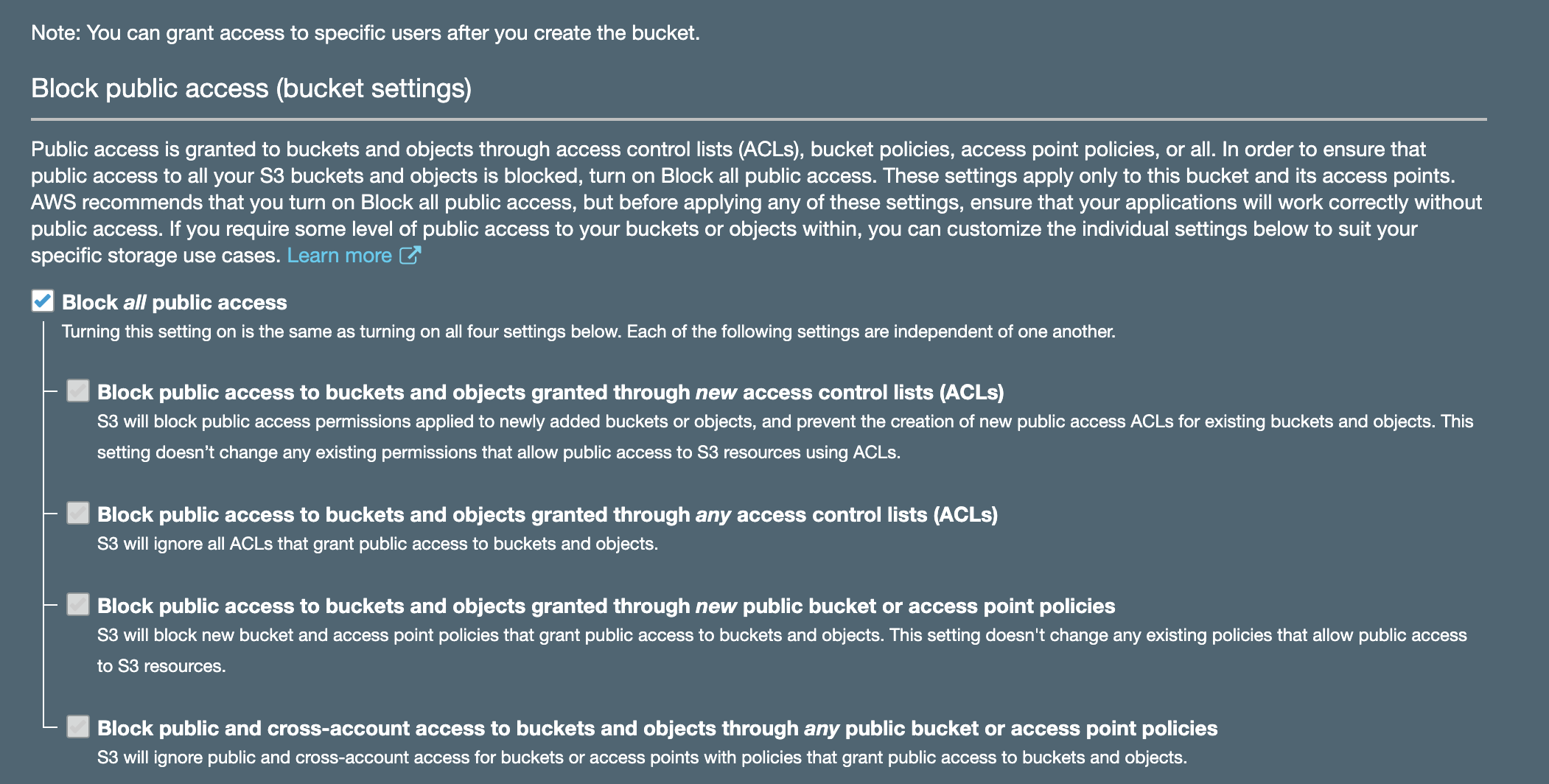
Enabling encryption and Object Lock is always a good idea. While encryption will help with confidentiality of your log data, Object Lock will ensure redundancy and prevent objects from accidental deletion. It requires versioning to be enabled and is best configured on bucket creation. Don’t forget to block public access!

S3 block public access

You must then use your organisational root account to set up Organization Trail, selecting the bucket you created in your operational security account as a destination (rather than creating a new bucket in your master account).

For this to work, you will need to set up appropriate permissions on that bucket. It is also advisable to set up access for child accounts to be able to read their own logs.

If you had other trails in your accounts previously, feel free to turn them off to avoid unnecessary duplication and save money. It’s best to give it a day for these trails to run in parallel though to ensure nothing is lost in transition. Keep your old S3 buckets used for collection in your accounts previously; you will need these logs too. You can configure lifecycle policies and perhaps transfer them to Glacier to save on storage costs later.

And that’s how you set up CloudTrail for centralised collection, storage and analysis.

How to audit your AWS environment

Cloudmapper

Let’s build on my previous blog on inventorying your AWS assets. I described how to use CloudMapper‘s collect command to gather metadata about your AWS accounts and report on resources used and potential security issues.

This open source tool can do more than that and it’s functionality is being continuously updated. Once the data on the accounts in scope is downloaded, various operations can be performed on it locally without the need to continuously query the accounts.

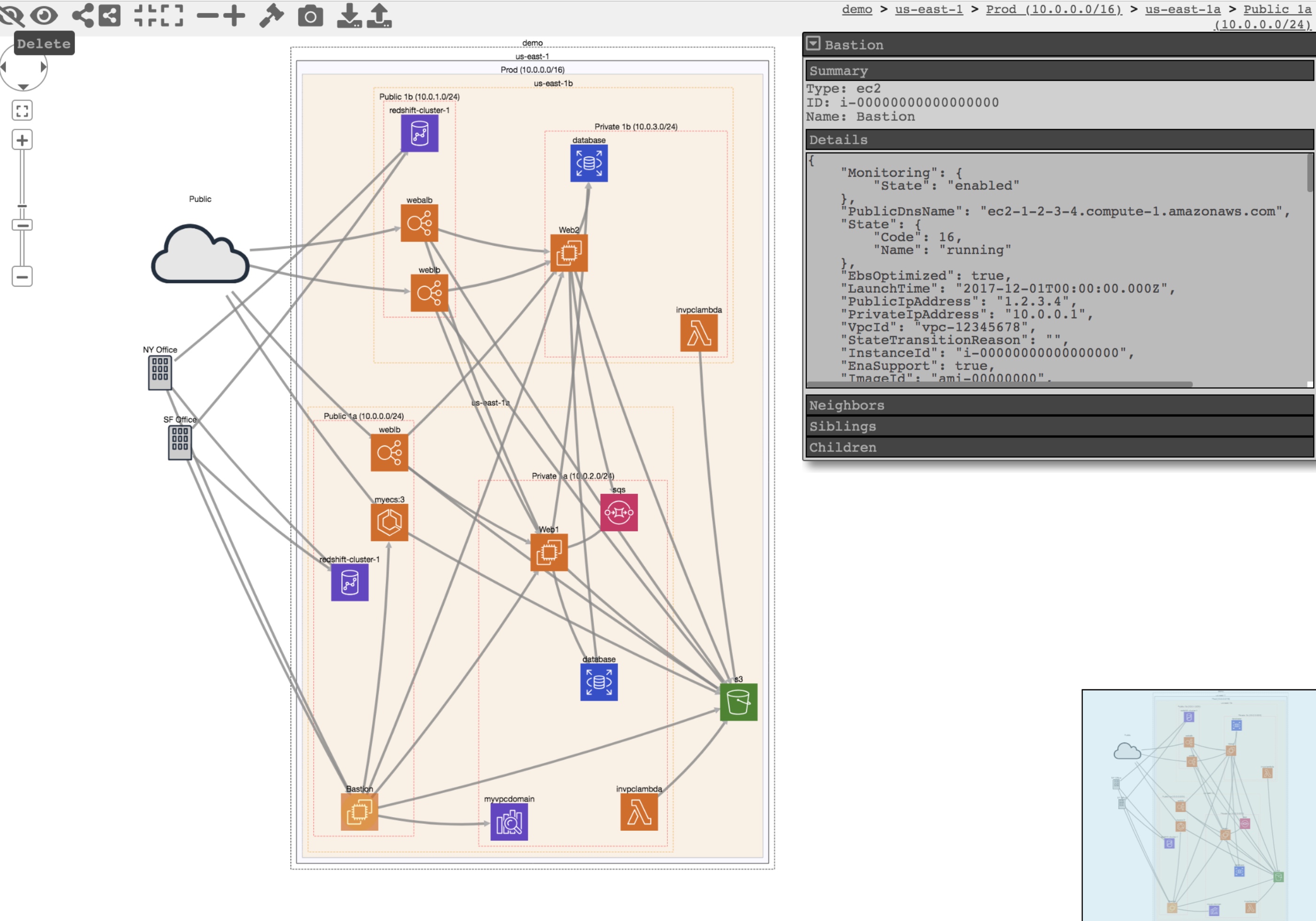
One of interesting use cases is to visualise your AWS environment in the browser. An example based on the test data of such a visualisation is at the top of this blog. You can apply various filters to reduce complexity which can be especially useful for larger environments.

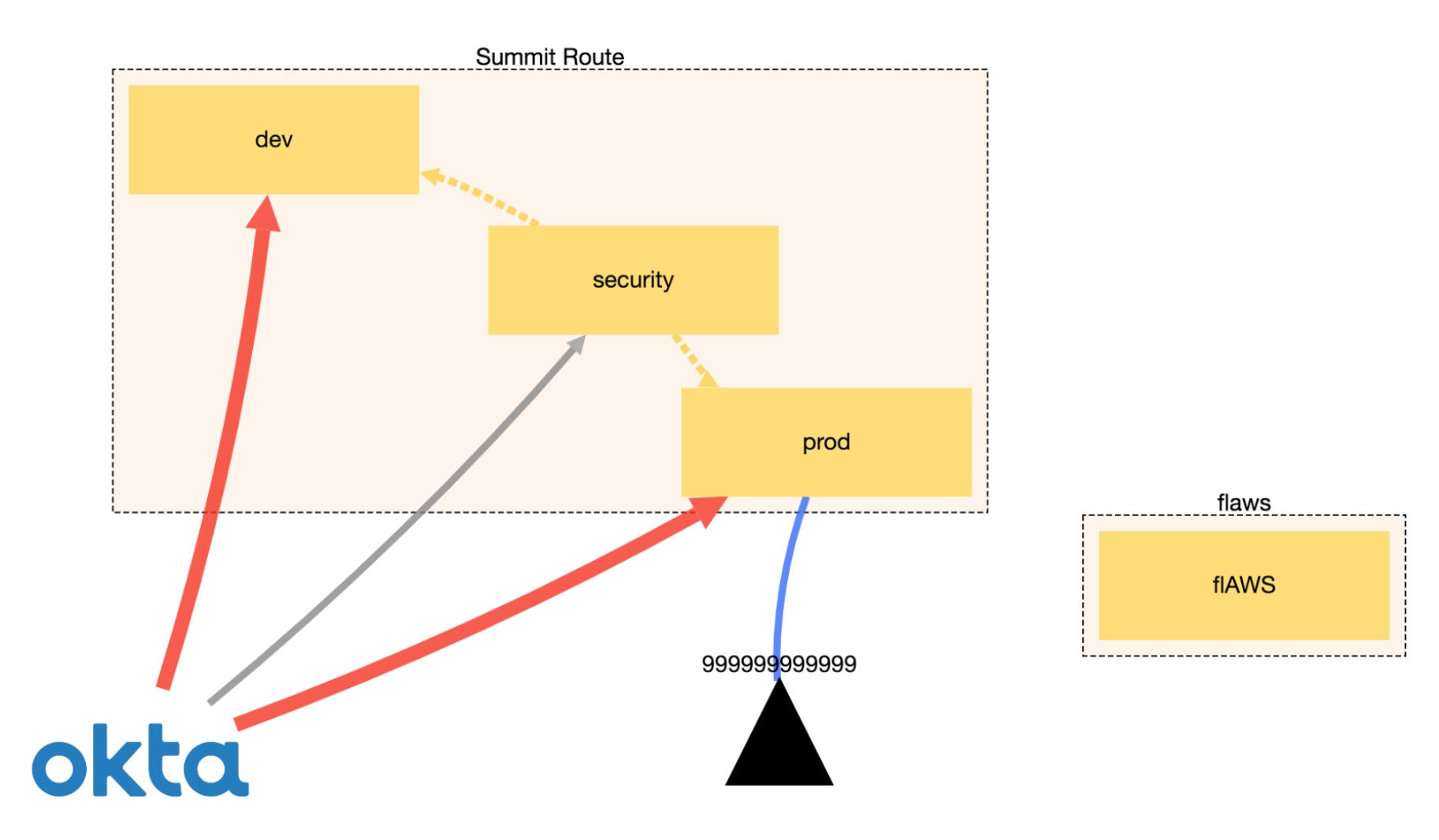
Another piece of CloudMapper’s functionality is the ability to display trust relationships between accounts using the weboftrust command. Below is an example from Scott’s guidance on the use of this command. It demonstrates the connections between accounts, including external vendors.

weboftrust

I’m not going co cover all the commands here and suggest checking the official GitHub page for the latest list. I also recommend running CloudMapper regularly, especially in environments that constantly evolve.

An approach of that conducts regular audits. saving reports and integrating with Slack for security alerts is described here.

ISACA young professionals

I’ve been interviewed for the launch of the ISACA Young Professionals portal that contains a wealth of information for starting and accelerating your career in IT audit and cybersecurity.

I decided to contribute because ISACA played a role in my career development too.

I started attending ISACA London chapter events while I was studying for my Master’s degree in London. Although the university provided a great theoretical foundation on information security, I wanted to know about the real-world challenges that practitioners in the industry were facing.

At the time I had just finished writing my thesis after doing some great research at the university and I wanted to share my findings and the research of my colleagues with the community. The organisers were supportive, so we agreed a day and I delivered a talk on resolving conflicts between security compliance and human behaviour.

It was a rewarding experience as the participants provided some valuable insights and feedback; they helped to bridge the gap between academia and real practical experience. I already had a solid foundation from my postgraduate degree but I was missing was some anecdotes and real life stories about how this could apply in practice. This laid the foundation for my book The Psychology of Information Security.

It worked out for me, but should you get involved in broader activities beyond developing your technical skills? I would say yes.

The value of technical skills and knowledge can’t be overestimated. But there’s another side to this story. Prospective employers are not only looking for technical experts, they want people who are good team players, who can collaborate and communicate effectively with others, who can organise and get things done, who can lead. Getting involved with the community and volunteering gives you the chance to develop and demonstrate these non-technical skills and grow your professional network.

Regardless of where you are on your journey, ISACA provides great opportunities to advance your career through courses, networking and certification programmes, so I highly recommend getting involved!

Read my story on ISACA Blog.

NIS Directive: are you ready?

UNADJUSTEDNONRAW_thumb_3de4

Governments across Europe recognised that with increased interconnectiveness a cyber incident can affect multiple entities spanning across a number of countries. Moreover, impact and frequency of cyber attacks is at all-time high with recent examples including:

  • 2017 WannaCry ransomware attack
  • 2016 attacks on US water utilities
  • 2015 attack on Ukraine’s electricity network

In order to manage cyber risk, the European Union introduced the Network and Information Systems (NIS) Directive which requires all Member States to protect their critical national infrastructure by implementing cyber security legislation.

Each Member State is required to set their own rules on financial penalties and must take the necessary measures to ensure that they are implemented. For example, in the UK fines, can be up to £17 million.

And yes, in case you are wondering, the UK government has confirmed that the Directive will apply irrespective of Brexit (the NIS Regulations come into effect before the UK leaves the EU).

Who does the NIS Directive apply to?

The law applies to:

  • Operators of Essential Services that are established in the EU
  • Digital Service Providers that offer services to persons within the EU

The sectors affected by the NIS Directive are:

  • Water
  • Health (hospitals, private clinics)
  • Energy (gas, oil, electricity)
  • Transport (rail, road, maritime, air)
  • Digital infrastructure and service providers (e.g. DNS service providers)
  • Financial Services (only in certain Member States e.g. Germany)

NIS Directive objectives

In the UK the NIS Regulations will be implemented in the form of outcome-focused principles rather than prescriptive rules.

National Cyber Security Centre (NCSC) is the UK single point of contact for the legislation. They published top level objectives with underlying security principles.

Objective A – Managing security risk

  • A1. Governance
  • A2. Risk management
  • A3. Asset management
  • A4. Supply chain

Objective B – Protecting against cyber attack

  • B1. Service protection policies and processes
  • B2. Identity and access control
  • B3. Data security
  • B4. System security
  • B5. Resilient networks and systems
  • B6. Staff awareness

Objective C – Detecting cyber security events

  • C1. Security monitoring
  • C2. Proactive security event discovery

Objective D – Minimising the impact of cyber security incidents

  • D1. Response and recovery planning
  • D2. Lessons learned

Table view of principles and related guidance is also available on the NCSC website.

Cyber Assessment Framework

The implementation of the NIS Directive can only be successful if Competent Authorities  can adequately assess the cyber security of organisations is scope. To assist with this, NCSC developed the Cyber Assessment Framework (CAF).

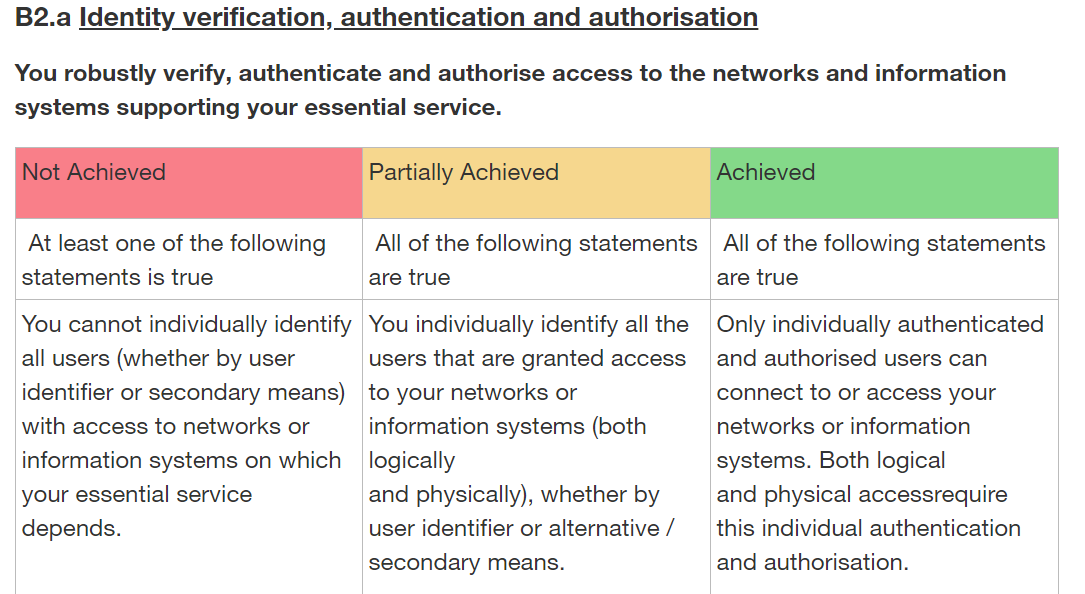
The Framework is based on the 14 outcomes-based principles of the NIS Regulations outlined above. Adherence to each principle is determined based on how well associated outcomes are met. See below for an example:
NIS

Each outcome is assessed based upon Indicators of Good Practice (IGPs), which are statements that can either be true or false for a particular organisation.

Whats’s next?

If your organisation is in the scope of the NIS Directive, it is useful to conduct an initial self-assessment using the CAF described above as an starting point of reference. Remember, formal self-assessment will be required by your Competent Authority, so it is better not to delay this crucial step.

Establishing an early dialogue with the Competent Authority is essential as this will not only help you establish the scope of the assessment (critical assets), but also allow you to receive additional guidance from them.

Initial self-assessment will most probably highlight some gaps. It is important to outline a plan to address these gaps and share it with your Competent Authority. Make sure you keep incident response in mind at all times. The process has to be well-defined to allow you report NIS-specific incidents to your Competent Authority within 72 hours.

Remediate the findings in the agreed time frames and monitor on-going compliance and potential changes in requirements, maintaining the dialogue with the Competent Authority.


How to conduct a cyber security assessment

NIST SCF

I remember conducting a detailed security assessment using the CSET (Cybersecurity Evaluation Tool) developed by the US Department of Homeland Security for UK and US gas and electricity generation and distribution networks. The question set contained around 1200 weighted and prioritised questions and resulted in a very detailed report.

Was it useful?

The main learning was that tracking every grain of sand is no longer effective after a certain threshold.

The value add, however, came from going deeper into specific controls and almost treating it as an audit where a certain category is graded lower if none or insufficient evidence was provided.  Sometimes this is the only way to provide an insight into how security is being managed across the estate.

Why?

What’s apparent in some companies – especially in financial services – is that they conduct experiments often using impressive technology. But have they made it into a standard and consistently rolled it out across the organisation? The answer is often ‘no’. Especially if the company is geographically distributed.

I’ve done a lot of assessments and benchmarking exercises against NIST CSF, ISO 27001, ISF IRAM2 and other standards since that CSET engagement and developed a set of questions that cover the areas of the NIST Cybersecurity Framework.

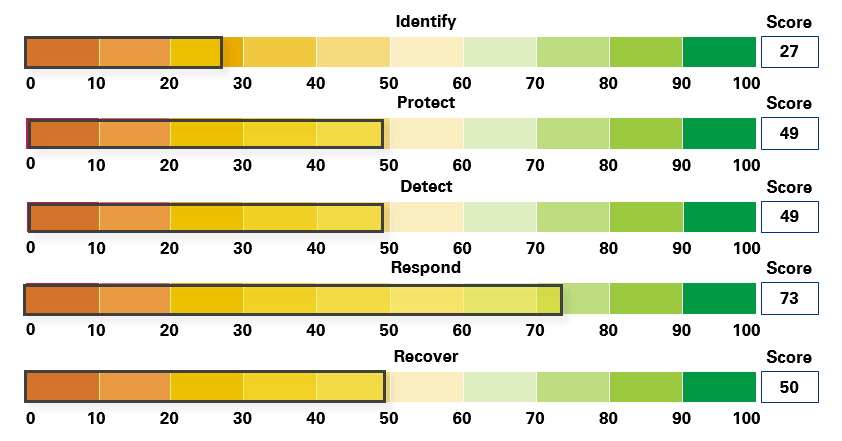
I felt the need to streamline the process and developed a tool to represent the scores nicely and help benchmark against the industry. I usually propose a tailor-made questionnaire that would include 50-100 suitable questions from the bank. From my experience in these assessments, the answers are not binary. Yes, a capability might be present but the real questions are:

  • How is it implemented?
  • How consistently it is being rolled out?
  • Can you actually show me the evidence?

So it’s very much about seeking the facts.

As I’ve mentioned, the process might not be the most pleasant for the parties involved but it is the one that delivers the most value for the leadership.

What about maturity?

I usually map the scores to the CMMI (Capability Maturity Model Integration) levels of:

  • Initial
  • Managed
  • Defined
  • Quantitatively managed and
  • Optimised

But I also consider NIST Cybersecurity framework implementation tiers that are not strictly considered as maturity levels, rather the higher tiers point to a more complete implementation of CSF standards. They go through Tiers 1-4 from Partial through to Risk Informed, Repeatable and finally Adaptive.

The key here is not just the ultimate score but the relation of the score to the coverage across the estate.

Secure by design

V4tS8p5F_C0

Have you seen security controls being implemented just to comply with legal and regulatory requirements? Just like this fence. I’m sure it will pass all the audits: it is functioning as designed, it blocks the path (at least on paper) and it has a bright yellow colour just as specified in the documentation. But is it fit for purpose?

It turns out that many security problems arise from this eager drive to comply: if the regulator needs a fence – it will be added!

Sometimes controls are introduced later, when the project is well passed the design stage. It might be the case that they just don’t align with the real world anymore.

n0saycKzykM

Safety measures, unfortunately, are no exception. The solution may be poorly designed, but more often, safety requirements are included later on with the implementation not fit for purpose.

IbHF452Usk0tuLB7kjBazs

Same holds for privacy as well. Privacy professionals encourage to adopt the Privacy by Design principle. Is it considered on the image below?

2Tx1qKFQzfoB5nli4NoEG4