Training offshore teams

IMG_20150105_195112 copy

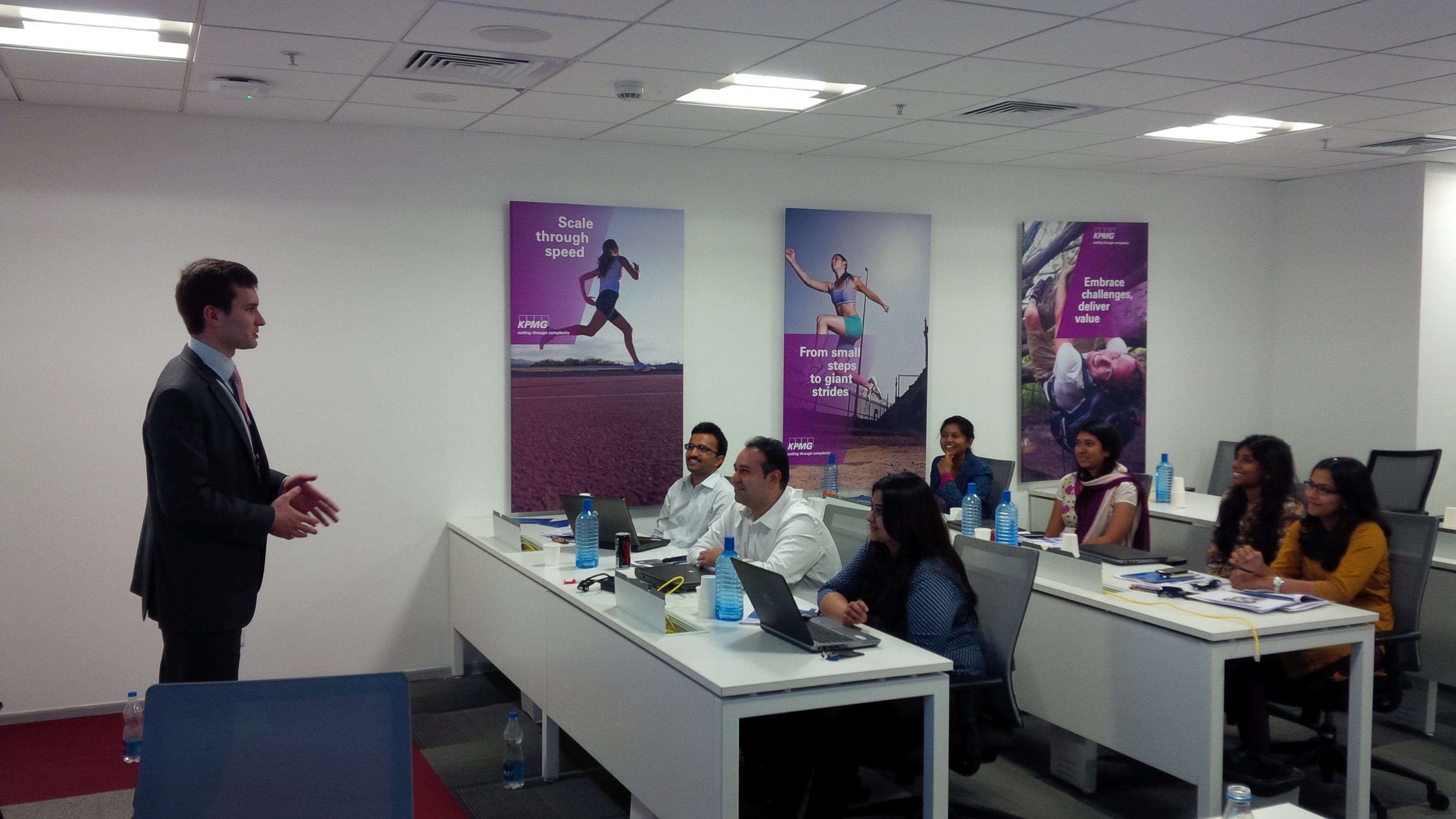
I just returned from my trip to Bangalore, India, where I was asked to deliver a series of training activities to the KPMG offshore teams. Spending a week there came with lots of wonderful insights.

First of all, India is a beautiful country. I didn’t really have a lot of time to travel around, but I still had a chance to visit the Bangalore Palace, drive up and down the Mahatma Gandhi Road, see the Parliament and many beautiful parks.

Moreover, apart from delivering training sessions myself, the local leadership organised a presentation for the UK team, where we were described the services they offer globally. I was impressed by the level of innovation and standardisation, which clearly demonstrate the rapid technological growth in India.
IMG_20150106_163908

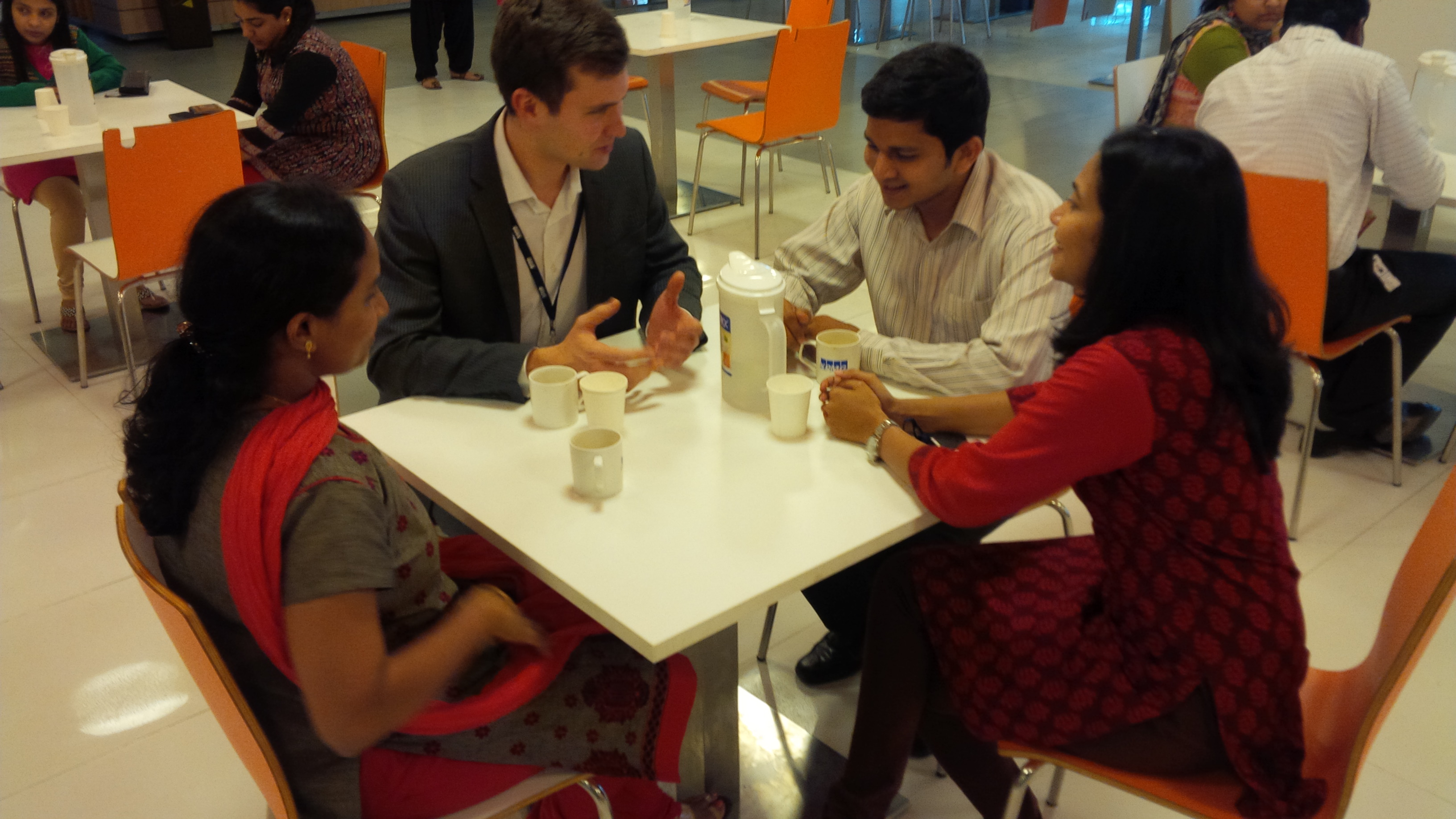
I’ve had a chance to work with some of the marvelous members of our offshore team before, and it was very valuable to finally meet them in person. I had an opportunity to interview a few people for a position in my programme and we are already on-boarding the successful candidate.

Not only I was able to share my knowledge and meet some lovely people, but I could enjoy a brief but wonderful taste of India and its warm hospitality. I’m sure the effectiveness of our communications and project work will increase substantially in going forward.


Developing your team through coaching

We discussed improving team productivity previously. I received a few comments regarding this topic, which I decided to address here. I would like to cover the question of developing your team members through coaching.

I remember attending a workshop once, where the participants were divided into two teams and were presented with a rather peculiar exercise. The facilitator announced that the goal of this competition was to use newspaper and tape to construct a giraffe. The teams would be judged on the height of the animal: the team who will manage to build the tallest one wins.

teamwork and securtiy - exercise as a distraction

There are many variations of this exercise, but they all boil down to the same principle. The real aim is to understand how people work together. How they plan, assign roles and responsibilities, execute the task, etc.

In the end, everyone had a chance to discuss the experience. Participants were also presented with feedback on their performance. But can people’s performance be improved? And if yes, what could have been done in order to achieve positive and lasting change?

The answer to these questions can be found in coaching.

Coaching is all about engaging people in an authentic way. There might be different opinions on the same problem, which doesn’t necessarily mean that there is only one universal truth. How much do you appreciate and respect what other people think?

Coaching, however, is not about knowing all the answers, but about listening, empathising and understanding others. Here are some example questions you can use:

  • What is happening in your life and career?
  • What’s going well?
  • Where do you want to be?
  • What do you need to do to get there?
  • What is the first step you would take today?

IMG_2039

The last thought I would like to mention here is about giving people time to reflect. Some silent and alone time can yield unexpected results. Our brain is bombarded with enormous amounts of information on a daily basis. Finding time to quiet your mind and slow down can help you to listen to your inner voice of intuition.  This can help you come up with innovative solutions to seemingly unsolvable problems.

NextSec Conference: The Changing Face of Cyber Security

NextSec

I am delighted to invite you to the NextSec Cyber Security Conference ‘The Changing Face of Cyber Security’ on 11 December 2014 at EY, 1 More London Place, SE1 2AF, London.

The conference will provide an opportunity for you to hear senior cyber security leaders, from a range of industries, share their cyber security experiences and insights through presentations following three main themes:
1) the changing cyber threat landscape,
2) the diverse techniques that have been adopted in response to the threat, and
3) the range of cyber security roles across different sectors.

The second half of the conference will address the changing dynamics required for leadership in cyber security including gender diversity and inclusiveness.

An open Q&A panel discussion will close the conference sessions.

Event Details:

  •  Date:           11 December 2014
  • Time:            5.00pm – 8.30pm followed by networking and drinks
  • Location:     Mulberry Restaurant, EY, More London Place

 Chairs

  • Cheryl Martin, Partner, EY
  • Leron Zinatullin, NextSec Committee Member and Information Security Advisor, KPMG

Confirmed speakers and panellists:

  • Cheryl Martin, Partner, EY
  • Sian John, Security Futurologist, Symantec
  • Robert Coles, Chief Information Security Officer, GlaxoSmithKline
  • Elena Cinquegrana, Associate Director, Navigant
  • Lucy Chaplin, Assistant Manager, KPMG
  • Freddie Hult, Senior Cyber Resilience Adviser, Cyber Resilience Ltd

Please visit the website to register for free.

NextSec is a networking group of young professionals working in cyber security and information risk management in the UK. The group exists since January 2012 and currently has over 290 members. These 290 members work for over 59 organisations in the UK. We have a diverse representation of young professionals working in financial services, oil and gas industry, industrial goods and retail, marketing, telecommunications, software, technology, professional services, and public sector. For more information about NextSec, please visit our website and LinkedIn group.

Presenting on Industrial Control Systems Security at the University of Westminster

SCADA WESTMINSTER

I delivered a seminar to a group of students at the University of Westminster on industrial control systems security. We discussed the history of these systems, current developments and research opportunities in this area. There was some debate around the hypothesis that these systems weren’t designed to be secure and the trade-offs between confidentiality, integrity and availability helped the participants to better understand modern challenges. Practical recommendations were given pertaining the areas of risk management, disaster recovery, and resilience.

I also facilitated a workshop, where I divided the audience into several groups representing various stakeholders within the company: shareholders, process engineers, and security managers. This helped to drive further discussion regarding different points of view, priorities, and the complexity of communication.

Career Paths and Skills Development for Security Professionals

Career paths for security professionals typically depend on the industry. For a consultancy company, for example, it might be the same progression across all the departments, but for an end-user organisation it usually follows the path, outlined in the figure below.

career

Certifications for security professionals

Certified Information Security Professional CISSP (www.isc2.org)

CISSP® certification is a globally recognized standard of achievement that confirms an individual’s knowledge in the field of information security. CISSPs are information assurance professionals who define the architecture, design, management and/or controls that assure the security of business environments.

Certified Information Security Manager CISM (www.isaca.org)

The uniquely management-focused CISM certification promotes international security practices and recognizes the individual who manages designs, and oversees and assesses an enterprise’s information security. It demonstrates your information security management expertise.

Certified Information Systems Auditor CISA (www.isaca.org)

The CISA designation is a globally recognized certification for IS audit control, assurance and security professionals. Being CISA-certified showcases your audit experience, skills and knowledge, and demonstrates you are capable to manage vulnerabilities, ensure compliance and institute controls within the enterprise.

There are also more specific certifications for penetration testing (e.g. Offensive Security, CEH), project management (PMP, PRINCE2), IT service management (ITIL) or architecture (TOGAF, ISSAP). Technical security skills can also be developed through SANS Institute