Netrunner: what infosec might look like in the future

Netrunner

Android: Netrunner is a two-player card game that can teach you a great deal about cyber security. It’s fun to play too.

Bad news first: although initially intended as a ‘living card game’ with constantly evolving gameplay, this game has now been discontinued, so no expansions will be published, limiting the community interest, ongoing deckbuilding and tournaments.

Now to the good news, which is pretty much the rest of this blog. None of the above can stop you from enjoying this great game. You can still acquire the initial core set which contains all you need for casual play.

The premise of this game is simple: mega corporations control all aspects of our lives and hackers (known as runners) oppose them. I know it was supposed to be set in the dystopian cyberpunk future, but some of the elements of it are coming to life sooner than expected since the original game release in 1996.

Runners

The runners vary in their abilities that closely align to their motivation: money, intellectual curiosity, disdain for corporations. Corporations have their core competencies too. Again, just like in real life. The core set I mentioned earlier consists of seven pre-built, and balanced by creators, decks: three for runners and four for corporations with their unique play styles.

The game is asymmetrical with different win conditions: runners are trying to hack into corporations’ networks to steal sensitive information (known as agendas in the game) and corporations are aiming to defend their assets to achieve their objectives (advance agendas). This masterfully highlights the red team versus blue team tension commonplace in today’s infosec community.

Troubleshooter

A corporation has to adapt to evolving threats posed by hackers installing protective devices and conducting defensive operations all the while generating revenue to fund these projects and reach their targets to win the game. It’s not only about defence for the corporation either. Today’s “hacking back” debate got apparently settled in the future, with corporations being able to trap, tag and trace hackers to inflict real damage, as an alternative win condition.

Cyberfeeder

Runners differ vastly in methods to penetrate corporation’s defences and have to take care of an economy of their own: all these cutting edge hacking consoles cost money and memory units. Example cards in runner’s toolbox sometimes closely resemble modern methods (e.g. siphoning off corp’s accounts) and sometimes gaze far into the future with brain-machine interfaces to speed up the process.

Basic rules are simple but there are plenty of intricate details that make players think about strategy and tactics. It’s a game of bluff, risk and careful calculation. There’s also an element of chance in it, which teaches you to be able to make the best use of resources you currently have and adapt accordingly.

It’s not an educational game but you can learn some interesting security concepts while playing, as you are forced to think like a hacker taking chances and exploiting weaknesses or a defender trying to protect your secrets. All you need is the deck of cards and someone to play with.

GITEX Technology Week in Dubai

I travelled to Dubai to attend the GITEX conference this year. The scope and scale of this technology event is vast. It covers all things tech with a focus on innovation, including artificial intelligence, 5G, smart cities, future mobility and much more.

It was interesting to attend talks and participate in workshops, as well as just walk the floor to better understand current technology trends.

Of course, there was also time to explore Dubai and enjoy the many things this city has to offer.

Time for something new

IMG-6141

After six years with KPMG’s Cyber Security practice I decided it was time to take on a new challenge. It was a great pleasure helping clients from various industry sectors solve their security issues and I certainly learned a lot and met many fantastic people.

A digital venture incubation firm has partnered with a world leader in visas and identity management to found a new London-based venture that is creating a frictionless travel experience. 

I joined this tech startup as the Head of Information Security and couldn’t pass on this opportunity to be one of the early members of the leadership team. 

I’ll be driving the security and compliance agenda, adjusting to the needs of the dynamic and growing business. I can’t wait to put the skills I learned in consulting into practice and contribute to this company.

I’ll have an opportunity to help create a trusted, seamless, user centred visa application process for consumers and businesses alike, through automation and a cutting edge technology. And that’s exciting!

ISACA young professionals

I’ve been interviewed for the launch of the ISACA Young Professionals portal that contains a wealth of information for starting and accelerating your career in IT audit and cybersecurity.

I decided to contribute because ISACA played a role in my career development too.

I started attending ISACA London chapter events while I was studying for my Master’s degree in London. Although the university provided a great theoretical foundation on information security, I wanted to know about the real-world challenges that practitioners in the industry were facing.

At the time I had just finished writing my thesis after doing some great research at the university and I wanted to share my findings and the research of my colleagues with the community. The organisers were supportive, so we agreed a day and I delivered a talk on resolving conflicts between security compliance and human behaviour.

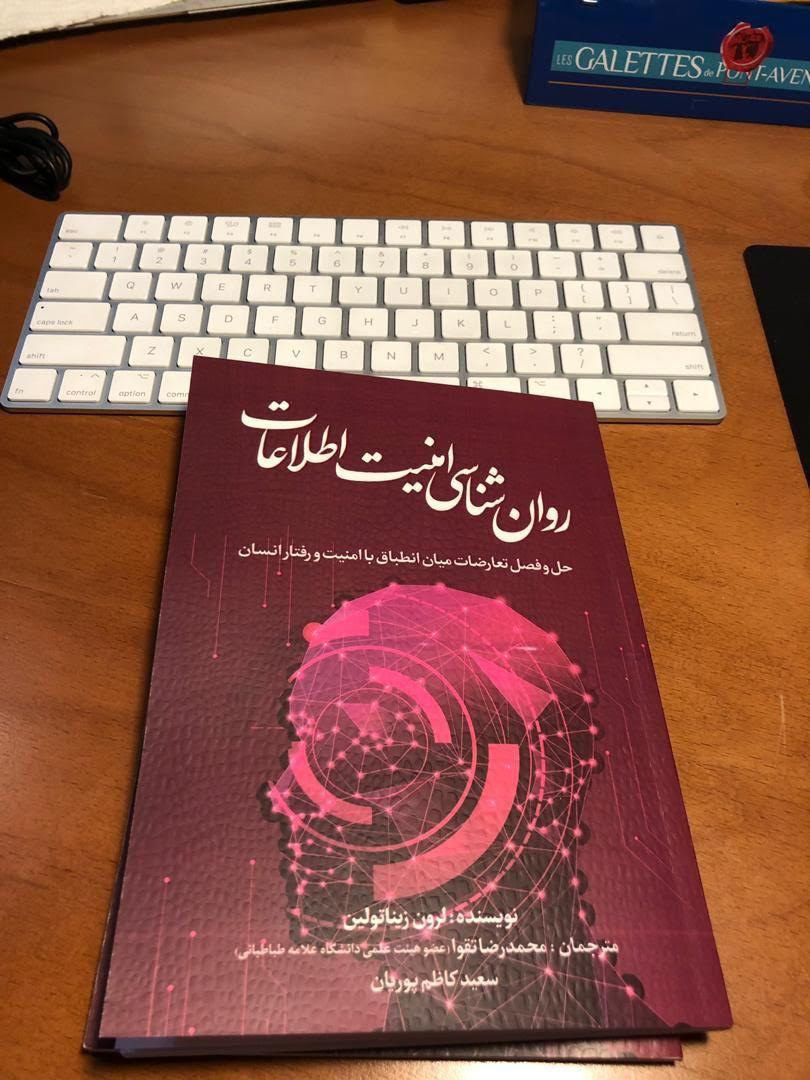
It was a rewarding experience as the participants provided some valuable insights and feedback; they helped to bridge the gap between academia and real practical experience. I already had a solid foundation from my postgraduate degree but I was missing was some anecdotes and real life stories about how this could apply in practice. This laid the foundation for my book The Psychology of Information Security.

It worked out for me, but should you get involved in broader activities beyond developing your technical skills? I would say yes.

The value of technical skills and knowledge can’t be overestimated. But there’s another side to this story. Prospective employers are not only looking for technical experts, they want people who are good team players, who can collaborate and communicate effectively with others, who can organise and get things done, who can lead. Getting involved with the community and volunteering gives you the chance to develop and demonstrate these non-technical skills and grow your professional network.

Regardless of where you are on your journey, ISACA provides great opportunities to advance your career through courses, networking and certification programmes, so I highly recommend getting involved!

Read my story on ISACA Blog.

Learn software engineering

Python_logo_and_wordmark.svg

I’ve recently decided to brush up on my programming skills with one of the courses on Udemy. Despite completing a degree in Computer Science back in the day, my recent focus has been away from software development and a lot has changed since I graduated.

At university I studied mathematics and algorithms but actual programming was performed on archaic languages – such as Pascal for high-level and Assembly for low-level programming.

Although they provide a solid foundation, I was looking for something more practical and because of this I ended up taking up Python because of its versatility. Python is not only widely used, but can also be applied to a variety of projects, including data analysis and machine learning.

The course has been very good and Jupyter notebooks with extensive comments and exercises are available for free on GitHub.

You can start applying it in practice straight away or just have some fun with your own pet projects.

If you’re an experienced developer or just want to have some extra practice, I found the below brain teasers quite entertaining:

On the other hand, if you are just starting up and would like some more grounding in computer science, check out Harvard University’s CS50’s Introduction to Computer Science. It’s completely free, online and self-paced. It starts with some basic principles and lets you put them into practice straight away through Scratch, a graphical programming language developed by MIT.  You then go on to learn more advanced concepts and apply them using C, Python, JavaScript and more.

The course also has a great community, so I highly recommend checking it out.

How to pass the CCSP exam

CCSP-logo-2lines

The CCSP exam is not easy but nothing you can’t prepare for. It tests your knowledge of the following CCSP domains:

  • Cloud Concepts, Architecture and Design
  • Cloud Data Security
  • Cloud Platform and Infrastructure Security
  • Cloud Application Security
  • Cloud Security Operations
  • Legal, Risk and Compliance

The structure and format might change as (ISC)2 continuously revise their exams, so please check the official website to make sure you are up-to-date with the latest developments.

Apart from the official (ISC)2 guides, here are some of the resources I used in my studies:

If you would prefer to add video lectures to your study plan, there’s a free course on Cybrary. For a quick summary, check out these mindmaps. Also, multiple sets of free flashcards are available on Quizlet.

It is a good idea to do some practice questions: there are books and mobile apps out there to help you with this. Practical experience in cloud security is also essential.

On the day, read the questions carefully. It’s not a time pressured exam (I was done in two hours), so it’s worth re-reading the questions and answers again to make sure you are answering exactly what is being asked. Eliminate the wrong options first and then decide on the best out of the remaining ones.

Finally, my suggestion would be to approach the questions from the perspective of a consultant. What would you recommend in each situation? Don’t be too technical – keep the business needs in mind at all times.

Don’t stress too much about the final result. I’m sure you’ll pass, but even if not on your first attempt, you’ll learn either way! Remember, the knowledge you accumulate in the process of preparing for the test itself has the most value, not the credential.

Good luck!

Internet of Toys Security

NSPCC

To support my firm’s corporate and social responsibility efforts, I volunteered to help NSPCC, a charity working in child protection, understand the Internet of Toys and its security and privacy implications.

I hope the efforts in this area will result in better policymaking and raise awareness among children and parents about the risks and threats posed by connected devices.

Toys are different from other connected devices not only because how they are normally used, but also who uses them.

For example, children may tell secrets to their toys, sharing particularly sensitive information with them. This, combined with often insufficient security considerations by the manufacturers, may be a cause for concern.

Apart from helping NSPCC in creating campaign materials and educating the staff on the threat landscape, we were able to suggest a high-level framework to assess the security of a connected toy, consisting of parental control, privacy and technology security considerations.

More

Passed my AWS Certified Solutions Architect exam – here’s how you can too


Solutions badge

I’ve recently passed my AWS Certified Solutions Architect – Associate exam. In this blog I would like to share some preparation tips that would help you ace it.

  1. Practice

Not only practice makes perfect, some hands-on experience is also a prerequisite for the exam. So there is really no way around that! But what if you didn’t have a chance to use your skills on a real-world project yet? No problem! AWS gives you a opportunity to learn how their cloud components work through AWS Free Tier.  For one year, you can use Amazon EC2 Amazon S3Amazon RDSAWS IoT and many more free of charge,

You want more guidance? Qwiklabs developed a set of labs that specifically designed to help you prepare for this exam. For a small price, you can complete exercises without  even requiring an AWS account or signing up for Free Tier.

  1. Read

I recommend studying AWS Whitepapers to broaden your technical understanding. If you are short on time, focus on these:

  1. Watch

AWS developed a free self-paced Cloud Practitioner Essential course, to help you develop an overall understanding of the AWS Cloud. You will learn basic cloud concepts and AWS services, security, architecture, pricing, and support.

There is also a YouTube channel with free introductory videos and other noteworthy material.

Exam sample questions can help you check your knowledge and highlight areas requiring more study.

Remember, the best preparation for the exam is practical experience: AWS recommend 1+  years of hands-on experience with their technologies.

When you’re ready, go ahead and schedule an exam here.

Good luck!

Developing Global Cyber Services

UNADJUSTEDNONRAW_thumb_3078

Over the past year I’ve worked as a core part of the KPMG’s Global Cyber Strategic Growth Initiative as the lead for service development activities, with a focus on working with member firms to deploy capabilities in order to ensure consistent delivery and quality across key growth areas.

I was responsible for the roll-out of cyber security services that included developing sales and delivery accelerators, accreditation requirements, learning pathways, vendor ecosystem and quality and risk management principles across EMEA, APAC and Americas.

To achieve this, I created a service development framework and worked with numerous stakeholders across the firm’s network: global deployment, service development leads, acquisition leads, risk management and key member firm cyber representatives and regional leads.

I also developed a method for the in-country adoption of deployed capabilities and supported both global and in-country risk team members in the evaluation of risk when taking services for client use.

I ensured the sustainability of deployed capabilities through the implementation and use of delivery frameworks and tools, and assigned ownership for the upkeep of deployed capabilities. I worked with member firms to promote the adoption of prioritised services; developed adoption timelines and targets for deployed service.

One of the existing aspects of the role was alliance, acquisition and investment integration support where I collaborated with the relevant stakeholders to deploy and embed offerings obtained through alliances to member firms while monitoring progress against agreed budgets, milestones, deliverables and benefits for capabilities being deployed.

By the end of the programme, I deployed Cyber Maturity Assessment, Identity and Access Management, Industrial Internet of Things Cyber Security, Privacy and Cyber Incident Response services to 19 countries around the world.

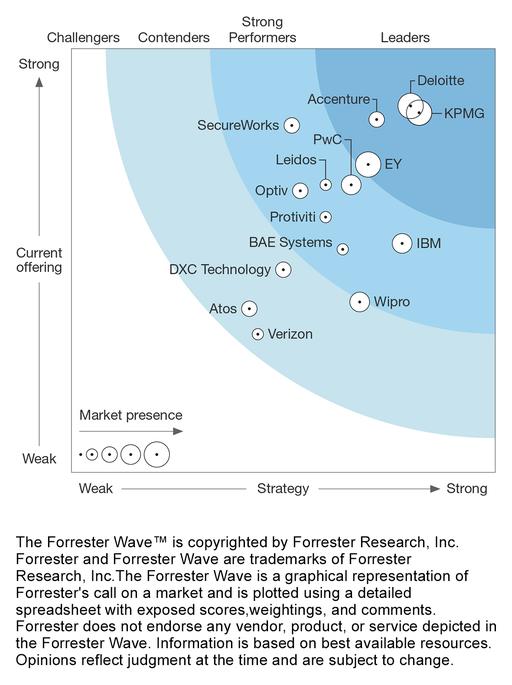
This resulted in achieving significant revenue and market share growth for cyber security services of my firm globally. KPMG International was also named a leader in information security consulting services in 2016 and 2017 according to Forrester Research.

cq5dam.web.512.99999