CyberPeace Institute’s Volunteer of the Month

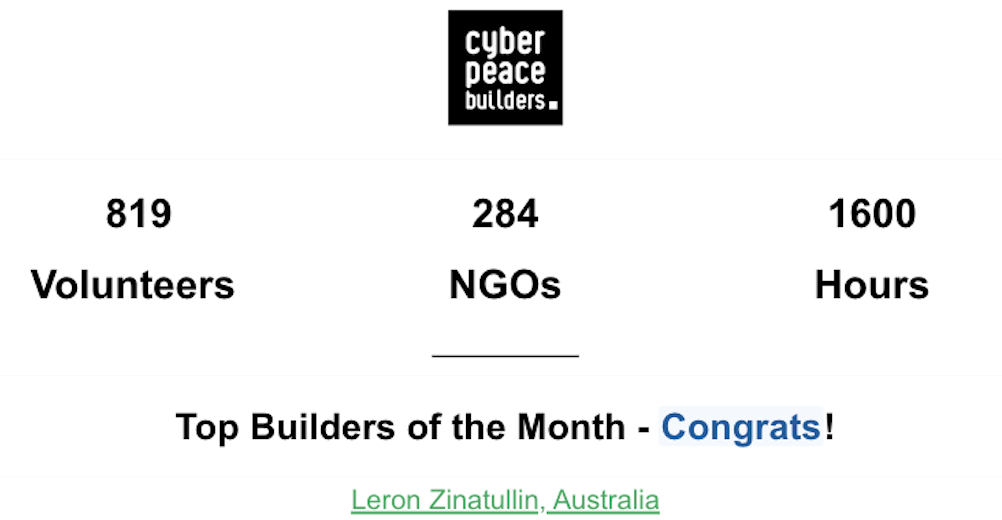
I’m proud to be named CyberPeace Institute‘s Volunteer of the Month.

A big shoutout to CyberPeace for this awesome recognition! It’s been such a rewarding experience to help them in their mission to make the digital world safer for everyone.

The CyberPeace Institute is a non-profit focused on reducing the harm caused by cyberattacks to individuals and communities. Through their CyberPeace Builders program, they offer free cybersecurity support to organisations that need it most, especially those where cyber threats can have a serious impact.

As a volunteer, I’ve had the chance to help for-purpose organisations respond to cyber attacks, develop incident response plans, run security awareness training, perform dark web monitoring and craft essential policies and procedures. Plus, I’ve provided general cyber advice along the way. It’s been an incredible journey being part of a team that’s making a real difference.

Disruption and transformation

We landed a plane and saved 164 passengers 🛩

This Boeing 737 simulation was definitely the highlight of the past week’s course on Disruption and Transformation as part of my MBA studies.

More

Scenario analysis in cyber security: building resilience

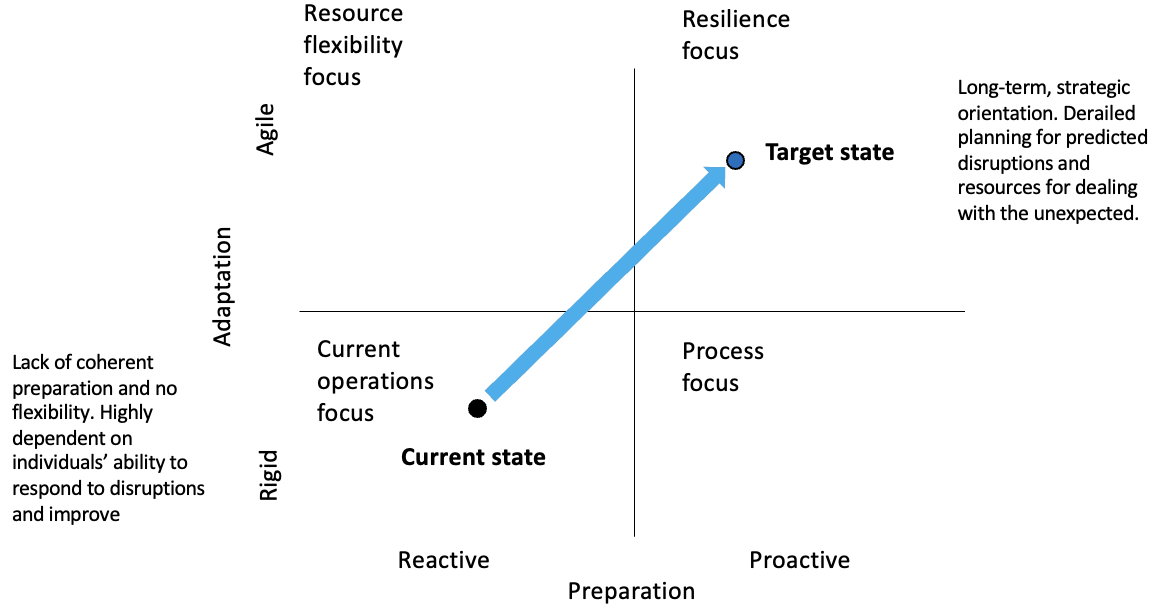
Resilience matrix, adapted from Burnard, Bhamra & Tsinopoulos (2018, p. 357).

Scenario analysis is a powerful tool to enhance strategic thinking and strategic responses. It aims to examine how our environment might play out in the future and can help organisations ask the right questions, reduce biases and prepare for the unexpected.

What are scenarios? Simply put, these are short explanatory stories with an attention- grabbing and easy-to-remember title. They define plausible futures and often based on trends and uncertainties.

More

Sustainable leadership in an accelerating world

I recently completed a masterclass on embedding sustainable leadership in organisations. The best part was the interactive simulation to identify the trade-offs necessary to achieve a balanced approach to decision making for both immediate business goals and long-term sustainability.

More

Cross-cultural leadership in China

I had a fantastic time on an international MBA exchange at one of the top universities in China, Fudan University in Shanghai, for the Global Network for Advanced Management program. 

It was an chance to learn first hand about innovation in China and meet some amazing Executive MBA students from the world’s top business schools.

More

How to adopt NIST CSF 2.0

CSF 2.0 Functions. Source: NIST

NIST released a new version of the Cybersecurity Framework with a few key changes:

  • It now can be applied beyond critical infrastructure, making it more versatile and straightforward to adopt.
  • It introduces a new core “Govern” function that includes categories from other sections, with increased focus on supply chain risk management and accountability.
  • It highlights synergies with the NIST Privacy Framework.

I often use this framework to develop and deliver information security strategy. Although, other methodologies exist, I find its layout and functions facilitate effective communication with various stakeholder groups, including the Board.

More

Cyber security for social impact

As a cyber security leader, I feel strongly about social issues related to human rights in the context of privacy, data protection and safe use of technology. I believe technology can be an enabler but also a potential cause of harm that needs to be considered.

I started volunteering with the CyberPeace Institute to leverage my cyber and technology skills to empower not-for-profit organisations to combat cyber threats and protect the communities they serve.

More

How to measure social impact

I have a keen interest in the not-for-profit sector because its commitment to mission aligns with my personal values and goals. As part of my Executive MBA studies, I completed the Social Impact course that provided me with an insight into complex problems in society and how I can leverage my skills to help tackle them.

One of my biggest learnings from this course relates to demonstrating social impact.

I previously viewed social impact measurement as a distraction from doing actual work imposed by funders and regulators. It was easier for me to focus on outputs rather than long-term outcomes and impact, because they were readily available and straightforward to report on. This course broadened my perspective and helped me distinguish between outputs and lasting social, economic and environmental effects.

Applying course concepts, particularly Theory of Change and Logic Models helped me see the benefits of social impact measurement like learning and personal development, increased accountability, transparency and trust and overall organisational improvement. 

In this blog I’ll share some of the tools that can be used to analyse a particular problem. We will use homelessness as an example and compare how two organisations tackle this problem and demonstrate social impact.

More