The Psychology of Information Security – Resolving conflicts between security compliance and human behaviour

ITGP

In today’s corporations, information security professionals have a lot on their plate. In the face of constantly evolving cyber threats they must comply with numerous laws and regulations, protect their company’s assets and mitigate risks to the furthest extent possible.

Security professionals can often be ignorant of the impact that implementing security policies in a vacuum can have on the end users’ core business activities. These end users are, in turn, often unaware of the risk they are exposing the organisation to. They may even feel justified in finding workarounds because they believe that the organisation values productivity over security. The end result is a conflict between the security team and the rest of the business, and increased, rather than reduced, risk.

This can be addressed by factoring in an individual’s perspective, knowledge and awareness, and a modern, flexible and adaptable information security approach. The aim of the security practice should be to correct employee misconceptions by understanding their motivations and working with the users rather than against them – after all, people are a company’s best assets.

I just finished writing a book with IT Governance Publishing on this topic. This book draws on the experience of industry experts and related academic research to:

  • Gain insight into information security issues related to human behaviour, from both end users’ and security professionals’ perspectives.
  • Provide a set of recommendations to support the security professional’s decision-making process, and to improve the culture and find the balance between security and productivity.
  • Give advice on aligning a security programme with wider organisational objectives.
  • Manage and communicate these changes within an organisation.

Based on insights gained from academic research as well as interviews with UK-based security professionals from various sectors, The Psychology of Information Security – Resolving conflicts between security compliance and human behaviour explains the importance of careful risk management and how to align a security programme with wider business objectives, providing methods and techniques to engage stakeholders and encourage buy-in.

The Psychology of Information Security redresses the balance by considering information security from both viewpoints in order to gain insight into security issues relating to human behaviour , helping security professionals understand how a security culture that puts risk into context promotes compliance.

It’s now available for pre-order on the UK, EU or US websites.

Online Safety and Security

ID-100356086

We live in the developed world where it is now finally safe to walk on the city streets. Police and security guards are there to protect us in the physical world. But who is watching out for us when we are online?

Issues:

  1. Cyber crime and state-sponsored attacks are becoming more and more common. Hackers are now shifting their focus form companies to the individuals. Cars, airplanes, smart homes and other connected devices along with personal phones can be exploited by malicious attackers.
  2. Online reputation is becoming increasingly more important. Potential business partners conduct thorough research prior to signing deals. Bad reputation online dramatically decreases chances to succeed in business and other areas of your life.
  3. Children’s safety online is at risk. Cyber-bullying, identity theft; with a rapid development of mobile technology and geolocation, tracking the whereabouts of your children is as easy as ever, opening opportunities for kidnappers or worse.

Solution:

A one-stop-shop for end-to-end protection of online identity and reputation for you and your children.

A platform of personalised and continuous online threat monitoring secures you, your connections, applications and devices and ensures safety and security online.

Image courtesy ofwinnond / FreeDigitalPhotos.net

Cyber Wargaming Workshop

ID-10071890

I was recently asked to develop a two-day tabletop cyber wargaming exercise. Here’s the agenda.
Please get in touch if you would like to know more.

Day 1
Introduction
Course Objectives
Module 1: What is Business Wargaming?
How Does Business Wargaming Work?

  •         Teams
  •         Interaction
  •         Moves

Module 2 Cyber Fundamentals

  •         Practical Risk Management
  •         Problems with risk management
  •         Human aspects of security
  •         Conversion of physical and information security
  •         Attacker types and motivations
  •         Security Incident management
  •         Security incident handling and response
  •         Crisis management and business continuity
  •         Cyber security trends to consider

Module 3: Introducing a Case Study

  •         Company and organisational structure
  •         Processes and architecture
  •         Issues

Module 4 Case study exercises

  •         Case study exercise 1: Risk Management
  •         Case study exercise 2: Infrastructure and Application Security

Day 2
Introducing a wagaming scenario
Roles and responsibilities
Simulated exercise to stress response capabilities
The scenario will be testing:

  •         How organisations responded from a business perspective
  •         How organisations responded to the attacks technically
  •         How affected organisations were by the scenario
  •         How they shared information amongst relevant parties

Feedback to the participants
Course wrap up

Image courtesy zirconicusso / FreeDigitalPhotos.net

Removing Unused Firewall Rules

ID-100234172

Implementing cutting-edge technology solutions is not the only way to combat cyber threats. Seemingly mundane administrative tasks such as network infrastructure hardening could yield greater results in terms of risk reduction.

I ran a remediation project for a major blue chip company, which successfully removed over 8,000 unused firewall rules.

Such projects can be complex and require a rigorous process to be designed to ensure that no active rules are removed. For example, a period of monitoring and subsequent hypercare ensured that only a few rules were reverted back to production after being indicated as “unused”. Proactive stakeholder engagement was key in completing the work ahead of schedule and under budget.

As a result, the project improved network security by eliminating the chance an attacker can exploit a weak unused firewall rule. Moreover, the number of rules on the firewalls was cut by half, which made it easier and cheaper to monitor and manage.

Image courtesy renjith krishnan / FreeDigitalPhotos.net

Industrial Control Systems Security: Information Exchange

There are a number of global information exchanges related to industrial control systems security. They offer useful guidelines and standards to help protect the environment.

The UK Centre for the Protection of National Infrastructure (CPNI) provides good practice and technical guidance as well as advice on securing industrial control systems.
Secure move to IP-based Networks (SCADA):

They also highlight the risks of wireless connectivity of physical security systems

Similar information exchange centres were established in Japan and Spain,

For the introduction to Industrial Control Systems Security see my previous blogs (Part I, Part II, Part II) or ICS Security Library

SC Awards, BSides London and Infosecurity Europe

It was a busy week for security professionals in London; InfoSecurity Europe, BSides London and SC Magazine Awards were happening almost simultaneously.

IMG_4721

We were provided with a booth at the InfoSecurity Europe conference & exhibition to host another NextSec event entitled “Finance and Cyber Security: How Banks Are Evolving To Combat The External Cyber Landscape”. Two global financial institutions discussed how they are reacting to the cyber threats that affect them, and how they are looking to combat that threat.

Attendees had an opportunity to gain insight into how financial institutions are dealing with cyber threats on both strategic and operational levels as well as to understand challenges and approaches to managing information security risk in large financial organisations

cyber-academy-service-478x185

I was also invited to attend the SC Magazine Awards as part of KPMG’s Cyber Academy team. I helped to develop KPMGs IT Security Concepts course and also delivered it internally. It was a great honour to know that the course’s quality was recognised beyond the firm.

BSides2015

Finally, BSides London 2015 was great as always. KPMG were running a lockpicking competition, where I managed to make it to the Top 30. It was also nice to catch up with Thom, Javvad, Lawrence, Iggi and other great professionals in the field.

Secure by design

V4tS8p5F_C0

Have you seen security controls being implemented just to comply with legal and regulatory requirements? Just like this fence. I’m sure it will pass all the audits: it is functioning as designed, it blocks the path (at least on paper) and it has a bright yellow colour just as specified in the documentation. But is it fit for purpose?

It turns out that many security problems arise from this eager drive to comply: if the regulator needs a fence – it will be added!

Sometimes controls are introduced later, when the project is well passed the design stage. It might be the case that they just don’t align with the real world anymore.

n0saycKzykM

Safety measures, unfortunately, are no exception. The solution may be poorly designed, but more often, safety requirements are included later on with the implementation not fit for purpose.

IbHF452Usk0tuLB7kjBazs

Same holds for privacy as well. Privacy professionals encourage to adopt the Privacy by Design principle. Is it considered on the image below?

2Tx1qKFQzfoB5nli4NoEG4

Database Security Project

ID-100187848

A company experienced a significant data breach from a malicious source which led to the loss of strategically sensitive information. I was called in to manage a security remediation project. Given that data at rest is a critical asset, remediating and hardening the company’s business critical databases was a key component of this program.

The client designed a solution for database security but was struggling to implement it and gain the required stakeholder buy-in. Furthermore, the client’s business critical landscape was highly dispersed – with application management spread across multiple business units based out of a number of countries and database management was overseen by third-party IT vendor.

I was a part of the project management team, which was established to coordinate multiple stakeholders in order to implement the end-to-end solution for database security consisting of monitoring, reporting and remediation of business critical databases.

I identified that the most significant obstacle was business application owner understanding of the system, the processes, and the benefits of implementation. I initially engaged in extensive stakeholder communication and business change management to ensure the required buy-in.

I drove the progress of system implementation through stakeholder management, delivery management, information gathering and providing technical expertise and management reporting. I worked within the client’s project management methodology whilst leveraging my experience and expertise in project management to ensure timely delivery.

As a result, the business critical databases in scope were brought into the known state of compliance, drastically reducing the attack surface. Moreover, awareness of the importance of application security and secure behaviours to support databases was raised significantly.

I embedded the processes to implement the system into the client’s run and maintain activities, ensuring that future changes to their business critical landscape do not introduce new database vulnerabilities. I also developed an asset inventory for business critical databases which improved upon any previous client efforts.

Image courtesy ddpavumba / FreeDigitalPhotos.net

Cyber Attacks and Data Breaches Visualised

breaches 2

To keep up to date with the recent data breaches, one can use DataLossDB. It is a research project aimed at documenting known and reported data loss incidents world-wide.

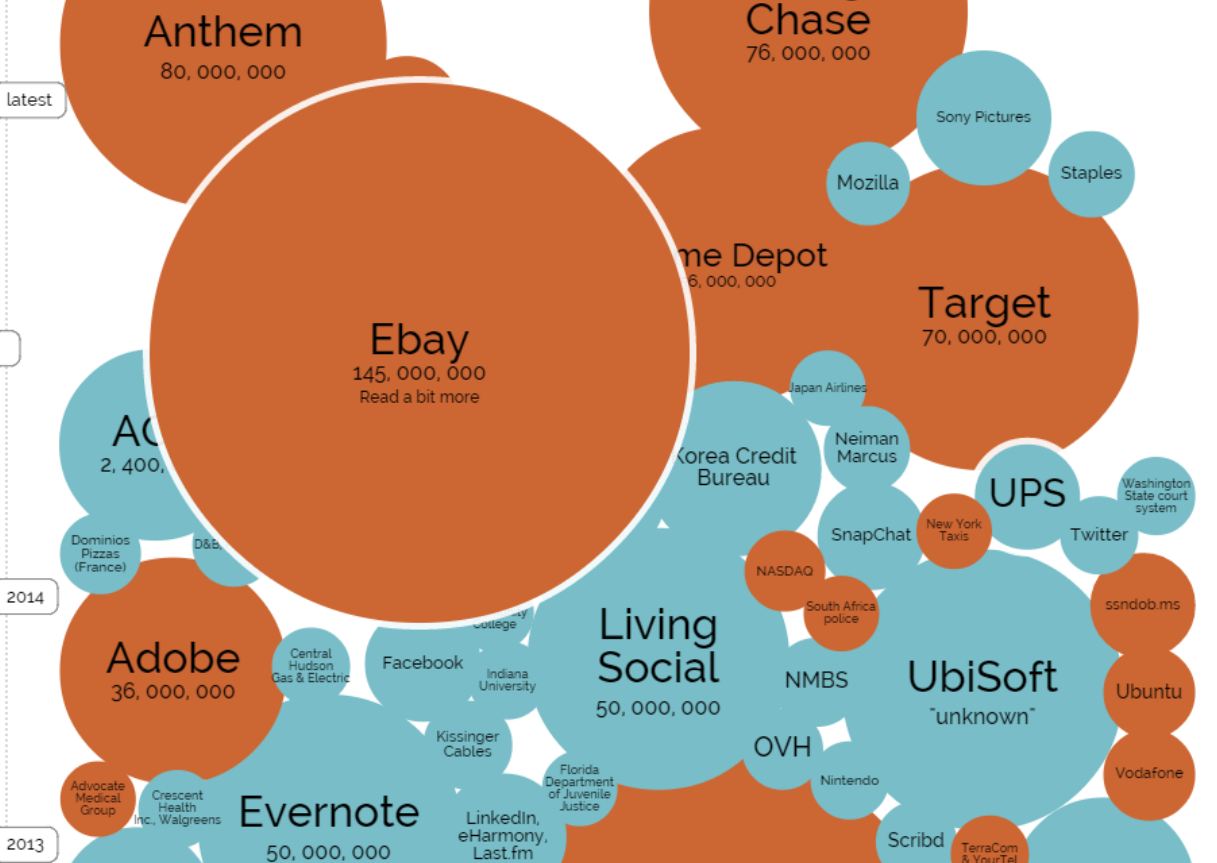
For something more visual, Information is Beautiful presented world’s biggest data breaches as bubbles of various size depending on the amount of records lost. Short stories and explanations are also available for some of the incidents.

Breaches

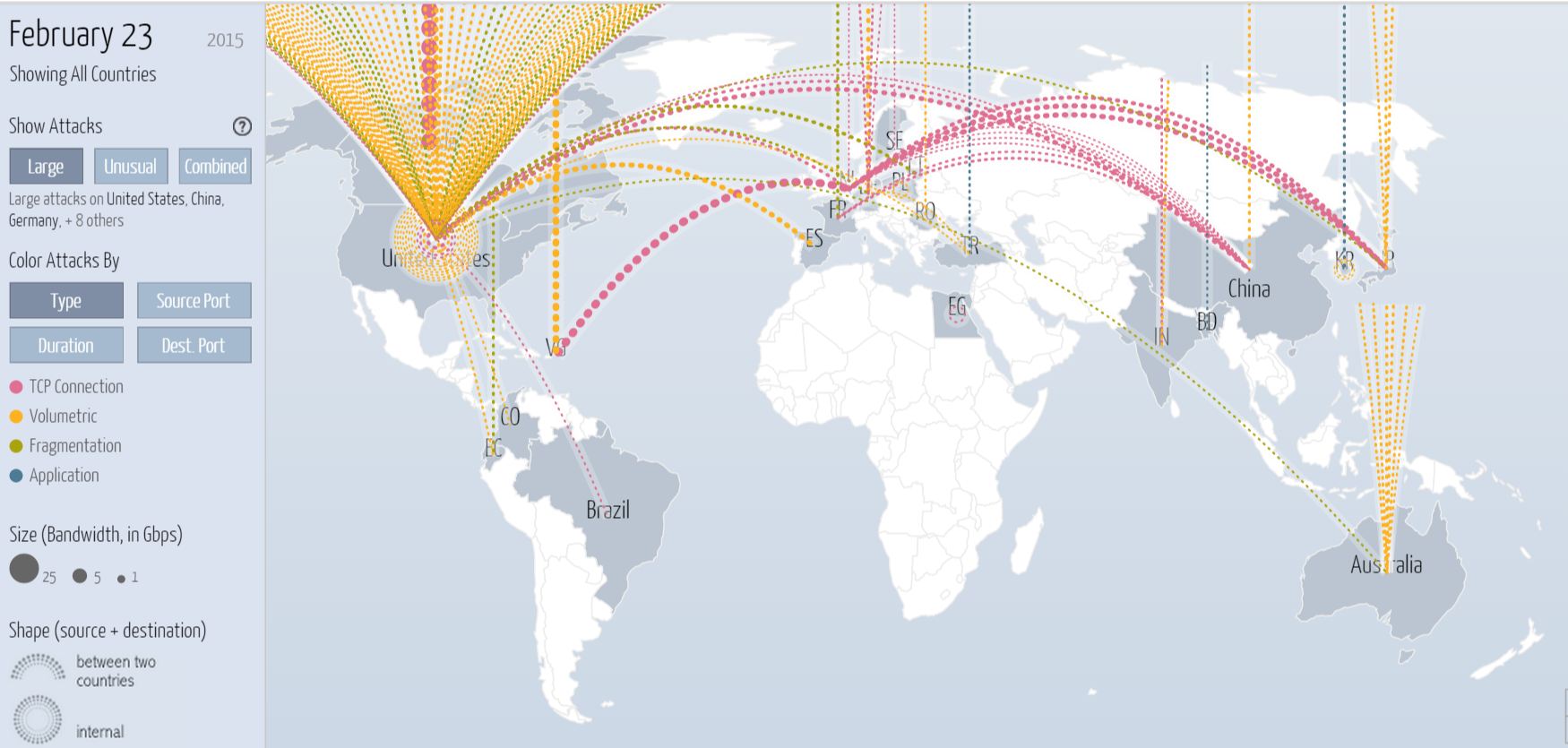
For real-time information, Google developed the Digital Attack Map. It is a live data visualization of DDoS attacks around the globe, built through a collaboration between Google Ideas and Arbor Networks. The tool surfaces anonymous attack traffic data to let users explore historic trends and find reports of outages happening on a given day.

DDoS

Sherwood Applied Business Security Architecture

SABSA

I completed my SABSA Foundation training, passed the exam and earned the.SABSA Chartered Security Architect credential.

SABSA is a proven methodology for developing business-driven, risk and opportunity focused Security Architectures at both enterprise and solutions level that traceably support business objectives. It is also widely used for Information Assurance Architectures, Risk Management Frameworks, and to align and seamlessly integrate security and risk management into IT Architecture methods and frameworks.
SABSA is comprised of a series of integrated frameworks, models, methods and processes, used independently or as an holistic integrated enterprise solution, including:

  • Business Requirements Engineering Framework (known as Attributes Profiling)
  • Risk and Opportunity Management Framework
  • Policy Architecture Framework
  • Security Services-Oriented Architecture Framework
  • Governance Framework
  • Security Domain Framework
  • Through-life Security Service Management & Performance Management Framework