How to land cyber deliverables: from strategy to impact

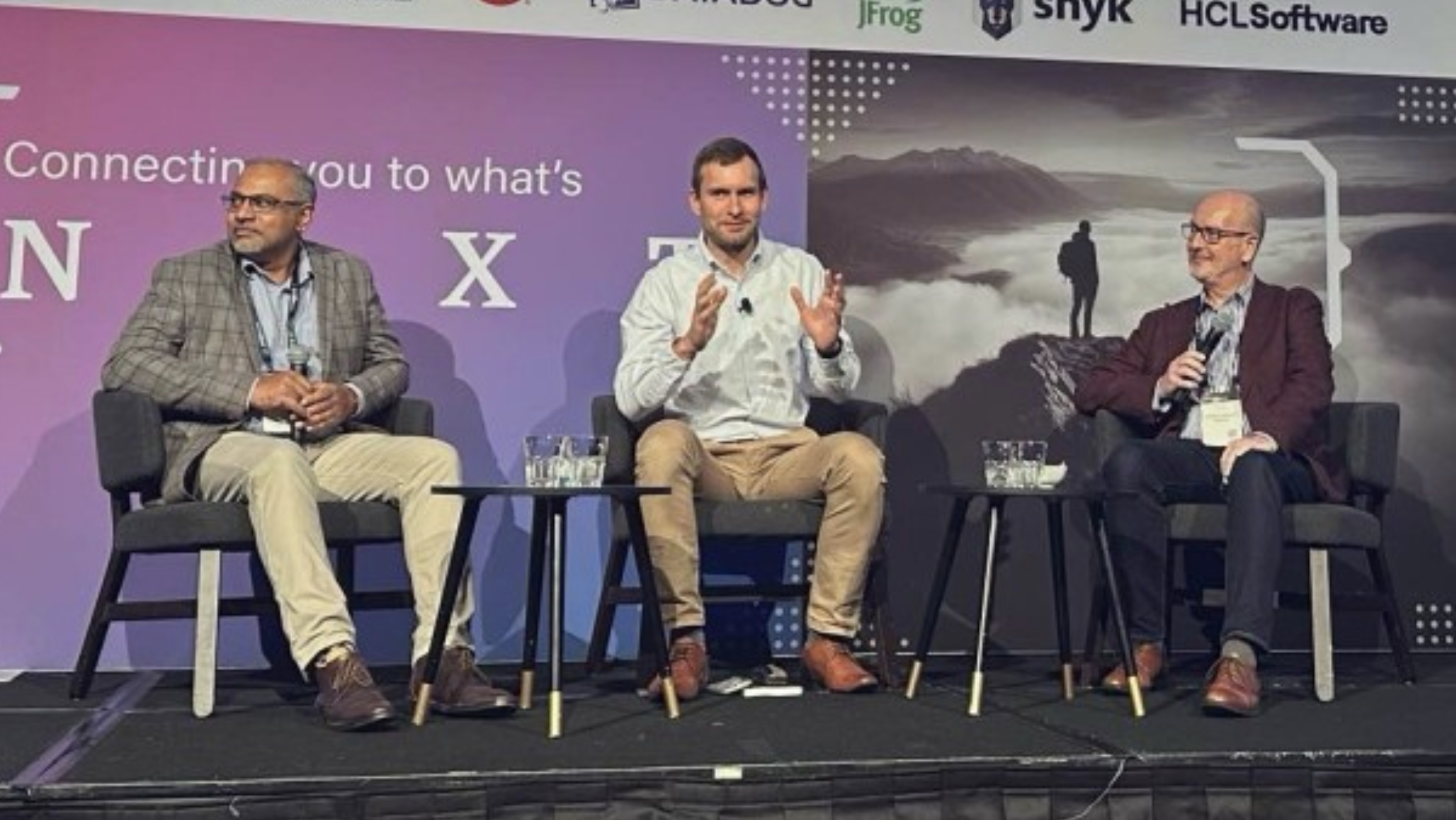
It was good to moderate a discussion on bridging the gap between strategy and execution. Great, candid conversation and plenty I’ll take back to the office.

Key takeaways:

☑️ Buy-in happens when you translate risk into business impact, work across functions and deliver early, visible wins.

☑️ Common pitfall: a glossy PowerPoint deck with no delivery plan. Convert vision into smaller, time-boxed outcomes with clear owners.

☑️ What makes the difference: realistic roadmaps, measurable OKRs (outcomes not activity), empowered teams and a steady governance cadence that removes blockers.

Thanks to the panelists and everyone in the audience who challenged orthodoxies – I learned as much as I hope I gave.

More

Accelerating innovation in Health as a HealthTech mentor

A big moment at the 10x Demo Day with Edmond Sorich and Eléonore Cluzel.

Health 10x, in collaboration with The George Institute for Global Health, is a unique national program accelerating the business growth of startups building affordable and scalable solutions for major health challenges.

It was a privilege to support GLIA Diagnostics developing the first portable, accurate brain injury diagnostic device over the past twelve weeks as an advisor and mentor.

More

Change management and cyber security

Adapted from Kotter, J. 2007, ‘Leading change: Why transformation efforts fail’, Harvard Business Review, vol. 73, no. 2, pp. 1–10.

Cyber security leaders have to be effective change agents to be successful. Cyber capability uplift and risk reduction initiatives often require significant transformation in the organisation. In this blog, I’ll introduce a tried and tested change management framework and demonstrate its application to cyber security in an illustrative case study.

More

Implementing cyber security strategy

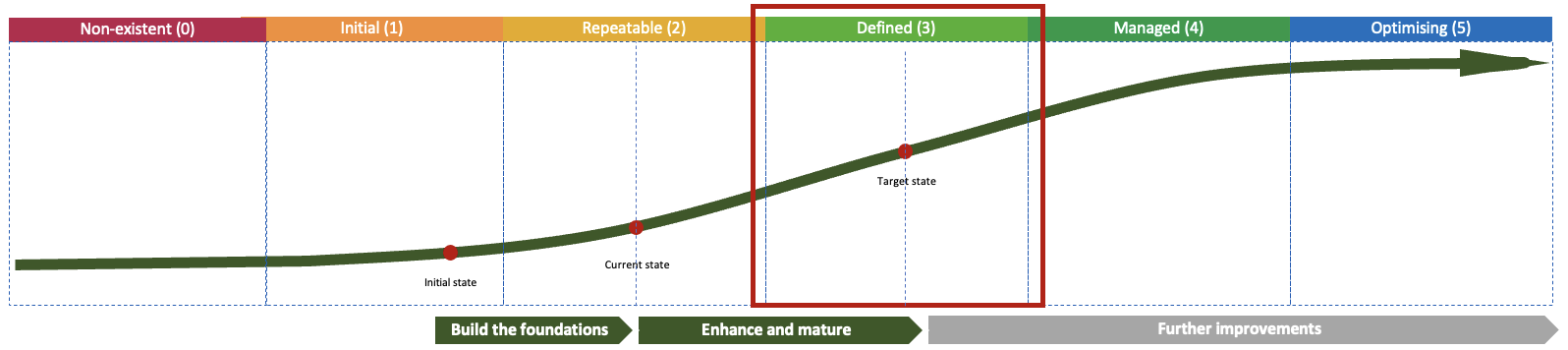
Illustrative example: cyber roadmap

CISOs and security leaders are often called upon to develop a security strategy. It’s an important step to understand what your current state is, in what direction you’re going and the roadmap to get there. It’s also an opportunity to demonstrate how cyber security activities and programs align to business objectives.

There is more to the CISO role than just setting the direction, however. It’s also about execution. As a security leader, it’s key to take ownership of the strategy and deliver on its promise. It’s useful, therefore, to be able to track progress against your objectives and demonstrate to the executive leadership team and the Board the impact the security team is making in enabling the business.

More

Applying Lean practices to security

Photo by siddhu2020 https://flic.kr/p/61m23G

I had an opportunity to follow the Lean Silver Belt pathway of Cardiff University’s Lean Competency System and work with a coach to deliver measurable business process improvement in the workplace. This resulted in significant cost savings for the business and was supported by the official accreditation.

A lot of it is to do with the mindset: spotting inefficiencies, eliminating waste and continuous improvement are at the core of the approach. It’s also about applying these concepts and techniques to real world challenges.

More

Agile security at scale

Scaled Agile Framework (SAFe) provides a way for the entire organisation to work in an agile way, not only software engineers. Security professionals, lawyers, compliance specialists and procurement teams are encouraged to engage in sprints (or ‘iterations’) too. You don’t have to write code to participate in a retrospective.

I recently had an opportunity to apply some of the Agile practices in my latest cyber security projects while going through formal Leading SAFe training at work.

Many ideas are not new, especially if you worked with Scrum previously, but they don’t have to be in order to be effective. The framework serves more as a collection of principles and a menu of techniques that can be used to transform large organisations that have ‘always done things that way’.

More

The complexity of communication

As someone who worked for both large multinationals and small tech startups, I’m often asked whether the scale of the organisation matters when building security culture.

I think it does. Managing stakeholders and communication gets increasingly complex in larger organisations. In fact, the number of communication paths tends to increase dramatically with every new stakeholder introduced to the network.

I’ve had the privilege to advise a number of smaller companies in the beginning of their journey and I must admit it’s much more effective to embed secure behaviours from the start. We talk about security by design in the context of technical controls – it’s no different with security culture.

While working as a consultant, I helped large corporations with that challenge too. The key is to start small and focus on the behaviours you want to influence, keeping stakeholder engagement in mind. Active listening, empathy and rapport building are essential – just rolling out an eLearning module is unlikely to be effective.

The role of a CISO

I’m often asked what the responsibilities of a CISO or Head of Information Security are. Regardless of the title, the remit of a security leadership role varies from organisation to organisation. At its core, however, they have one thing in common – they enable the businesses to operate securely. Protecting the company brand, managing risk and building customer trust through safeguarding the data they entrusted you with are key.

There are various frameworks out there that can help structure a security programme but it is a job of a security leader to understand the business context and prioritise activities accordingly. I put the below diagram together (inspired by Rafeeq Rehman) to give an idea of some of the key initiatives and responsibilities you could consider. Feel free to adapt and tailor to the needs of your organisation.

You might also find my previous blogs on the first 100 days as a CISO and developing an information security strategy useful.

More

Developing Global Cyber Services

UNADJUSTEDNONRAW_thumb_3078

Over the past year I’ve worked as a core part of the KPMG’s Global Cyber Strategic Growth Initiative as the lead for service development activities, with a focus on working with member firms to deploy capabilities in order to ensure consistent delivery and quality across key growth areas.

I was responsible for the roll-out of cyber security services that included developing sales and delivery accelerators, accreditation requirements, learning pathways, vendor ecosystem and quality and risk management principles across EMEA, APAC and Americas.

To achieve this, I created a service development framework and worked with numerous stakeholders across the firm’s network: global deployment, service development leads, acquisition leads, risk management and key member firm cyber representatives and regional leads.

I also developed a method for the in-country adoption of deployed capabilities and supported both global and in-country risk team members in the evaluation of risk when taking services for client use.

I ensured the sustainability of deployed capabilities through the implementation and use of delivery frameworks and tools, and assigned ownership for the upkeep of deployed capabilities. I worked with member firms to promote the adoption of prioritised services; developed adoption timelines and targets for deployed service.

One of the existing aspects of the role was alliance, acquisition and investment integration support where I collaborated with the relevant stakeholders to deploy and embed offerings obtained through alliances to member firms while monitoring progress against agreed budgets, milestones, deliverables and benefits for capabilities being deployed.

By the end of the programme, I deployed Cyber Maturity Assessment, Identity and Access Management, Industrial Internet of Things Cyber Security, Privacy and Cyber Incident Response services to 19 countries around the world.

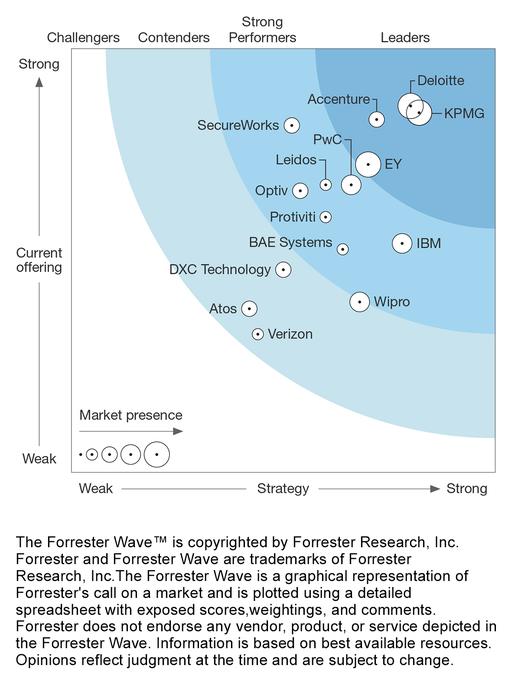
This resulted in achieving significant revenue and market share growth for cyber security services of my firm globally. KPMG International was also named a leader in information security consulting services in 2016 and 2017 according to Forrester Research.
cq5dam.web.512.99999