Discussing Human Aspects of Information Security

June 11 (1)

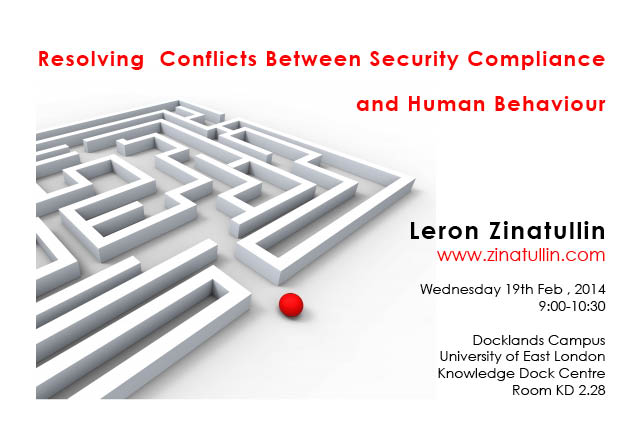
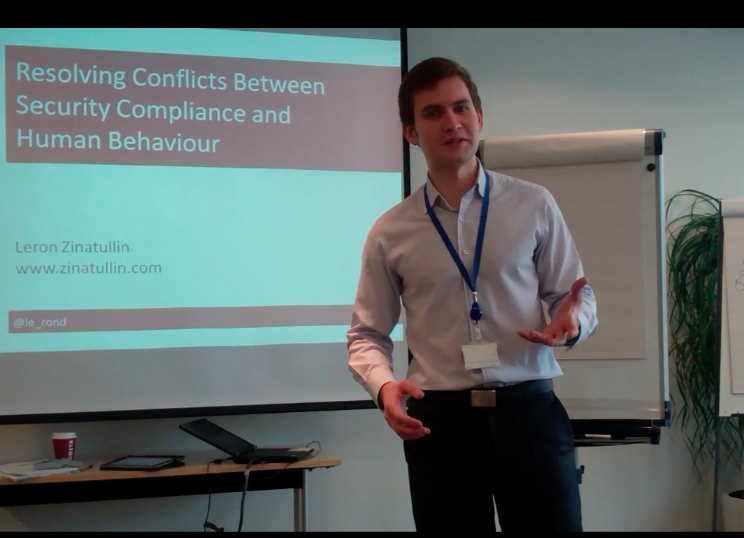
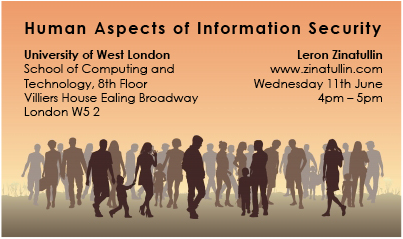
I delivered a seminar on the human aspects of information security at the University of West London. We discussed conflicts between security and productivity in companies and possible solutions. Research students with different backgrounds helped to drive the debates around usability, awareness and policy design.

We also talked about the practical applications of behavioural theories, where I shared my views on user monitoring and trust in organisations within the context of security culture.

Daniel, one of the participants, summarised his experience in his blog.

Image courtesy of Vlado / FreeDigitalPhotos.net

Delivering a Seminar at the IT Security & Computer Forensics Pedagogy Workshop

HIGHER EDU

I presented at the HEA STEM Workshop on human aspects of information security.

The aim of the workshop is to share, disseminate and stimulate discussions on: the pedagogy of teaching subjects related to IT security and computer forensics, and issues relating to employability and research in these areas.

During the workshop the speakers presented topics that focus on: delivery of innovative practical tutorials, workshops and case studies; course design issues; demand for skills and employment opportunities; countering the “point & click” approach linked to vendor supplied training in industry; and current research exploring antivirus deployment strategies.

Risks to Risk Management

Nasim Taleb in his book The Black Swan provides the following examples of Mirage Casino’s four largest losses:

  • $100 million from a tiger mauling
  • Unsuccessful attempt to dynamite casino
  • Neglect in completing tax returns
  • Ransom demand for owner’s kidnapped daughter

How many of these losses could’ve been identified and managed appropriately?

John Adams in his research Risk, Freedom and Responsibility suggests that “Risk management is not rocket science – it’s much more complicated.” He further elaborates on this point in his research: “The risk manager must […] deal not only with risk perceived through science, but also with virtual risk – risks where the science is inconclusive and people are thus liberated to argue from, and act upon, pre-established beliefs, convictions, prejudices and superstitions.”

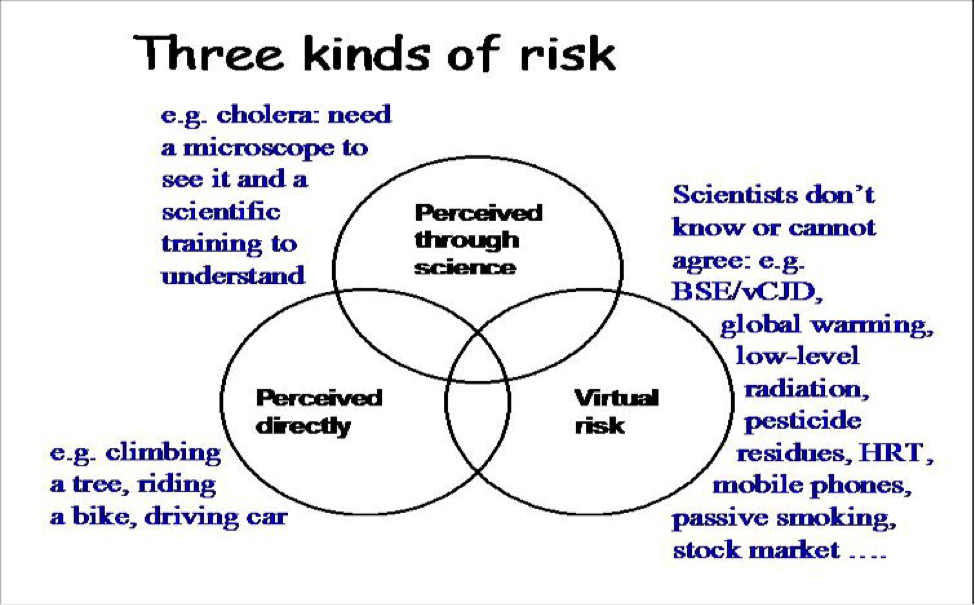
According to Adams, there are three types of risk:

three_kinds_or_risk

  • Directly perceptible risks are dealt with using a proper judgment. “One does not undertake a formal, probabilistic, risk assessment before crossing the road.”
  • Risks perceived through science are subject to formal risk managementprocess.  “Here one finds not only biological scientists in lab coats peering through microscopes, but physicists, chemists, engineers, doctors, statisticians, actuaries, epidemiologists and numerous other categories of scientist who have helped us to see risks that are invisible to the naked eye. Collectively they have improved enormously our ability to manage risk – as evidenced by the huge increase in average life spans that has coincided with the rise of science and technology.”
  • Virtual risk is not perceived through science, hence people are forced to act based on their convictions and beliefs.“Such risks may or may not be real, but they have real consequences. In the presence of virtual risk what we believe depends on whom we believe, and whom we believe depends on whom we trust.”

Klein in his Streetlights and shadows: searching for the keys to adaptive decision making suggests the following issues with risk management:

  • It works best in well-ordered situations
  • Fear of speaking out may result in poor risk identification
  • Organisations should understand that plans do not guarantee success and may result in a false sense of safety
  • Risk Management plans may actually increase risk.

Klein also identifies three risk decision making approaches:

  • Prioritise and reduce
  • Calculate and decide
  • Anticipate and adapt

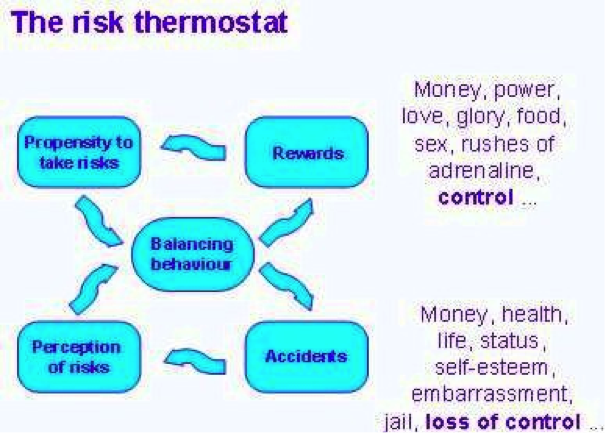
To illustrate individual’s decision-making process while dealing with risk, Adams introduces another concept called “Risk thermostat”

risk_thermostat

The main idea behind it is that people vary in their propensity to take risks which is influenced by the perception of risk, experience of losses, and potential rewards.

People tend to overestimate spectacular but rare risks, but downplay common risks. Also, personified risks are perceived to be greater than anonymous risks.

The protection measures also can be introduced to only increase perceived security, rather than implement actual mechanisms. A possible example might be using National Guard in airports after 9/11 to provide re-assurance. However, such a security theatre has other applications in relation to motivation, deception and economics.

Finally, Adams discusses the phenomenon of risk compensation and appropriate adjustments which take place in the risk thermostat. He argues that introducing safety measures changes behavior: for example, seat belts can save a life in a crash, so people buckle up and take more risks when driving, leading to an increased number of accidents. As a result, the overall number of deaths remains unchanged.

Giving a talk at the University of Greenwich

presentation

I was invited to the University of Greenwich to discuss career opportunities in the information security field. We had a productive discussion with the young people who are finishing their degree in Computer Security and Forensics. After the presentation I was introduced to several PhD students who are currently researching various issues around privacy and social media. I’m very happy that people are becoming more interested in solving information security and privacy issues.

Research Proposal: People and Security

UCL - research proposal
Purpose: The study aims to develop a model to support security managers’ decision-making process when implementing security policies in their organisations and incorporates users into the system in a way that mitigates the negative impact of users’ behaviour on security controls

Background: Security managers in companies lack a clear process to implement security controls in order to ensure compliance with various regulations and standards. The company can be formally compliant but still inefficient in performing its revenue-generating activities.
Security managers may take ISO 27001 standard as a framework and then make a decision on any particular implementation based on their experience. Such implementations run the risk of creating collisions with users’ business activities and result in violation of security policies in the company, because they introduce friction with the business process. Users try to avoid such friction. It is important, however, to differentiate between malicious non-compliance and cases when security policy obstructs business processes leading to workarounds. There is a mismatch between users’ and security managers’ perception of workload, introduced by security tasks

Method: To achieve the goal of the study, a combination of quantitative and qualitative methods is applied to research the perception of information security by both users and security managers.

Research benefits. The model points a security manager in the direction of a better understanding of the users in his company.  It provides the means to gain an insight into users’ core business activities and reflect on how they relate to the security tasks. This can help security managers to come up with more usable security policies and reduce the number of potential complaints, and instances of violation of security policy.
Moreover, this model can help the security manager to understand how much time users in his company spend on various security activities. This information can be used to make better investment decisions, and help in security policy optimisation. Additionally understanding that the security manager’s decisions affect the whole organisation may result in cost savings from pre-implementation security analysis and its relation to main business processes of the company

Giving a seminar at the University of East London

Poster

This morning I delivered a seminar for a group of graduate students at the University of East London. An enriched mix of participants from various degrees, including information security, forensics, and IT law made the classroom discussions very interesting.
I was very glad to see that students were very eager to learn more about the subject and were willing to share their ideas and experience.  We were even able to managed to identify new research opportunities in the field of economics of information security.
East London small
After the presentation, I facilitated a workshop which was designed based on a case study around USB drive encryption. This exercise helped the students to understand the perspective of both a security manager and an end-user on the same problem.

Image courtesy of Stuart Miles / FreeDigitalPhotos.net

Information security policy compliance, business processes and human behaviour

This article aims to review the literature on information security policy compliance issues and their relation to core business processes in the company and users’ behaviour. It also provides an insight into particular implementation examples of the ISO 27001 Standard, and methods of analysis of the effectiveness of such implementations.

Information security

Information security issues in organisations have been brought up long before the rapid development of technology. Companies have always been concerned with protecting their confidential information, including their intellectual property and trade secrets. There are many possible approaches to addressing information security. Wood [30] points out that security is a broad subject including financial controls, human resource policies, physical protection and safety measures. However, Ruighaver et al. [23] state that information security is usually viewed as a purely technical concern and is expected to have the same technical solution. On the other hand, Schneier [25], Lampson [17], and Sasse and Flechais [24]  emphasise the people aspect of security, and people play crucial role as they use and implement security controls.

As stated by Anderson [3], it is essential to properly define information security in order to pay merit to all these aspects.

The Standard for Information Security Management ISO 27001 [32] defines information security as “the protection of information from a wide range of threats in order to ensure business continuity, minimize business risk, and maximise return on investments and business opportunities.”

Dhillon [10] states security issues in organisations can arise due to absence of an information security policy. One of the ways to implement such a security policy is to take ISO 27001 standard as a framework.

ISO 27001 Standard

ISO 27001 Standard which is a member of the ISO 27000 standards family evolved from British national standard BS7799 [31]. It aims to provide guidance on managing the risk associated with threats to confidentiality, integrity and availability of organisation’s assets. Such assets, as defined in ISO 27001 [32] include people, software, hardware, services, etc.

Doherty and Fulford [11], Von Solms [28], and Canavan [8] all came to the conclusion that well-established standards such as ISO 27001 might be a stepping-stone to implementing good information security programs in organisations.

However, Anttila and Kajava in their study [4] identify the following issues with ISO 27001 Standard:

–       The standard is high-level and basic concepts are not presented consistently in the standard.

–       It is hard to measure business benefits from implementing this standard.

–       Presented process management is not fully supporting current business practices.

–       The standard struggles to recommend solutions to contemporary business environments.

Neubauer et al. [19] in their research states that the main problem with security standards, including ISO 27001 is their “abstract control definition, which leaves space for interpretation”. Furthermore, the authors suggest that companies focus on obtaining formal certification and often do not to assess and put in place the adequate security controls according their main business goals. Ittner et al. [14] support this point, adding that organisation also fail to estimate the effectiveness of the investments in such initiatives.

According to Sharma and Dash [26], ISO 27001 does not provide detailed guidance requires substantial level of expertise to implement. Moreover, the authors claim that “If risk assessment is flawed, don’t have sufficient security and risk assessment expertise, or do not have the management and organizational commitment to implement security then it is perfectly possible to be fully compliant with the standard, but be insecure.” Results of their study suggest that the organizations, which participated in the study implemented information security mainly to comply with legal and regulatory requirements. The consequence of that was low cost-effectiveness of such implementations. However, the researcher don’t analyse the level of users’ acceptance of implemented controls. The authors also fail to recommend an approach which would support security manager’s decision-making process in implementing ISO 27001 Standard controls.

Karabacak and Sogukpinar in in their paper [16] present a flexible and low-cost ISO 17799 compliance check tool.  The authors use qualitative techniques to collect and analyse data and sate that “the success of our method depends on the answers of surveyors. Accurately answered questions lead to accurate compliance results.” However, the researchers stop short of analysing the impact of compliance with security policy on users’ behaviour. The authors do not consider the issue that a security manager’s decisions regarding a particular implementation of security policy affects that organisation as a whole and may introduce additional cognitive burdens to users. These issues in extreme cases (e.g. obstructing core business processes) may result in non-compliance as users prioritise their primary task.

Vuppala et al. their study [29] discuss their experience from implementing ISO27001 information security management systems. One of the most important lessons learnt was developing an understanding of the role of users’ behaviour in this process. The authors recommend to “not make drastic changes to the current processes; this will only infuriate the users. Remember, users are an important, if not the most important, part of the overall security system.”

Human behaviour

Johnson and Goetz in [15] conducted a series of interviews with security managers to identify main challenges of influencing employees’ behaviour. The results of this study revealed that security managers rely extensively on information security policies, not only as a means of ensuring compliance with legal and regulatory requirements, but also to guide and direct users’ behaviour.

To explore the question of the impact on users’ behaviour while implementing security policies, the following theories were researched:

1. Theory of Rational Choice – a framework, which provides insight into social and economic behaviour. It implies that users tend to maximise their personal benefits [13]. Beautement et al. in their paper [6] uses this theory to  build a foundation explaining how people make decisions about whether to comply or not to comply with any particular information security policy.

Herley [12] suggests that it is rational for users not to comply with security policy, because of the perceived risk reduction is lower than the effort needed.

2. Protection Motivation Theory – a theory which describes four factors that individuals consider when trying to protect themselves [22]:

–       perceived severity

–       probability of the adverse event

–       efficiency of the preventive behaviour

–       self-efficiency

Siponen builds on this theory to gain an understanding of the attitude of individuals towards compliance with security policies. Siponen refers to it in order to study the impact of the punishment on the actual compliance and on intention to comply [27], [20].

3. The Theory of General Deterrence – this suggests that users will not comply with the rules if they are not concerned with punishment [1].

4. Theory of Planned Behaviour – this suggests that subjective norms and perceived behavioural controls influence individuals’ behaviour [2]. Siponen [27] and Pahnila [20] discovered that social norms play a significant role in users’ intention to comply.

These theories suggest that to effectively protect a company’s assets, the security manager should develop and implement security policies not only to ensure formal compliance with legal and regulatory requirements, but also to make sure that users are considered as a part of the system. Policies should be designed in a way that reduces the mental and physical workload of users [1], [6].

Business process visualisation and compliance

It is important to consider information security compliance and users’ behaviour in the context of a company. Users in organisations involved into activities, which could be presented as business processes.

Business process is defined as a set of logically related tasks (or activities) to achieve a defined business outcome [9].

The continuous monitoring of their business processes is essential for any organisation. This can be achieved by visualisation of business processes [21]. However, they are usually complex, due to number of different users or user roles in large companies [7]. Barrett [5] also argues that it is essential to create a “vision of the process” to successfully reengineer it.

Namiri and Stojanovic in their paper [18] present a scenario demonstrating a particular business process and implement controls necessary to achieve compliance with regulatory requirements. The authors separate business and control objectives, introducing two roles: a business process expert, who is motivated solely by business objectives, and a compliance expert, who is concerned with ensuring compliance of a given business process.

References

[1]        Adams, A. and Sasse, M.A. 1999. Users are not the enemy. Commun. ACM. 42, 12 (Dec. 1999).

[2]        Ajzen, I. 1991. The theory of planned behavior. Organizational Behavior and Human Decision Processes. 50, 2 (Dec. 1991).

[3]        Anderson, J.M. 2003. Why we need a new definition of information security. Computers & Security. 22, 4 (May 2003).

[4]        Anttila, J. and Kajava, J. 2010. Challenging IS and ISM Standardization for Business Benefits. ARES  ’10 International Conference on Availability, Reliability, and Security, 2010 (2010).

[5]        Barrett, J.L. 1994. Process Visualisation: Getting the Vision Right Is Key. Information Systems Management. 11, 2 (1994).

[6]        Beautement, A. et al. 2008. The compliance budget: managing security behaviour in organisations. Proceedings of the 2008 workshop on New security paradigms (New York, NY, USA, 2008).

[7]        Bobrik, R. et al. 2005. Requirements for the visualization of system-spanning business processes. Sixteenth International Workshop on Database and Expert Systems Applications, 2005. Proceedings (2005), 948–954.

[8]        Canavan, S. 2003. An information security policy development guide for large companies. SANS Institute. (2003).

[9]        Davenport, T.H. and Short, J.E. 2003. Information technology and business process redesign. Operations management: critical perspectives on business and management. 1, (2003), 1–27.

[10]     Dhillon, G. 2007. Principles of information systems security: text and cases. John Wiley & Sons.

[11]     Doherty, N.F. and Fulford, H. 2005. Do Information Security Policies Reduce the Incidence of Security Breaches: An Exploratory Analysis. Information Resources Management Journal. 18, 4 (34 2005).

[12]     Herley, C. 2009. So long, and no thanks for the externalities: the rational rejection of security advice by users. Proceedings of the 2009 workshop on New security paradigms workshop (New York, NY, USA, 2009).

[13]     Herrnstein, R.J. 1990. Rational choice theory: Necessary but not sufficient. American Psychologist. 45, 3 (1990).

[14]     Ittner, C.D. and Larcker, D.F. 2003. Coming up short on nonfinancial performance measurement. Harvard business review. 81, 11 (2003), 88–95.

[15]     Johnson, M.E. and Goetz, E. 2007. Embedding Information Security into the Organization. IEEE Security Privacy. 5, 3 (2007).

[16]     Karabacak, B. and Sogukpinar, I. 2006. A quantitative method for ISO 17799 gap analysis. Computers & Security. 25, 6 (Sep. 2006).

[17]     Lampson, B.W. 2004. Computer security in the real world. Computer. 37, 6 (2004), 37–46.

[18]     Namiri, K. and Stojanovic, N. 2007. Pattern-based design and validation of business process compliance. On the Move to Meaningful Internet Systems 2007: CoopIS, DOA, ODBASE, GADA, and IS. Springer. 59–76.

[19]     Neubauer, T. et al. 2008. Interactive Selection of ISO 27001 Controls under Multiple Objectives. Proceedings of The Ifip Tc 11 23rd International Information Security Conference. S. Jajodia et al., eds. Springer US. 477–492.

[20]     Pahnila, S. et al. 2007. Employees’ Behavior towards IS Security Policy Compliance. 40th Annual Hawaii International Conference on System Sciences, 2007. HICSS 2007 (2007).

[21]     Rinderle, S.B. et al. 2006. Business process visualization-use cases, challenges, solutions. (2006).

[22]     Rogers, R.W. 1975. A Protection Motivation Theory of Fear Appeals and Attitude Change1. The Journal of Psychology. 91, 1 (1975).

[23]     Ruighaver, A.B. et al. 2007. Organisational security culture: Extending the end-user perspective. Computers & Security. 26, 1 (Feb. 2007).

[24]     Sasse, M.A. and Flechais, I. 2005. Usable Security: Why Do We Need It? How Do We Get It? Security and Usability: Designing secure systems that people can use. L.F. Cranor and S. Garfinkel, eds. O’Reilly.

[25]     Schneier, B. 2003. Beyond Fear: Thinking Sensibly About Security in an Uncertain World. Springer.

[26]     Sharma, D.N. and Dash, P.K. 2012. Effectiveness Of Iso 27001, As An Information Security Management System: An Analytical Study Of Financial Aspects. Far East Journal of Psychology and Business. 9, 5 (2012), 57–71.

[27]     Siponen, M. et al. 2010. Compliance with Information Security Policies: An Empirical Investigation. Computer. 43, 2 (2010).

[28]     Solms, R. von 1999. Information security management: why standards are important. Information Management & Computer Security. 7, 1 (Mar. 1999).

[29]     Vuppala, V. et al. Securing a Control System: Experiences from ISO 27001 Implementation.

[30]     Wood, M.B. 1982. Introducing Computer Security. National Computing Centre.

[31]     BS, BS7799 – Information Technology – Code of practice for information security management, London: BS, 1995.

[32]     ISO/IEC, ISO/IEC 27001 – Information technology – Security techniques – Information security management systems – Requirements, Geneva: ISO/IEC, 2005 and Draft for the new revision ISO/IEC JTC 1/SC 27 N10641, 2011.

Methodology of Research Study

IMG_1481

Within the channel of research two main analytical methods can be used:

–       Quantitative

–       Qualitative

Bell [2] argues that quantitative and qualitative approaches each have their own weaknesses and strengths. Hence, researchers should choose the appropriate technique according to their objectives and needs. Moreover, researchers can move from one approach to the other if it will bring benefit to their study.

Quantitative Research Methods

Quantitative research methods help researchers to support their hypothesis by testing various theories and existing research results [10].  Large sample sizes are often used to collect data and draw more general conclusion [14]. However, quantitative research approaches may not provide a sufficient amount of detail regarding participants’ attitudes and motivations.

Questionnaires

A questionnaire can help a researcher to collect larger volumes of information compared to interviews. Furthermore, they have reduced bias, which interviews typically introduce through personal interactions. Questionnaires can provide anonymity for the participants; hence more honest responses may be expected. This is relevant when the subject matter is sensitive, for example, security.

However, the main limitation of questionnaires is low response rates, which makes it difficult to collect large amounts of data. To overcome this limitation and achieve higher response rates follow-up e-mails should be sent and follow-up calls should be made in order to remind participants to take part in the survey [8].

Qualitative Research Methods

Creswell [8] characterises the qualitative approach as being focused mainly on participants’ experience and perceptions as expressed in words rather than numbers. Qualitative research methods allow researchers to use less structured instruments to collect information on participants’ thoughts and motivations. This gives the researcher the opportunity to look for common patterns, which is particularly useful in areas where little or no existing research has been done.

However, qualitative research methods are more time consuming to undertake and may result in smaller samples being used. Further, small samples result in issues surrounding repeatability of the study, and also subjectivism of responses, hence less reliability and less ability to apply to other situations outside the test conditions

For instance, Bjorck [4] adopts qualitative methods to collect information and draw conclusions on the implementation of information security management systems according to ISO 17799  Standard. In his paper, the author studies the attitude and behaviour of information security consultants’.

Interviews

Interviews can be time consuming and expensive. Moreover, face-to-face interaction allows the researcher to introduce additional bias [11]. Nevertheless, interviews are still commonly used in various research fields, because of the flexibility and deep insight into human perceptions and motivations which they allow.

According to Berg [3], Patton [12], and Briggs et al. [5] interviews can be divided into the following categories:

–      Structured interviews – these are standardised questionnaires, similar to quantitative research methods. They tend to be less biased, because the questions asked are always the same and in the same order. However, it reduces flexibility.

–      Semi-structured interviews – these are guided discussions with open-ended questions. The interviewer prepares questions in advance, but some questions might very well emerge during the process of the interview.

–      Unstructured interviews – these are similar to an informal conversation, which can be beneficial if the interviewer needs to collect additional information. However, it could be difficult to manage the interview and stay within the research question.

Using Grounded Theory

Following from Corbin and Strauss [7], a theory which is derived from collected information can provide valuable insights into real-world situations. For this reason, the Grounded Theory Method can be used to analyse interview data. Answers could be grouped into categories in order to discover possible patterns and derive meaningful conclusions. Corbin and Strauss [7] outline the following types of coding for analyzing the data

–       Open coding – basic categorization based on identified similarities.

–       Axial coding: – introducing sub-categories and connecting it with main categories.

–       Selective coding – revealing the connections between main categories in the study, integration of categories.

Adopting this approach would allow the collection, documentation, and analysis of interview materials, whilst interviewees freely express their thoughts and attitudes towards security compliance and behavior issues in their company.

Using a combination of quantitative and qualitative methods

According to Tashakkori and Teddlie [15], Carr [6], and Bandyopadhyay et al. [1] using the combination of both quantitative and qualitative may yield better outcomes, because it will help to overcome the weaknesses of each particular method, as well as combining strengths and achieving high-quality results. For instance, Rainer et al. [13] adopted a similar approach when researching the issue of risk analysis processes for information technology. Doherty and Fulford [9] decided to use a questionnaire when carrying out their study on the question of application of information security policies in companies. They then identified the need to apply more qualitative methods to research this area.

References

[1]        Bandyopadhyay, K. et al. 1999. A framework for integrated risk management in information technology. Management Decision. 37, 5 (Jun. 1999).

[2]        Bell, J. and Goulding, S. 1984. Conducting small-scale investigations in educational management. Harper & Row in association with the Open University.

[3]        Berg, B.L. 2004. Qualitative research methods for the social sciences. Pearson Boston.

[4]        Bjorck, F. 2001. Implementing Information Security Management Systems–An Empirical Study of Critical Success Factors. Lic thesis. Stockholm University & Royal Institute of Technology. (2001).

[5]        Briggs, A.R. et al. 2012. Research methods in educational leadership and management. Sage Publications.

[6]        Carr, L.T. 1994. The strengths and weaknesses of quantitative and qualitative research: what method for nursing? Journal of Advanced Nursing. 20, 4 (1994).

[7]        Corbin, J. and Strauss, A. 2008. Basics of Qualitative Research: Techniques and Procedures for Developing Grounded Theory. SAGE.

[8]        Creswell, J.W. 2013. Research design: Qualitative, quantitative, and mixed methods approaches. Sage Publications, Incorporated.

[9]        Doherty, N.F. and Fulford, H. 2005. Do Information Security Policies Reduce the Incidence of Security Breaches: An Exploratory Analysis. Information Resources Management Journal. 18, 4 (34 2005).

[10]     Flick, U. 2009. An Introduction to Qualitative Research. SAGE.

[11]     McIlwraith, A. 2006. Information Security and Employee Behaviour: How to Reduce Risk Through Employee Education, Training and Awareness. Gower Publishing, Ltd.

[12]     Patton, M.Q. 2005. Qualitative Research. Encyclopedia of Statistics in Behavioral Science. John Wiley & Sons, Ltd.

[13]     Rainer Jr, R.K. et al. 1991. Risk Analysis for Information Technology. J. of Management Information Systems. 8, 1 (1991).

[14]     Scandura, T.A. and Williams, E.A. 2000. Research Methodology In Management: Current Practices, Trends, And Implications For Future Research. Academy of Management Journal. 43, 6 (Dec. 2000).

[15]     Tashakkori, A. and Teddlie, C. 1998. Mixed Methodology: Combining Qualitative and Quantitative Approaches. SAGE.

Comparing views on security compliance behaviour in an organisation

The purpose of this post is to provide a comprehensive analysis of the data collected from the survey and semi-structured interviews to compare views on information security activities from security managers’ and users’ viewpoints.

Methodology

Survey

A survey was developed to collect information from a broad sample on attitudes of the users’ towards information security policies in their organisations in general, and how compliance with information security policies affects their behaviour in particular. It was quantitatively analysed.

Method

The main goal of the survey was to assess the attitude of the end-users towards information security policies in their companies and measure the level of dissatisfaction with security tasks. Prior to the questions, all participants were shown a page with the explanation of the purpose of the study, approximate time to complete the survey, the researcher’s contact information, and their rights to withdraw their answers at any time. After getting participants’ consent by clicking the “Next” button, they were asked to answer the eleven multiple-choice questions. The first four questions were designed to gather demographic information about the participants for future analysis: participants were asked to provide information on their gender, age, the number of years of work experience, and the industry sector. The subsequent seven questions were aimed at gathering insight on users’ attitude towards information security policies in their companies and the way they make their compliance decisions. Participants were asked to:

  1. Indicate their attitude towards security policy in their company.
  2. Assess the effectiveness of implementation of the security policy in their company.
  3. Estimate the approximate time they spend weekly on various security activities, such as password changes, antivirus checks, anti-phishing checks, awareness training, encryption, etc.
  4. Indicate their attitude towards the impact which security activities have on their overall performance: respondents were presented with a statement “I believe security activities negatively affect my overall performance” and were asked to choose one of the following four answers: “strongly agree”, “agree”, “disagree”, and “strongly disagree”.
  5. Assess the degree of concern of the security manager in their company with users’ main business goals and tasks.
  6. Assess the frequency of the prevention of security controls from accomplishing their main business tasks.
  7. Indicate their attitude towards the possibility of violation of the security policy if it prevented them from accomplishing their main business activities.

The survey was advertised on social networks (LinkedIn, Facebook) to recruit participants for the survey. A sample of specific interest was created to include people with relevant job experience.

Results

This section presents detailed end-users’ survey findings. Results are described in the order of their appearance in the survey. 64 responses were collected.

End-users’ demographic characteristics

Results show that the majority of the sample (40 out of 64 participants) were male. They also illustrate that 32 out of 64 participants are in the 18 to 24 age group, and that 29 out of 64 are in the 25 to 34 age group. A relatively small number of participants (only 3 people) are older than 35 years. The members of the most populated group (22 out of 64 participants) are in the beginning of their careers and have less than one year worth of work experience. The following figure presents the distribution of respondents by industry sector.

Distribution

Distribution of respondents by industry sector

Attitude towards security policy in the company

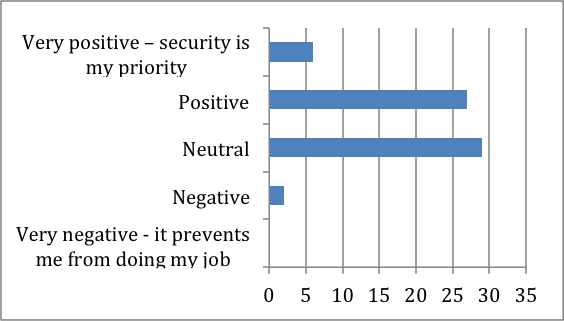
The results of the survey show that 51% of participants share a positive outlook towards information security in the company (6 have chosen “very positive” option and 27 “positive”). 29 respondents share a neutral attitude towards information security in the organisation. Only 2 participants indicated a negative attitude.

Attitude

Attitude towards security policy

View on the implementation of the security policy in the organisation

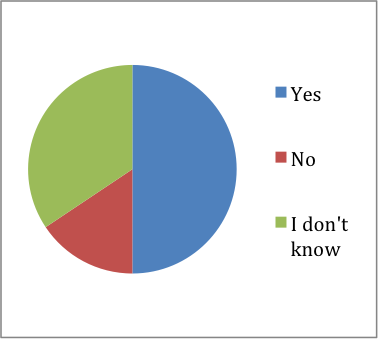
50% of participants think that information security policy is effectively implemented in their compamy. However, 34% of the population struggled to provide an opinion on this matter.

Effectivness

Effectiveness of implementation of the security policy

Time spent by users on security activities

A large majority (80%) feel that they spend less than 30 minutes per week in total on security tasks. However, there are 4 respondents that share the perception that they have spent over an hour on security activities in the course of the past week.

 time

Time spent by users on security activities

Impact on users’ overall performance

37 participants disagree with the statement that security negatively impacts their overall performance and 12 participants strongly disagree with it, although, there is 1 respondent who strongly agrees.

 Impact

Impact on users’ overall performance

Assessing the degree of concern of the security manager in the company with users’ main business goals and tasks

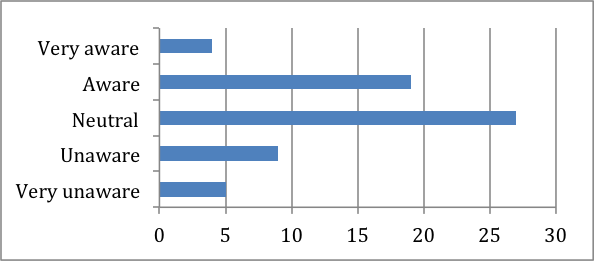
Most of the participants (27 out of 64) believe that their security manager is rather neutral towards users’ business activities. 19 participants feel that their security manager is aware of their day-to-day tasks.

 Degree

Degree of concern of the security manager in the company with users’ main business goals and tasks 

Instances of obstructing core business processes

30 respondents cannot recall any instances in which security controls obstructed their business activities. On the other hand, the results of the survey show more than 50% experienced problems at least once a year, and in many cases more regularly because of the security policy.

 Instances

Instances of obstructing core business processes

Information security policy violations

Results show an almost equal split between people when faced with the statement “I would violate security policy if it prevents me from accomplishing my main business tasks” who are willing to violate security policy in order to get their job done and those who make the decision to comply even in this case.

 violations

Information security policy violations

Discussion

Individual response analysis shows that some people can’t recall situations whereby security policy prevented them from accomplishing their core business activities, however they still perceive security as something that hinders their performance. Other participants also didn’t indicate such instances more frequently than approximately once every three months

frequency

Frequency of collisions in relation to perception of negative impact on users’ performance

Individual response analysis also allowed revealing the fact that there is a person, who strongly agrees that security tasks affect his/her performance. This individual’s answer of the question on the perceived number of instances when security policy prevented him/her from accomplishing their main business task shows that he/she experiences difficulty performing business activities on a daily basis. The anonymous nature of the survey didn’t allow the researcher to conduct a follow up interview to gain an insight on this particular case. Moreover, high number of responses “I don’t know” to the question regardless the effectiveness of implementation of the security policy may indicate that the criteria for effectiveness were not clearly defined. Furthermore, using social networks as a sample to survey users negatively affected the researcher’s ability to generalise the results. The presented sample contains mostly young people with relatively small amount of work experience. This fact makes it difficult to drive conclusions, because perception of the employees towards security task may change with time in the job. Given the limitations, results show that more than 23% of participants believe that security tasks negatively affect their overall performance. This outlines the major concern for the organisations, because it directly affects company’s ability to generate revenue. According to the survey results, 20% of participants responded that they spend approximately one hour per week on various security tasks.

Interviews

The second stage was conducted as an exploratory study with five information security experts. This section presents a descriptive analysis of the semi-structured interviews with information security experts.

Method

The main goal of the semi-structured interviews was to gather an insight on information security manager’s awareness of the fact that his decisions on particular implementation of security controls affect organisation as a whole, and that his actions may negatively impact users’ performance in core business activities. The interview questions were designed to gather information on security manager’s ability to distinguish between instances of malicious non-compliance and instances when security controls obstruct users’ main business tasks was gathered. All information security experts selected to participate in the study have seven or more years of work experience in the field of information security and are currently holding managerial positions in their companies. Materials and feedback from the two pilot interviews, which were not included in the current project, were then used to refine the questions and procedures for the following interviews, so that they focus more on relevant topics and group them into categories. When patterns started to emerge, the data were then evaluated. The Grounded Theory analysis revealed that the most common codes: –       Security manager’s decision-making process on particular implementation of security controls –       Relation between business and security goals –       Detection of instances of non-compliance –       Reaction to instances of non-compliance –       Security manager’s awareness of how security policy implementation affects users’ behavior –       Difficulties in measuring impact of users’ behaviour. –       Security manager’s awareness of users’ typical business activities –       Effect of understanding of users’ business activities on security manager’s decision-making process

Results

Results are grouped into codes, which were developed in line with the Grounded Theory: – Security manager’s decision-making process on particular implementation of security controls: Interview results suggest that 4 out of 5 interviewed security managers use their past experience when implementing security policy. One security manager suggested that security policy was already implemented in his organisation. – Relation between business and security goals: all security managers understand the role of information security as a supporting process. – Detection of instances of non-compliance: all interviewed experts rely on both formal and informal channels of detecting instances of non-compliance. – Reaction to instances of non-compliance Interview results suggest that 4 out of 5 interviewed security managers tend to try to understand the root cause of the problem first. One security manager indicated that he is not directly involved into investigation of such incidents. – Security manager’s awareness of how security policy implementation affects users’ behaviour: 4 out of 5 security managers believe that they aware of the impact of security controls on users’ behaviour. One security manager suggested that he doesn’t have resources for that. – Difficulties in measuring the impact of users’ behaviour: all experts experience some difficulties in assessing the impact on users’ behaviour. – Security manager’s awareness of users’ typical business activities: 4 out of 5 security managers indicated their awareness of users’ day-to-day tasks. One security manager mentioned that he doesn’t have enough time for this. – Effect of understanding of users’ business activities on security manager’s decision-making process: all of the interviewed experts agree that it is beneficial to understand users’ business tasks.

Discussion

This section presents a discussion of interview findings.

Security manager’s decision-making process on particular implementation of security controls

Interview data reconfirms that security managers mostly use their own judgment and past experience when making a decision on particular implementation of information security controls. As explained in a quote: “When I’m making a decision to implement ISO 27001 standard in my organization, half of that decision is what the particular policies would actually look like. Because ISO 27001 is very high-level and it is by all means not a policy in itself, it just gives you one or two criteria or one or two suggestions how your security policies should look like. Because of this freedom of implementation, you actually have to write these policies yourself.”

Relation between business and security goals

Interviewed security experts also understand the role of involving the business management in the process of implementing security controls. For example, one security manager mentioned: “If there is no benefit to the business – you don’t do it.” Another expert reinforces his point by saying: “Get the people who these controls directly affect. You should start with the business. Get their buy-in; although they might view it as an additional workload, hence most people involved in this security initiative might produce sub-standard work.“ Interviewed security managers also think that business objectives should always be the priority. For example, one expert commented: “Many security managers think that security is the most important thing. I personally don’t think so. Paying shareholders is the most important. Inhibiting those activities or encouraging dangerous activities because of what you are doing you are making the situation worse.” The results illustrate that interviewed security managers understand that their decisions affect the whole organisation.

Detection of instances of non-compliance

Participants of the interview are aware of various methods to detecting non-compliance. For example, one expert mentioned: “I walk around this building on occasion and I wiggle doors and I check workstations for locked screens. The other way you find out is by rumours or chatting with people.” The results revealed that security experts rely on both formal (e.g. periodic security reviews) and informal (e.g. rumours, complains) channels of detecting non-compliance.

Reaction to instances of non-compliance

Most interviewed security managers agree that you should not punish users for non-compliance right away. You have to first understand the root cause of the problem. For instance, one expert suggested: “You don’t react on non-compliance with anger. You try to find out why it happened, rather than the fact that it has failed. Moreover, you can use it as a possibility for education and awareness and possibility for improvement.” Another expert reinforces this point saying: “At the end of the day it failed because with high probability you implemented it badly, because you forced some particular way of working or method which they can’t use, so they worked around it.” According to the results, understanding the reason behind the non-compliance is important for most of the interviewed experts.

Security manager’s awareness of how security policy implementation affects users’ behaviour

Most of the interviewed security experts believe that they are to a certain degree aware of the impact of the security policy on users’ behavior. One security manager said: “Yes, I think I’m aware of that, because when it affects it in a negative way – we hear about it. There are lots of complains.” Some participants backed-up their statements with examples. One security manager mentioned: “When users want to look at Excel spreadsheet or use an application using iPad but they can’t, because security controls don’t allow access to the business applications via an iPad. So they have to use a laptop rather than device of their own choice. So yes, we are aware of that tension, but we tend to enable people to do what they need to do.” Interview results suggest that such awareness is in the direct relation to the number of users’ complains. However, nobody mentioned proactive way of assessing this impact.

Difficulties in measuring impact of users’ behaviour.

Several security experts stated that it is difficult to assess the impact of security controls on users’ behaviour. For example, one mentioned: “We never measured it. We don’t have a way of measuring it. So we don’t know.” Another expert agrees with him: “One thing is putting controls in place and the other is measuring effectiveness. Around users it is very difficult. Because they are not like a server, where you can say here is CPU optimisation.” However, one security expert strongly disagrees with the fact that he should take behavioural impact into consideration. He said that: “Why should I care? Why this is relevant to my job – caring about users is not part of my job responsibilities. I have limited resources to ensure compliance – how am I going to stretch that to areas outside of my direct responsibility?”

Security manager’s awareness of users’ typical business activities

Some security experts, who participated in the interviews, mentioned that they are aware of the users’ business task to the degree which is required to successfully manage projects. Once a security manager stated that: “At a high level we are aware. At the detailed process level really only when we are doing a project in that department. When we need to understand the process within the project.” Another expert provides an example supporting the same argument: “When we do a particular project on a new system. Say, for instance, it’s a new credit card system being implemented we work through the user’s role, we work through the general data storage, so we become familiar with that particular department’s user activities.” The results show that some interviewed security managers believe that they are capable of understanding of users’ day-to-day business activities and that they make their decisions on the particular implementation of security controls according to this knowledge.

Effect of understanding of users’ business activities on security manager’s decision-making process

All of the interviewed experts agree that knowledge of what users in their company are doing can help them in better implementation of information security policy. One security manager shared an example of that: “For instance we worked with our studio manager and looked at the process of data transfer to the client. We have chosen one particular brand of encrypted USB keys, we believe that adoption would be very high, because they are great looking devices. It feels good for our creative workers to give it to the client with our logo on it, rather than sharing data using cheap plastic USB stick – there is no story, there is no sort of emotional attachment, which is so particularly important for creative workers. But in order for us to come with such a decision we actually spend some time observing and understanding our users.”

Conclusion

The results show that the majority of security managers, who participated in the survey, understand the importance of making the user part of the system and assessing possible impact on users’ behaviour when deciding on implementation of particular security controls. However, they agree on that their awareness of users’ business activities is reactive and based mainly on the users’ complains. Small number of interviewed security experts makes it problematic to generalise the results. Moreover, all of the interviewed security managers have substantial amount of work experience (they were chosen to have minimum seven, however some of them have more than twenty years of experience), which may affects the results. Those security experts tend to work in the companies with mature information security processes in place. Interviewing expects with less amount of experience may yield different results.

Discussion

Results of this section provide an insight on how security managers and users view the importance of compliance behaviour in organisations. Analysis of the interview and survey results show that presented method is capable of identifying the existence of the problem: there is a huge gap between perception of security policy by users and security managers, which negatively impacts the organisation as a whole. Most of the interviewed security managers think that they consider users part of the system and aware of the impact of their action on users’ behaviour. However, survey results indicate that more that 23% users believe that security negatively affects their performance. Moreover, 20% of participants spend approximately one hour weekly on various security activities. Current interview and survey data suggests a difference in the perception of the users and security managers exists due to the differing opinions presented, but doesn’t prove this is the case and the information comes from different contexts. Running the study inside an organisation would overcome this limitation. The issue the difference in the perception of the users and security managers should be studied more thoroughly. The study should be conducted in one company to directly compare the view of managers and users from the same organisation, which is critical to showing if a difference in opinion really exists. Moreover, the research should be conducted with a broader and better-quality sample to ensure that the results could be generalised. More participants from various backgrounds should form the sample.