Security compliance behaviour conflicts resolution model

This article presents the model for analysis and visualisation of a company’s security policy building on the example scenario in relation to productive business activities.

The model aims to provide the means of comparing the perception of security tasks from both users’ and security managers’ points of view and optimising security activities in the company.

A guide for the security manager

On the one hand, violation of compliance requirements may result in significant losses for an organisation. On the other hand, poorly implemented security policies may obstruct users’ goal-driven behaviour and may result in non-compliance.

The scenario suggests that the CISO takes ISO 27001 as a framework and then makes a decision on a particular implementation based on his knowledge and past experience. As illustrated by the scenario lack of clear guidance in this decision-making process may result in the situation in which a company is formally compliant with the standard but users perform their core business activities inefficiently and/or are forced to violate poorly implemented security policies.

By directly comparing security requirements and business processes, the security manager can analyse ISO 27001 policy compliance controls and their consequences in terms of affecting user behaviour.

In order to ensure that users in the organisation will comply with security policies, the security manager should broaden his perspective and make users a part of the system. It is important to differentiate between malicious non-compliance and cases when security policy obstructs core business process.

Policy compliance
Yes No
Primary task optimised Yes V (X)
No (V) X

Relation between policy compliance and optimisation of the primary task

“V” – CISO is satisfied with users’ compliance efforts.

“X” – CISO is not satisfied with users’ compliance efforts.

“(X)” – the case when users perform their tasks efficiently, but not compliant with security policy.

“(V)” – the case when users are formally compliant with security policy, but it prevents them from carrying out their tasks efficiently.

The table emphasises the fact that regardless of formal compliance, users’ perform their core business activities in the inefficient manner due to poorly implemented security controls. The security manager also should pay attention to cognitive burdens and availability aspects of recommended solutions.

In order to mitigate the risk of poor implementation of security controls, the security manager should follow clear processes when implementing ISO 27001 controls.

process

Such guidance supports the security manager’s decision-making process. This method also gives the security manager an opportunity to reflect on his policy implementation in the context of the particular scenario.

Going beyond formally ensuring compliance, this method presents two rounds of compliance checks:

–       Check if organization is compliant (formal box-ticking exercise)

–       Check for collisions with core users’ tasks.

Visualisation technique

In order to minimise the probability of repeating scenario the security manager should pay more attention to users’ day-to-day business activities.

As a first step of the process, the security manager should gain an insight on users’ typical business activities. After understanding typical business activities, the security manager could visualise them for example in form of the workweek schedule.

main_BP

User’s main business process

For instance, the security manager finds out that the analyst runs data analysis software to model risks on Thursday to include this data in his report, which he usually presents at the end of each week to the client.

Furthermore, by gathering information on users’ manual security tasks, the information security manager estimates current users’ workload.

manual

User’s manual security tasks

The information security manager identifies unique security tasks that users undertake during the week and use this information to make those tasks invisible to user. In this case, users would feel less obstructed in completing business tasks. But those activities are still taking place in the background. Only by identifying them, mapping them, and prioritising them could the security manager then do something about them.

Next, as a part of security pre-implementation process of security controls, the security manager looks at scheduled security activities, such as periodic security awareness workshops, review of software and data on users’ workstations or full machine antivirus scans.

scheduled

Scheduled security activities

Merging all these diagrams together helps the security manager to understand total users’ workload and come up with a more effective implementation of security controls, which will not introduce collisions with core security tasks.

total

Total user’s workload

In order to make a decision on a particular implementation of security controls, the security manager should identify how users in his company perceive their security workload and which security tasks they carry out already.

At the moment, there is a possibility to of misconception of perceptions of security tasks of security managers and users. Developed model addresses this issue and helps the CISOs to manage their decision-making process more effectively. Moreover, comparing the security manager’s and users’ perceptions helps to uncover a number of unique security activities, and the amount of time users spend on them.

Validation of the model

The purpose of this section is to validate the model and gather relevant feedback from information security experts.

Method

An interview questionnaire was developed to interview information security experts and collect their opinion on the developed model.

Written consent was collected prior to the interview to explain ethical and privacy points. Additionally, permission to use voice-recording device was obtained for future analysis.

Information, regarding interview procedure, intended questions and brief overview of the study were sent to all participants in advance via e-mail. At least 2 days were allowed for participants to examine the materials and prepare for the interview.

Five interviews were conducted out with information security experts. Every interview took place at participant’s office and at convenient time.

Feedback, provided by information security experts was documented and analysed according to grounded theory method. The following codes were identified:

–       Degree of realistic implementation

–       Potential benefits

–       Business advantages

–       Practical implementation

–       Impact on security manger’s decision-making process

–       Other ways of dealing with the similar issues

–       Drawbacks of the model.

Results

Information in this section is presented according to codes, which were discovered during interview process and further data analysis.

  1. Degree of realistic implementation: all security managers agree that developed model is realistic and can be implemented in the real-world company.
  2. Potential benefits: all interviewed experts believe that the model is beneficial to their organizations.
  3. Business advantages: 3 out of 5 security experts were able to name possible economic advantages of implementing the model.
  4. Practical implementation: 2 out of 5 interviewed security managers agreed to run pilot testing of the model in their organisation.
  5. Impact on security manager’s decision-making process: 4 out of 5 interviewed experts stated that presented model changed their attitude towards compliance behaviour issues. One security manager commented that this model doesn’t affect his decision-making process.
  6. Other ways of dealing with the similar issues: no other ways of dealing with issues of impact of users’ behaviour in a proactive manner were presented.
  7. Drawbacks of the model: all interviewees agree that implementation of the model might be time- and resource-consuming.

Discussion

This section presents a discussion of interview findings.

Degree of realistic implementation

All the interviewed experts agree that the model could be implemented in the real-world scenario, but commented that it should be refined and validated with the real data. For example, one security manager said:

“I think the approach is sound and it’s realistic, but needs validation with the real data. And in the absence of the real data it’s got rather limited value.”

Another expert commented:

“I think that’s all sounds very interesting. You are definitely on the right track, but you need to collect more data to validate this model.”

Another security manager said:

“I believe it is realistic if it works, it will be relevant to any business. I don’t think many have considered practically addressing this dimension of security in their organisations.”

Potential benefits

Security experts can see the potential benefits of implementing developed model in their companies. For instance, one expert said:

“I think that issue of usability and security is really important. Understanding where those tensions are and then represent those tensions might in some way help us to understand the cost associated with mitigating the risk.”

Another security manager commented:

“This model might help us to highlight where we can be creative and do something slightly different to make it easier for users to do what they want to do and do it in the default secure way. So yes, anything that can help us shed light on that going to be beneficial.”

One expert said:

“I think it’s beneficial, because it allows you to channel these thought about users’ workflow versus your workflow. How we squeeze security tasks all together with business activities.”

Business advantages

According to the experts, developed model yields some direct economic benefits for the company. For example, one security manager suggested:

“It is a very relevant model also from resource management perspective. How is my staffs’ time being utilised? Am I utilising my staff for the best? ”

One security expert suggested, that presented model can help him to make better decisions regarding risk assessment and investments in information security controls:

“It can be very valuable input into our risk assessment process and into our security investment decision-making process. Do we want to invest in one security tool or the other? Your model can provide means to compare security investment opportunities.”

Another expert agrees:

“You can understand what the business process is and what security solution would fit the best in order to maximise value.”

Another security manager’s quote supports the same point:

“Security really struggles to justify return on investment. What you could do is if you actually will break it down, saying that during the day typical user spends thirty minutes doing security activities. That cost, say 2 million pounds for a user. Does this security control bring 2 million worth saving in a year? If yes, or more, then it worth it. If no, then maybe you are doing the wrong controls. When maybe you should accept the risk. For example, yes maybe USB stick may introduce a virus to the system. Fine, but don’t spend five minutes every time scanning it.”

Practical implementation

Some security managers agreed to run a pilot test in his company. One expert commented:

“It provided a different prospective on security – we have not considered how specific security controls may affect user behavior and productivity. I would be happy enough to run it as a small pilot to see if it yields promised results.”

Another said:

“If it could be used as a means to ensure greater user efficiency/reduced non-compliance, we could consider including it in our security review.”

This indicates that the model could be implemented in the real-world companies for the future analysis.

Impact on security manger’s decision-making process

The majority of security mangers mentioned that presented model made them realise the impact of their actions on users and how they might struggle with particular security controls they implemented in the company.

Some security mangers came up with particular scenarios of how they would now make decision on implementation of security controls: On expert said: 

“As a result you can make a decision to implement a technology solution that going to scan all the USB sticks in the background, rather than making each and every user do it manually. The cost of such implementation would be justified by you model. It will save user’s time and you can get security benefit as well.”

However, one security manager confessed that this model would not change the way he makes decision on security policy implementation:

“If it ain’t broken – don’t fix it! If the process we have in place is already compliant, I will not risk changing it just to satisfy the users who are not complaining anyway.”

The results imply that developed model helped most of the security managers to change their attitude towards compliance behaviour in their companies.

Other ways of dealing with the similar issues

All of the interviewed security managers agree that they are not actively dealing with issues of negative impact of security controls on users’ performance. One expert said:

“It’s very passive. The impact on users is important but it’s not the issue I spend a lot of time thinking about.  Our approach is more reactive. The model presented, on the other hand, is more proactive technique.”

Another commented:

“Very informally. We don’t really draw on a real data. I think, having a framework of some description would be very useful. Something that focuses that kind of thinking.“

One security manager said that he never considered users being part of the system, hence never used any techniques, as mentioned in the following quote:

“We never considered user compliance from this perspective before – so have not considered / applied alternative principles.”

Drawbacks of the model

All interviewees agree that implementation of the model might be time- and resource-consuming. One expert commented:

“You need an easier way to implement it – that’s the biggest challenge. Because you need to come up with all users’ business tasks, then all security tasks, and then map them all together. All these things have to also be categorised and measured. And humans a very difficult to measure.”

Another manager mentioned:

“Getting it implemented I see as a big challenge. But once it’s implemented you can get a really good value.”

Another commented:

“The method is very good, but it takes a lot of effort to compile this.”

Despite identified possible benefits, the model is considered to be difficult to implement. Cost-benefit analysis could be performed to support the decision on the implementation of the model.

Conclusion

According to the security experts, the model can yield additional benefits to the company, such as optimisation of security activities, cost reduction, and information security projects investment justification.

The interview results reveal the main benefit of the model: it points a security manager in the direction of a better understanding of the users in his company.  It provides the means to gain an insight into users’ core business activities and reflect on how they relate to the security tasks. This can help security managers to come up with more usable security policies and reduce the number of potential complaints, and instances of violation of security policy.

As some of the interviewees suggested, the security manager can implement this model in any company: all he has to do is to pick a process, pick a regulation and then apply the model.  Moreover, this model can help the security manager to understand how much time users in his company spend on various security activities. This information can be used to make better investment decisions, and help in security policy optimisation. Additionally understanding that the security manager’s compliance decisions affect the whole organisation may result in cost savings from pre-implementation security analysis and its relation to main business processes of the company.

Despite the potential benefits, the model has drawbacks. Interview results suggest that implementation of the model might be cost- and resource-consuming. To assess the degree of such problem, real-world data should be collected. Moreover, as one expert mentioned, the model has limited value in the absence of the real data. The limited time scope of the current project didn’t allow the validation of the model with such data. Furthermore, access to the real data was restricted due to protective attitude of the companies who don’t want to be seen in bad light.

Attitudes towards information security policy and its effect on users’ business activities should be measured before and after implementing the model in the company in order to assess the effectiveness of the model.

MSc Information Security research project: Overview of the methods and materials

It is difficult to ensure effectiveness of information security programme in the company without paying attention to users’ behaviour. One of the challenges for the security manager, when implementing information security policy, is to differentiate between malicious non-compliance and non-compliance due to the obstruction of business activities.

The main goal of this project is to gain an insight into information security behavior issues, from both an end-users’ and security managers’ perspectives. The study aims to develop a model to support security managers’ decision-making process when implementing security policy in the organisation. It is important to help security managers make a user a part of the system and to go beyond formal box-ticking when ensuring compliance with legal and regulatory requirements.

In order to achieve the objectives of the study, a method consisting of three parts was followed, including presenting example scenario and development of the model to address the research question for the first part, a survey and interviews for the second part, and interviews for the third part.

Stage one: Develop a model

The objective of the first stage is to motivate the research problem, presenting example scenario of poorly implemented security policy in the fictitious company, and to develop a model to support security manager’s decision-making process in implementing security controls in a company.

The example scenario presents the hypothesis that users’ experience and role of the manager are mismatched. Manager may think that user’s effort is unlimited. At the moment there is no way of directly comparing users’ and security manager’s perception of behavioural impact of security policy in the organisations.

The model is developed to support security managers’ decision-making process when implementing security policy in a company and to provide a tool of assessing users’ workload with security tasks.

The following stage shows that described mismatch exists and the developed model deals with the outlined problem.

Stage two Comparing views on security compliance behaviour in an organisation

The aim of the second part is to gather real-world data to highlight the importance of security compliance behavior and identify relevant problems which can arise when a security manager chooses a particular way of implementing information security controls in the organization. Moreover, this part aims to compare views of security managers and users on the problem of compliance behaviour.

For the purpose of this stage a combination of qualitative and quantitative methods was used.

1

As a part of the quantitative method, semi-structured interviews with five information security experts were conducted. In parallel 64 users were surveyed using an online surveying platform. For the purpose of the survey, eleven multiple-choice questions were developed, in collaboration with an academic with experience in this field.

Stage three: Validation of the developed model

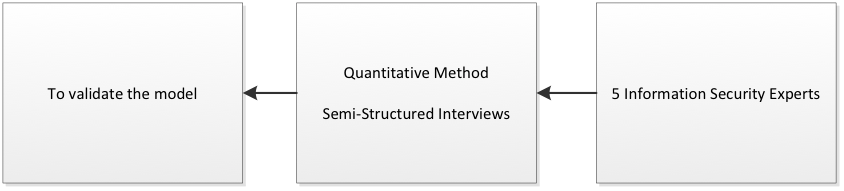
The goal of the third stage of the study was to validate the model and gather relevant feedback from information security experts.

Five semi-structured interviews were conducted with information security experts.

2

Invitations for an interview were also distributed to outline the approximate duration of the interview, intended questions, to give insight on the procedure and to provide high-level information on the study.

Written consents were collected from the interviewees prior to the interview.

Interviews with security experts consisted of two parts:

  1. General questions on the security manager’s decision-making process regarding the implementation of security controls when ensuring compliance within the company (Stage two).
  2. Validating the model to support the security manager’s decision-making process (Stage three).

Pilot interviews were first carried out. Feedback gathered from the pilot interviews was used to improve model presentation technique, modify existing questions, and add new questions. Materials from the pilot interviews were not included in the thesis.

Each interview took approximately 50 minutes. All interviews were conducted face-to-face and at participants’ offices at a time convenient for them.

In the second part of the interview the same experts were presented the model after they had answered the question around validation of the importance of compliance behaviour. The study aims to assess how the presented model changed their decision-making process when thinking in terms of making users an essential part of the system.

Audio recordings were subsequently used by the researcher to develop interview transcripts, parts of which are presented in this work to support various points and provide insight on relevant issues.

MSc Information Security thesis abstract

speak

Security managers in companies lack a clear process to implement security controls in order to ensure compliance with various regulations and standards.

Interviews with experts show that security managers may take ISO 27001 standard as a framework and then make a decision on any particular implementation based on their experience.

Such implementations run the risk of creating collisions with users’ business activities and result in violation of security policies in the company, because they introduce friction with the business process. Users try to avoid such friction. It is important, however, to differentiate between malicious non-compliance and cases when security policy obstructs business processes leading to workarounds.

This piece of research presents example scenarios of such clashes and explores the root causes of events of non-compliance.

A model is developed that supports security managers’ decision-making process and incorporates users into the system in a way that mitigates the negative impact on users’ behaviour of security policy.

A combination of quantitative and qualitative methods is applied to research the perception of information security by both users and security managers: the survey was created and 64 participants were surveyed to gain an insight into users’ perspective of implemented information security controls; semi-structured interviews with five experts were conducted, who have seven or more years of experience in the information security field and currently hold managerial positions.

The study illustrates that company can be formally compliant but still inefficient in performing its revenue-generating activities. Moreover, there is a mismatch between users’ and security managers’ perception: security managers think that they are already paying attention to the users, but 23% users complain that security activities negatively affect their performance.

The presented model is validated by information security experts and provides clear guidance to security managers in organisations as to implementation of security controls. The majority of experts liked the approach, but said that it needs to be tried with real-world processes.

Modelling conflicts between information security compliance and behaviour

With this post I’m starting a series of articles on information security compliance and behaviour issues.

It is important for security managers to understand that their decisions affect the company as a whole.  However, there are instances when business activities and security tasks are not synchronised. For example, the New York Times website was unavailable for several hours on the 14th of August 2013. While a malicious attack was initially suspected, the problem was caused simply by scheduled system maintenance procedure.
On the one hand, violation of compliance requirements may result in significant losses for an organisation. On the other hand, poorly implemented security policies may obstruct users’ goal-driven behaviour and may result in non-compliance.

Security managers and users may share different views on security activities. In order to ensure that users in the organisation will comply with security policies, the security manager should broaden his perspective and make users a part of the system.

Lack of clear guidance in this decision-making process may result in the situation in which a company is formally compliant with the standard but users perform their core business activities inefficiently and/or are forced to violate poorly implemented security policies.

Governance, Risk and Compliance in the Cloud research project

cloudaudit_logocai_logo_clipped

ccm-logoctp-logo

A major UK-based telecommunications company proposed to conduct a joint research  with MSc Information Security students at UCL.

The use of cloud computing as a way of providing and consuming on-demand, pay-as-you-consume ICT service has revolutionised the industry.  Services like Amazon EC2 have seen a huge increase in its revenue. However, currently it is the Small and Medium Enterprises (SMEs) that are leading the way in the use of these public Infrastructure as a Service (IaaS) offerings. 

The company envisages that as these services become more mature and secure, they will be adopted and used by more “traditional” enterprises like the finance, health and government sector.

Governance, Risk and Compliance (GRC) plays a very important role in the IT policies of these institutions and as such, for any solution to be adopted by them, these aspects of the IT policies will have to be considered.  Several initiatives have been started to address this issue. The Cloud Security Alliance’s  GRC Stack is one of the most mature and accepted initiative in this area. It consists of four main stacks – Cloud Controls Matrix, Consensus Assessments Initiative, Cloud Audit and Cloud Trust Protocol.

It was very interesting to participate in the series of workshops to investigate how  this framework would impact and be used by the company. This helped me to learn a lot about the telecoms industry and the way they are adopting cloud technologies in a secure way.

PCI DSS Compliance in a Cloud Computing Environment. Part 3

According to the statistical survey [1] security is one of the main concerns for enterprises when making the decision to outsource their applications and infrastructure to the cloud computing environment

The inability to clearly identify where the sensitive data is stored and how it is processed is a major concern of many companies.

The problem becomes more serious when the enterprise processes cards payments and has to comply with regulatory requirements, such as PCI DSS. A need for compliance of the infrastructure with regulatory requirements plays an important role when having to decide whether to move applications or infrastructure to the cloud.

This chapter will identify specific requirements for PCI DSS compliance in a cloud computing environment and will look at research done in the field of continuous auditing.

1. PCI DSS compliance and virtualization

Virtualization, which serves as a foundation for cloud computing, introduces new unique types of risks that must be taken into consideration when deciding on adopting cloud computing in cardholder data environment. [2]

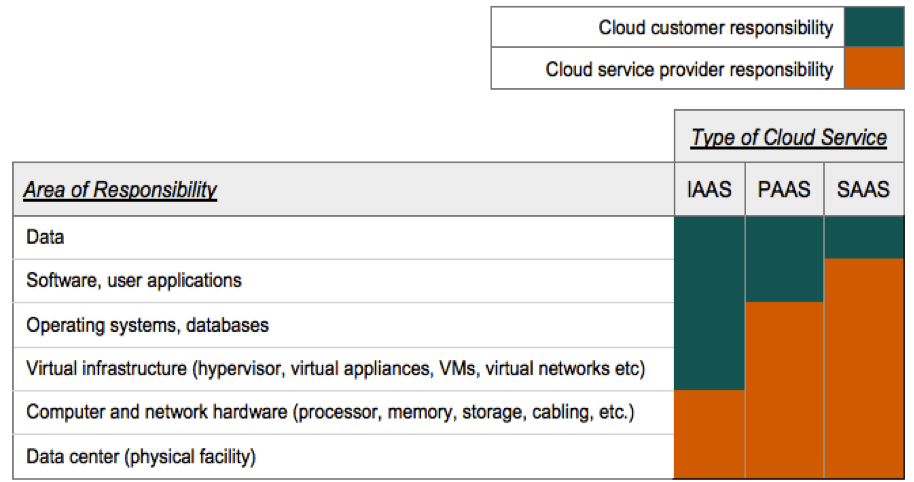
To address these concerns and to achieve PCI DSS compliance in such environment, PCI Security Standards Council issued “PCI DSS Virtualization Guidelines,” providing an example of how scope and responsibility may differ by type of cloud service (Figure 1) [2]

cloud{responsibility

Figure 1 – Area of responsibility by type of cloud service [2]

In their supplement guidance PCI Security Standards Council also focuses on following risks [2]:

– Vulnerabilities in the Physical Environment Apply in a Virtual Environment

– Hypervisor Creates New Attack Surface

– Increased Complexity of Virtualized Systems and Networks

– More Than One Function per Physical System

– Mixing Virtual machines of Different Trust Levels

– Lack of Separation of Duties

– Dormant Virtual Machines

– Virtual machines Images and Snapshots

– Immaturity of Monitoring Solutions

– Information Leakage between Virtual Network Segments

– Information Leakage between Virtual Components

For each risk they provide a set of recommendations, specifically covering compliance aspects of the cloud computing environment.

2. Continuous compliance monitoring in cloud computing environment

Ensuring the compliance of outsourced business processes to regulatory requirements is one of the key problems in the deployment of cloud computing environment [3],  [4]

Some research has been done in the field of developing models to automate the process of continuous auditing in order to ensure adherence to regulatory requirements.

Building on Speeter’s research [5], Chieu, Viswanathan, and Gupta in their work [6], push the concept further and not only provide solutions on gathering information on network and server configuration, but also provide a tool to automate this process and use collected evidence for assurance purposes.

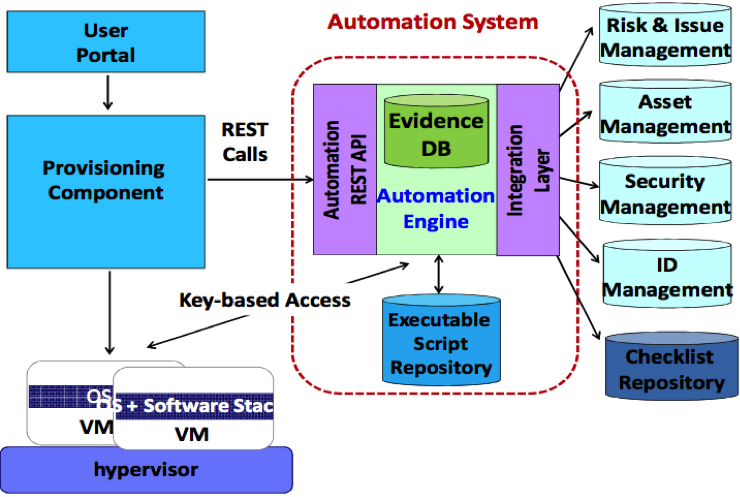
The researchers acknowledge all possible benefits of cloud computing, but mention that “the steps of validating the configuration and security of the target workload for compliance and assuring its quality may be complex and very time consuming.” Emphasizing the difficulties of the validation process when performed manually, the authors present the design of an automation system (Figure 2) to carry out the validation of configuration on target cloud services for compliance [6].

cloud_scheme_app

Figure 2 – Architecture of the automation system for service activation [6]

The authors describe in detail how to use the presented system to collect and verify all collected evidences and ensure adherence with the regulatory requirements in the cloud computing environment. This development makes a large practical contribution, and supports various operating systems and middleware stacks. It also was deployed in shared private enterprise cloud (IBM SmartCloud Enterprise Plus [7]. However, authors acknowledge that the developed system “lacks the flexibility to support the diverse private cloud environments in which different back-end tools may have to be integrated.” [6] Allowing such flexibility may result in wider adoption and use for practical purposes, such as automation of PCI DSS compliance checks.

Acknowledging the contribution of Breaux and Antón’s research [8] Accorsi and Sato claim that there is still no sufficient research results to support creation of a uniform way of expressing the compliance requirements [9]. Moreover, in their paper, the researchers emphasize the absence of tools for automating certification procedures, and that the “multitude of regulations and contractual rules increases the complexity of checking compliance” [9].

The authors analyze some regulatory requirements and develop nine common categories. They then focus on workflows and create Petri net [10], [11], [12], [13] representation of these categories. They use the developed model to check the compliance of a given business process in relation to a given requirements. In case of non-compliance, the developed model gathers necessary evidence and points out to the problem.

Unlike Sadiq, Governatori, Namiri [14], who focus only on a single legislation, Accorsi and Sato present their categorization using several different legislations, which may be beneficial for cloud service providers who need to comply simultaneously with many different regulations. However, in their research, the authors analyze mainly business process design issues and only several legislations, ignoring, for example, PCI DSS and, more importantly, many requirements which may be specific for this legislation.

Hizver and Chiueh in their paper [15] tackle another side of automated compliance monitoring – discovering credit card flow, which is a pre-requisite to the implementation of PCI DSS.

Their research has valuable practical application, because in order to comply with PCI DSS requirements, merchants must understand how credit card data flows in their information technology infrastructure and must document it. This may result in problems with out-of-date and difficult to maintain documentation of this flow when infrastructure changes.

To avoid manual effort, the authors develop a tool that can discover payment card data flow from distributed systems in an automated manner. The foundation of the tool is virtual machine introspection technology [16].

Researchers present and thoroughly analyze the developed tool and show evidence that it can fulfill its purpose, despite the fact that communications between distributed systems are encrypted.

Conclusion

Existing issues with compliance monitoring prevent companies from outsourcing their application and infrastructure to a third party cloud computing environment [17] and slow down the process of realization of the cloud computing potential [19].

Although some positive results are achieved in the field of identifying problems with cloud computing and compliance, more research should be done in the field of automation of continuous monitoring for PCI DSS requirements in a cloud computing environment. Models should be developed and tested to allow companies to ensure their adherence with requirements not only of application, but also of external environment, especially if outsourced to third parties.

References

[1]       IDC Survey (2009) http://blogs.idc.com/ie/?p=730

[2]       PCI DSS Virtualization Guidelines (2011) https://www.pcisecuritystandards.org/documents/Virtualization_InfoSupp_v2.pdf

[3]       ENISA (2009)” Cloud computing—benefits, risks and recommendations for information security”. European Network Information and Security Agency

[4]       Cloud Security Alliance (2013)” Top threats to cloud computing”

http://www.cloudsecurityalliance.org/

[5]       Speeter, Framba, Duncan, Talla, Bullis, (2006) “Configuration management system and method of discovering configuration data”, US Patent Pub. No. 20060179116

[6]       Chieu, Viswanathan, Gupta (2012) “Automation System for Validation of Configuration and Security Compliance in Managed Cloud Services”

[7]       IBM SmartCloud, http://www.ibm.com/cloud-computing/us/en/

[8]       Breaux, Antón (2008) “Analyzing regulatory rules for privacy and security requirements”. IEEE Trans Software Eng 34(1) p.5–20

[9]       Accorsi, Sato (2011) “Automated Certification for Compliant Cloud-based Business Processes” DOI 10.1007/s12599-011-0155-7

[10]    Murata (1989) “Petri nets: properties, analysis and applications”. Proc IEEE 77(4 :p.541–580

[11]    van der Aalst (1998) “The application of Petri nets to workflow management”. Journal of Circuits, Systems, and Computers 8(1): p.21–66

[12]    Katt, Zhang Hafner (2009)” Towards a usage control policy specification with Petri nets”. Springer LNCS 5871: p.905–912

[13]    Huang, Kirchner (2009)” Component- based security policy design with colored Petri nets”. Springer LNCS 5700: p.21–42

[14]    Sadiq, Governatori, Namiri (2007) “Modeling control objectives for business process compliance. Business process management”. Springer LNCS 4714: p.149–164

[15]    Hizver, Chiueh (2011) “Automated Discovery of Credit Card Data Flow for PCI DSS Compliance”,  30th IEEE International Symposium on Reliable Distributed Systems

[16]    Garfinkel, Rosenblum (2003) “A virtual machine introspection based architecture for intrusion detection,” Proc. Network and Distributed Systems Security Symposium,, p. 191-206.

[17]    Chow, Golle , Jakobsson  Staddon, Masuoka, Molina (2009) “Controlling data in the cloud: outsourcing computation without outsourcing control”. In: Proc ACM workshop on cloud computing security. ACM, New York, pp 85–90

[18]    Etro (2009) “The economic impact of cloud computing on business creation, employment and output in Europe”. Review of Business and Economics 54(2):p.179–218

PCI DSS Compliance in a Cloud Computing Environment. Part 2

Cloud computing

Cloud computing recently became a popular topic and has been adopted by many enterprises. The National Institute of Standards and Technology (NIST) has defined cloud computing as follows:  “Cloud computing as a model for enabling convenient, on-demand network access to a shared pool of configurable resources (e.g. networks, servers, storage, applications, and services) that can be rapidly provisioned and released with minimal management effort or service provider interaction” [1]

1. Overview and history

According to Hamdaqa [2] cloud computing is based on two basic paradigms: virtualization, which abstracts the physical architecture and allows use of it as a software and atomic computing, which enables self-management of distributed systems

The basis of cloud computing is a notion of time sharing, [3] developed in the 1950s and allowed shared use of mainframes CPU time through terminal connection.

Later, the availability of cheap computers and high-bandwidth networks, coupled with development hardware virtualization technologies, resulted in the rapid growth of cloud computing [4], [5], [6].

2. Service and deployment models

Cloud service providers (CSPs) offer services, which could be divided into three main categories: Software as a Service (SaaS), Platform as a Service (PaaS), and Infrastructure as a Service (IaaS). There are also four types of cloud deployment models: Private Cloud, Public Cloud, Hybrid Cloud and Community Cloud. [7], [1] (Figure 1)

NIST_cloud

Figure 1- NIST Visual Model of Cloud Computing Definition [8]

Companies before making a decision on each type of cloud should weigh all benefits and limitations of each type in terms of cost and security, among others.

3. Challenges

Dillon, Wu, and Chang [9] identify the following challenges related to the adoption of cloud computing:

– Security

– Costing Model

– Charging Model

– Service Level Agreement

– What to migrate

However, the authors only briefly discuss each of these areas and focus mainly on the results of survey [10], not paying attention to such sensitive aspects of cloud computing as legal, privacy, compliance, governance, etc.

Zhang, Qi, Lu Cheng, and Boutaba [7] also present only a brief overview of cloud computing technology and discuss core research challenges. The paper does not develop new models or concepts, but instead only analyses current developments and trends.

Although the researchers touch on security issues in general, they focus mainly on basic issues with confidentiality, integrity and availability, failing to address and explore important problems such as compliance in depth.

References

[1]       Mell, and Grance (2011) “The NIST definition of cloud computing”. NIST special publication 800-145

[2]       Hamdaqa (2012). “Cloud Computing Uncovered: A Research Landscape”. Elsevier Press. p. 312. ISBN 0-12-396535-7

[3]       Strachey (1959). “Time Sharing in Large Fast Computers”. Proceedings of the International Conference on Information processing, UNESCO p. 336–341

[4]       “Cloud Computing: Clash of the clouds”. The Economist. (2009). http://www.economist.com/node/14637206?story_id=14637206

[5]        “Gartner Says Cloud Computing Will Be As Influential As E-business”. Gartner. http://www.gartner.com/newsroom/id/707508

[6]       Gruman (2008). “What cloud computing really means”.InfoWorld. http://www.infoworld.com/d/cloud-computing/what-cloud-computing-really-means-031

[7]       Zhang, Cheng, Boutaba. (2010) “Cloud computing: state-of-the-art and research challenges.” Journal of Internet Services and Applications 1, p. 7-18.

[8]       NIST Visual Model of Cloud Computing Definition

[9]       Dillon, Wu, Chang (2010) “Cloud Computing: Issues and Challenges” 24th IEEE International Conference on Advanced Information Networking and Applications

[10]    IDC Survey (2009) http://blogs.idc.com/ie/?p=730

PCI DSS Compliance in a Cloud Computing Environment. Part 1

The main purpose of this article series is to survey the research that have been done in areas of PCI DSS compliance and recent developments of cloud computing. It gives an overview of basics of cloud computing, PCI DSS and specific compliance issues when dealing with outsourcing applications and infrastructure to third parties.

Nowadays many companies changed the way they doing business with the development of cloud computing. An ability to outsource application or entire infrastructure to the third parties allows businesses to take advantage of rapid and highly scalable deployment of services with little or no information technology expertise. Unfortunately, many enterprises are slow to adopt cloud computing because of information security compliance issues. Companies are skeptical about moving their sensitive information outside their own control perimeter, and see their main obstacle as an inability to check whether outsourced infrastructure and applications are in conflict with existing rules and regulations, such as PCI DSS.

The Payment Card Industry Data Security Standard (PCI DSS)

Payment Card Industry Data Security Standard (PCI DSS) is a standard that organizations must follow if their business involves processing, storing, and transmitting cardholder data. The main purpose of this standard is to provide requirements to ensure security of payment card data

1. Overview and history

PCI DSS was developed by PCI Security Standards Council, an open global forum formed in 2006 by American Express, Discover Financial Services, JCB International, MasterCard Worldwide, and Visa Inc. [1].

Historically, the companies in this forum developed their own programs, but because they shared similar goals they decided to align their requirements and created PCI DSS.

The birth of PCI DSS created many discussions in the industry.

For example, PCI Council General Manager Bob Russo thinks that PCI DSS gives stakeholders “the opportunity and flexibility to work with Qualified Security Assessors (QSA) to determine appropriate security controls within their environment that meet the intent of the PCI standards.” [2]

Furthermore, Bruce Schneier says that, “Regulation – SOX, HIPAA, GLBA, the credit-card industry’s PCI, the various disclosure laws, the European Data Protection Act, whatever – has been the best stick the industry has found to beat companies over the head with. And it works. Regulation forces companies to take security more seriously, and sells more products and services.” [3]

2. PCI DSS requirements compliance

PCI DSS consists of on six high-level objectives and twelve requirements (Table 1) [4]

Build and maintain a secure network 1. Install and maintain a firewall configuration to protect cardholder data
2. Do not use vendor supplied defaults for system passwords and other security parameters
Protect card holder data 3. Protect stored cardholder data
4. Encrypt transmission of cardholder data across open, public networks
Maintain a vulnerability management program 5. Use and regularly update antivirus software or programs
6. Develop and maintain secure systems and applications
Implement strong access control measures 7. Restrict access to cardholder data by business need to know
8. Assign a unique ID to each person with computer access
9. Restrict physical access to cardholder data
Regularly monitor and test networks 10. Track and monitor all access to network resources and cardholder data
11. Regularly test security systems and processes
Maintain and information security policy 12. Maintain a policy that addresses information security for all personnel.

Table 1 – PCI DSS Requirements and Security Assessment Procedures [4]

Compliance with PCI DSS requirements is enforced through contract agreements and may include fines and higher processing fees. To ensure compliance of services providers and merchants with PCI DSS requirements, special assessments are carried out. Such assessments usually utilize a sampling methodology to demonstrate compliance in target systems.

However, assessment procedure depends on the level of the merchant (it may require the completion of a Self-Assessment Questionnaire or on-site assessment) (Table 2) [5]

Category Criteria Requirements
Level 1 Any merchant that has suffered a hack or an attack that resulted in an account data compromise
Any merchant having more than six million total combined MasterCard and Maestro transactions annually
Any merchant that MasterCard, in its sole discretion, determines should meet the Level 1 merchant requirements to minimize risk to the system
Annual Onsite Assessment
Quarterly Network Scan
Level 2 Any merchant with more than one million but less than or equal to six million total combined MasterCard and Maestro transactions annually Annual Self-Assessment
Onsite Assessment at Merchant Discretion
Quarterly Network Scan
Level 3 Any merchant with more than 20,000 combined MasterCard and Maestro e-commerce transactions annually but less than or equal to one million total combined MasterCard and Maestro e-commerce transactions annually Annual Self-Assessment
Quarterly Network Scan
Level 4 All other merchants Annual Self-Assessment
Quarterly Network Scan

Table 2 – Merchant Level and Validation Requirements (MasterCard version) [5]

PCI DSS requirements assessment procedure depends on merchant’s annual number of transactions and past breach history.

3. Implementing the PCI DSS

Companies face many challenges and difficulties when implementing PCI DSS requirements. According to Michael Jones, CIO of Michaels’ Stores, PCI DSS requirements “are very expensive to implement, confusing to comply with, and ultimately subjective, both in their interpretation and in their enforcement. It is often stated that there are only twelve ‘Requirements’ for PCI compliance. In fact there are over 220 sub-requirements; some of which can place an incredible burden on a retailer and many of which are subject to interpretation.” [6]

Rees identifies the following challenges of PCI DSS compliance [7]:

– Understanding scope

– Understanding of card data flow

– Organizational

– Technological

– Third party management

Bonner, O’ Raw and Curran in their paper [8] present a good analysis of application adherence with PCI DSS requirements. Researchers address such issues as maintaining legacy systems and their difficulties to implement PCI DSS requirements properly. They discuss several existing solutions such as using web services to “wrap” older legacy systems [9]. However, in their opinion, neither of these approaches directly addresses the problem of PCI DSS compliance.

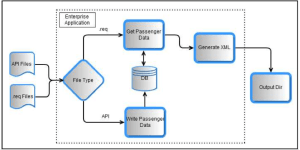
The authors developed a prototype (Figure 1) and showed how to implement controls to achieve PCI DSS compliance in the application.

 system

Figure 1 -. Experimental System Overview [8]

The researchers thoroughly describe their prototype, present some experiments, and tackle the problems of masking payment card data and cryptographic key management while storing such data.

However, in their research they focus solely on adherence with requirements of developed application, completely ignoring environment in which this piece of software operates.

Despite the fact that this paper contributes to the field of secure software development, and emphasizes some application PCI DSS compliance issues, one should remember that environment plays an important role in achieving compliance for business overall

References

[1]       PCI Security Standards Council  https://www.pcisecuritystandards.org/

[2]       Russo (2009). “Letter to NRF”. PCI Council. https://www.pcisecuritystandards.org/pdfs/statement090615_letter_to_nrf.pdf

[3]       Schneier (2008) “Bruce Schneier reflects on a decade of security trends”. http://www.schneier.com/news-049.html

[4]       PCI DSS Requirements and Security Assessment Procedures, Version 2.0 p. 5

[5]       Merchant Level and Validation Requirements (MasterCard version) http://www.mastercard.com/us/company/en/whatwedo/determine_merchant.html

[6]       Jones (2009). “Testimony of Michael Jones before the emerging threats cybersecurity and science and technology subcommittee “. Congress of the United States.

Click to access 20090331142012-77196.pdf

[7]       Rees (2010) “Computer Fraud & Security” Volume 2010, Issue 12, p. 14–116

[8]       Bonner, O’ Raw, Curran (2011) “Implementing the Payment Card Industry (PCI) Data Security Standard (DSS)”.

[9]       Steed (1996) “Encapsulating Legacy Software for Use in Client/Server Systems”. Proceedings of the Third Working Conference on Reverse Engineering. Monterey, CA: p.104-119