How to be a trusted advisor

Being a security leader is first and foremost acting as a trusted advisor to the business. This includes understanding its objectives and aligning your efforts to support and enable delivery on the wider strategy.

It is also about articulating cyber risks and opportunities and working with the executive team on managing them. This doesn’t mean, however, that your role is to highlight security weaknesses and leave it to the board to figure it all out. Instead, being someone they can turn to for advice is the best way to influence the direction and make the organisation more resilient in combating cyber threats.

For your advice to be effective, you first need to earn the right to offer it. One of the best books I’ve read on the subject is The Trusted Advisor by David H. Maister. It’s not a new book and it’s written from the perspective of a professional services firm but that doesn’t mean the lessons from it can’t be applied in the security context. It covers the mindset, attributes and principles of a trusted advisor.

Unsurprisingly, the major focus of this work is on developing trust. The author summarises his views on this subject in the trust equation:

Trust = (Credibility + Reliability + Intimacy) / Self-Orientation

It’s a simple yet powerful representation of what contributes to and hinders the trust building process.

It’s hard to trust someone’s recommendations when they don’t put our interests first and instead are preoccupied with being right or jump to solutions without fully understanding the problem.

Equally, as important credibility is, the long list of your professional qualifications and previous experience on its own is not sufficient to be trustworthy. Having courage and integrity, following through on your promises and active listening, among other things are key. In the words of Maister, “it is not enough to be right, you must also be helpful”.

Business alignment framework for security

In my previous blogs on the role of the CISO, CISO’s first 100 days and developing security strategy and architecture, I described some of the points a security leader should consider initially while formulating an approach to supporting an organisation. I wanted to build on this and summarise some of the business parameters in a high-level framework that can be used as a guide to learn about the company in order to tailor a security strategy accordingly.

This framework can also be used as a due diligence cheat sheet while deciding on or prioritising potential opportunities – feel free to adapt it to your needs.

More

How to set up a bug bounty program

Bug bounty programmes are becoming the norm in larger software organisations but it doesn’t mean you have to be Google or Facebook to run one for continuous security testing and engaging with the security community..

Setting it up can be easier than you might think as there are multiple platforms like HackerOne, BugCrowd or similar out there that can help with centralised management. They also offer an option to introduce it gradually through private participation first before opening it to the whole world. 

At a minimum, you can have a dedicated email address (e.g. security@yourexamplecompanyname) that security researchers can use to report security issues. Having a page transparently explaining the participation terms, scope and payout rate also helps. Additionally, it’s good to have appropriate tooling to track issues and verify fixes.

Even if you don’t have any of the above, security researchers can still find vulnerabilities in your product and report them to you responsibly, so you effectively get free testing but can exercise limited control over it. Therefore, it’s a good idea to have a process in place to keep them happy enough to avoid them disclosing issues publicly.

There is probably nothing more frustrating for a security researcher than receiving no response  (apart perhaps from being threatened legal action), so communication is key. At the very least, thank them and request more information to help verify their finding while you kick off the investigation internally. Bonus points for keeping them in the loop when it comes to plans for remediation, if appropriate. 

There are some prerequisites for setting up the bug bounty programme though. Beyond the obvious budget requirement for paying researchers for the vulnerabilities they discover, there is a broader need for engineering resources being available to analyse reported issues and work on improving the security of your products and services. What’s the point of setting up a bug bounty programme if no one is looking at the findings?

Many companies, therefore, might feel they are not ready for a bug bounty programme. They may have too many known issues already and fear they will be overwhelmed with duplicate submissions. These might indeed be problematic to manage, so such organisations are better off focusing their efforts on remediating known vulnerabilities and implementing measures to prevent them (e.g. setting up a Content Security Policy).

They could also consider introducing security tests in the pipeline as this will help catch potential vulnerabilities much earlier in the process, so the bug bounty programme can be used as a fall back mechanism, not the primary way for identifying security issues.

How to secure a business in decline

Many business have felt the economic impact of the Covid pandemic. Depending on the industry, some managed to adapt and pivot to new models and ways of working, but not all were successful.

As a result, some companies were unable to continue to operate profitably and entered administration. The cause of financial troubles, however, doesn’t have to be pandemic-related to pose new security challenges.

In this blog I would like to share some of the priority areas for a security leader in a business in, sometimes rapid, decline.

As the business is failing, the leadership might not treat cyber security as their top priority. However, the organisation still has obligations to its customers who entrusted the company with their data and comply with relevant laws and regulations. It goes without saying that previously identified cyber security threats and risks are unlikely to disappear either.

If there is a chance of survival, a poorly managed security incident can be the last straw.

How should security teams adapt? What should they focus on?

Broadly speaking, there are two main areas a CISO can support the business: securing a potential rescue deal and managing the decline.

There are investors specialising in distressed businesses and part of the administration process might involve looking for a capital injection or an acquisition of a failing company.

Potential investors would understandably need to know what they might be buying which normally involves conducting due diligence on the target. Although circumstances are different, the process itself is very similar to an M&A scenario or a startup acquisition.

As a security leader, it’s your job to provide transparency on the matters related to data protection, past breaches and existing security controls and processes. If done right, it presents the business in a favourable light as a well-governed enterprise, increasing investors’ confidence and therefore chances of a successful rescue deal.

In many ways, this is comparable to overseeing a divestment. A lot of such conversations are confidential, so raising awareness of what can and can’t be shared externally (including on social media), and maintaining appropriate need-to-know access controls is paramount.

Some things, however, are outside of our control and sometimes all we can do is to make the best out of a bad situation.

There are a few key areas to pay attention to when it comes to embedding security for a business in downturn.

People. There will naturally be a lot of leavers, so having a robust joiner-mover-leaver process is key. All access permissions should be timely revoked when no longer required. In addition, data loss prevention controls and broader insider risks should be considered as the morale in the company worsens. On a positive note, people and a culture of security can significantly contribute to the company’s security posture, especially in the conditions of scarce resources (see next point).

Resources. Investment in security is going to understandably diminish. Some of the top talent will leave, so you will have to learn to do more with less. If your desired control to mitigate a particular risk is no longer affordable, what is the next best thing? Can this be done cheaper, or better still, for free? Business leadership should be made aware of the potential consequences of risk acceptances, and there will likely be a higher than usual number of these.

Data. There also might not be enough money to pay for non business critical systems and services. These should be decommissioned in the way that ensures that sensitive (including personal) data is destroyed securely in line with company’s retention policies. Having data maps and asset inventories is invaluable to maintain visibility.

Sustaining operational resilience in the face of cost pressure is challenging but not impossible. For many, it’s a unique learning experience regardless of the outcome.


Small business resilience toolkit

Resilience.png

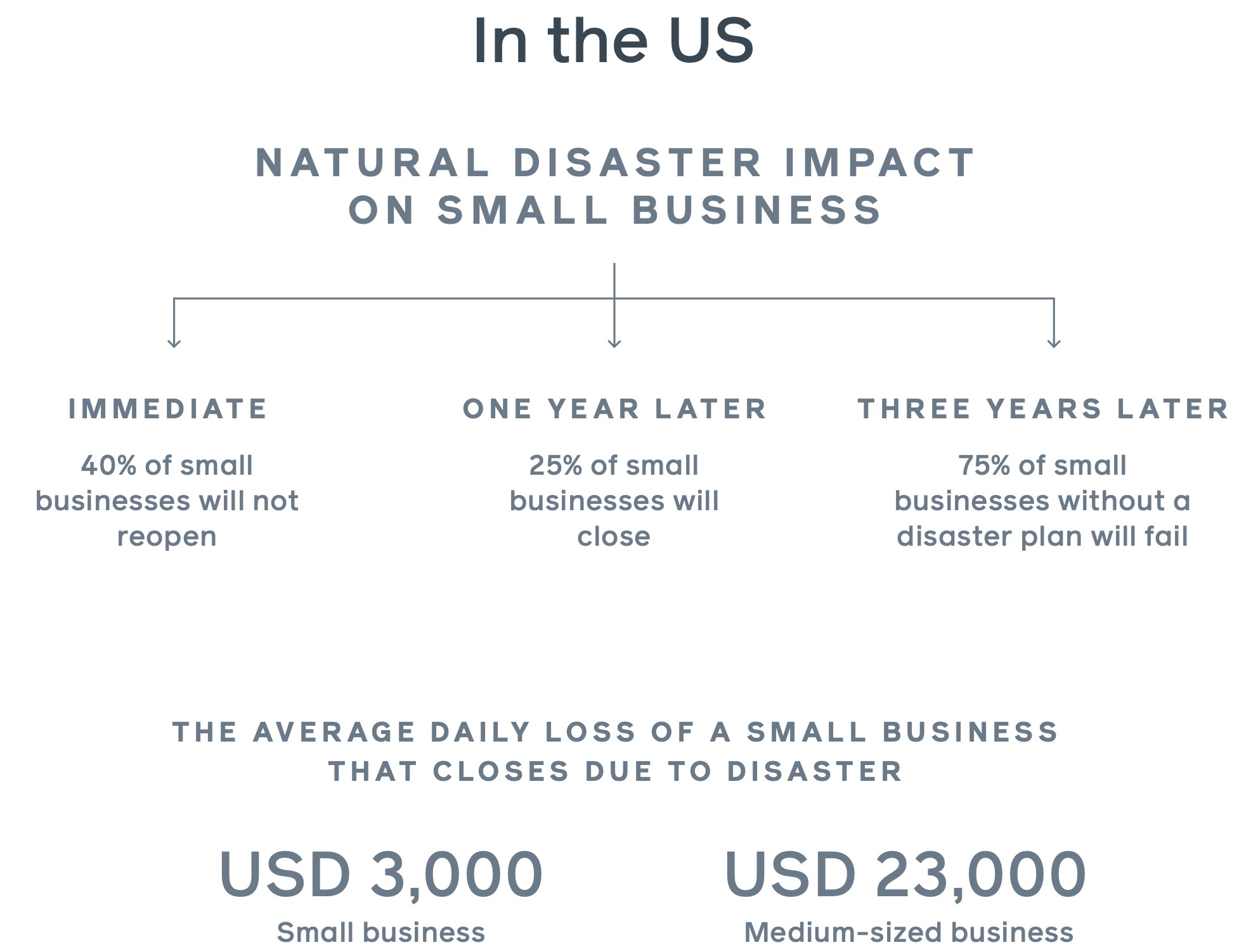
Developing a resilient business is about identifying what your business can’t afford to lose and planning for how to prevent loss should a disaster occur. While this may seem a daunting task, determining your business’s resiliency strategy is more straightforward than you might think.

This resilience toolkit developed by Facebook provides a framework for small businesses that may not have the time or resources to create an extensive plan to recover from business interruptions.

You don’t have to use Facebook’s crisis response features for this approach to be effective – the value comes from the taking the time to assess the risks and plan you response strategy.

Download the Small business resilience toolkit

One year in: a look back

In the past year I had the opportunity to help a tech startup shape its culture and make security a brand differentiator. As the Head of Information Security, I was responsible for driving the resilience, governance and compliance agenda, adjusting to the needs of a dynamic and growing business.

More

I’m joining PigeonLine’s Advisory Board

I’ve been asked to join PigeonLine – Research-AI as a Board Advisor for cyber security. I’m excited to be able to contribute to the success of this promising startup.

PigeonLine is a fast growing AI development and consulting company that builds tools to solve common enterprise problems. Their customers include the UAE Prime Ministers Office, the Bank of Canada, the London School of Economics, among others.

Building accessible AI tools to empower people should go hand-in-hand with protecting their privacy and preserving the security of their information.

I like the company’s user-centric approach and the fact that data privacy is one of their core values. I’m thrilled to be part of their journey to push the boundaries of human-machine interaction to solve common decision-making problems for enterprises and governments.

Securing GSuite: a guide for startups

GSuite

GSuite is an excellent choice for any startup, especially early in the process of establishing your business. Its flexible cost structure allows you to pay per user while benefiting from range of services, including email (with a custom domain name), calendar, document collaboration and storage, videoconferencing and much more.

GSuite, being a Software-as-a-Service (SaaS), relieves you from the underlying infrastructure management in line with the shared responsibility model. This can be especially powerful for smaller companies trying out an idea, as it doesn’t require intensive capital expenditure to set up a datacentre or staff to maintain it. Startups, however, are still responsible for the data, permissions and overall configuration of GSuite if they want to keep their information secure.

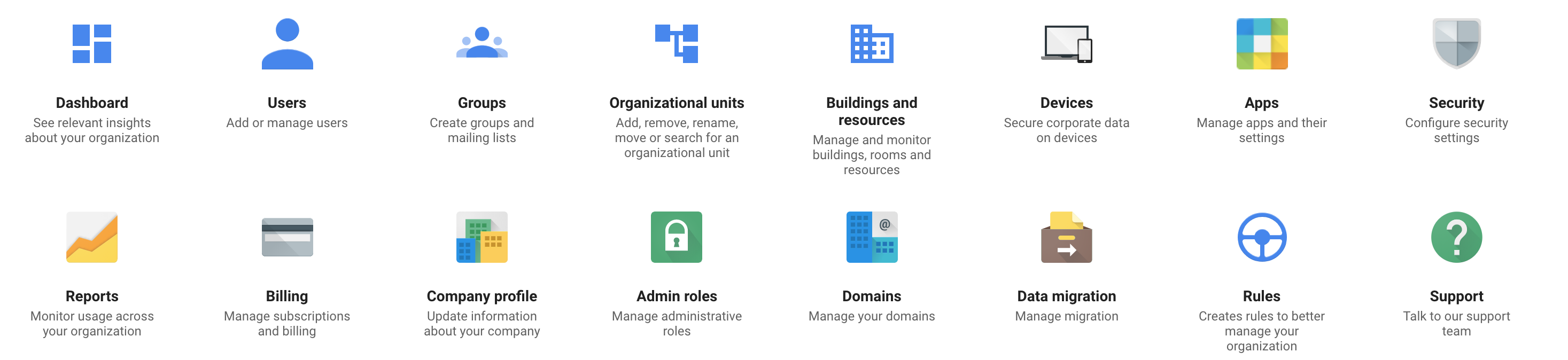
Thankfully, Google made available a short checklist for small businesses, describing the necessary steps to safeguard company data. Similar guidance is available for larger (100+ users) organisations.

Settings 2

The plan you select will determine how many security features are available to you. Depending on the criticality of your data and the amount of control you require, it can be a good idea to upgrade to the Enterprise plan.

Hint: if you ask customer support to put you in touch with a sales representative and request a discount, it might just be given to you. Provided you are willing to commit to the subscription for a couple of years.

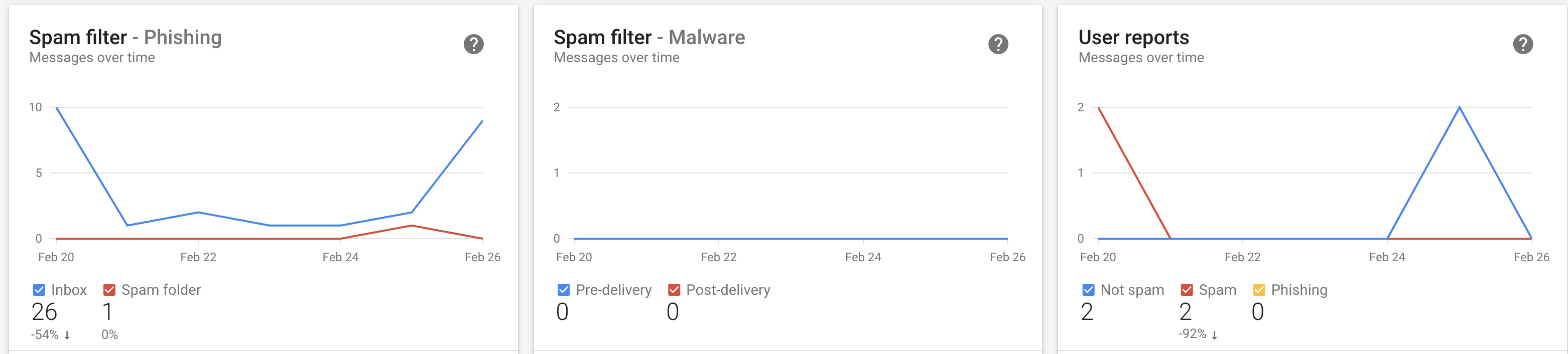
Security professionals will feel at home with the advanced features available after the upgrade. It includes encryption, data leakage prevention (DLP), granular access control and much more. Managing it is also going to become easier, as various reports and healthcheck dashboards are now at your fingertips.

Settings

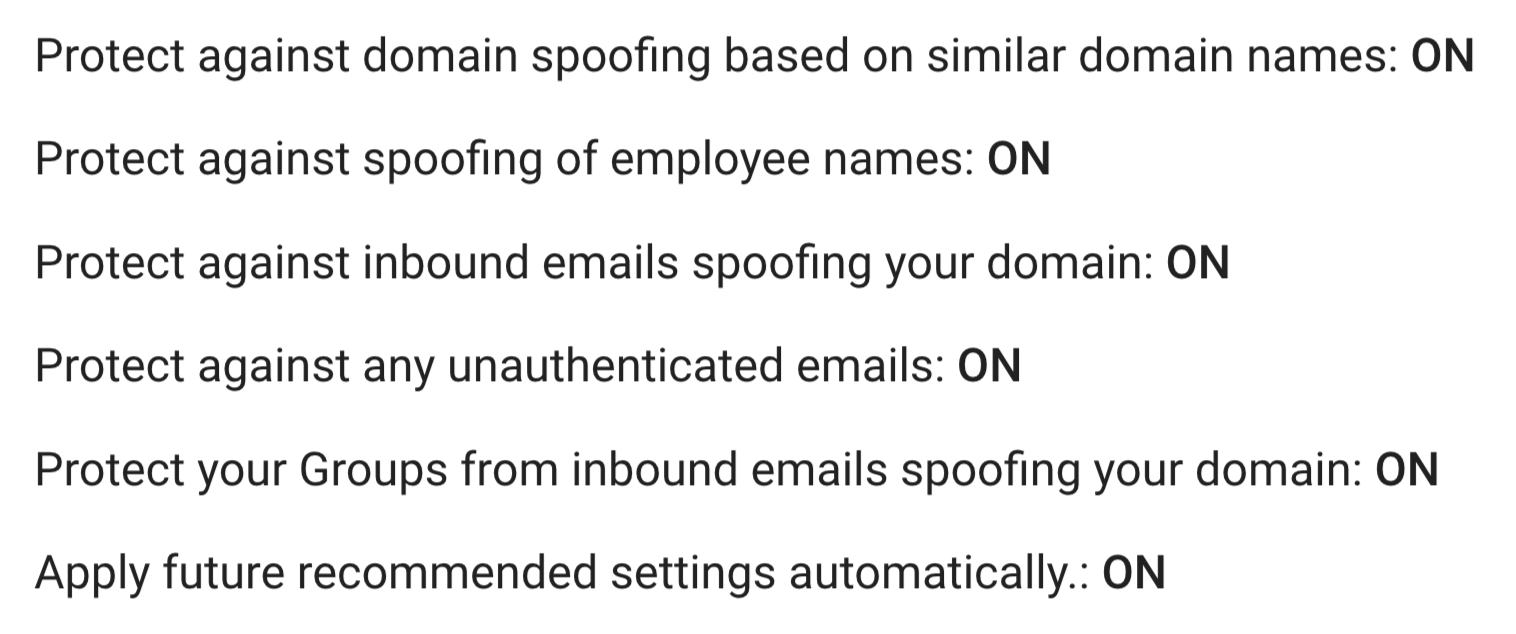
Regardless of the plan you use, it won’t hurt to enable multi-factor authentication on all accounts, as it dramatically reduces the risk of account takeover. It might also be a good idea to backup your critical business data somewhere off GSuite for extra resiliency.

How to prevent committing secrets in code

detect-secrets

Committing passwords, SSH keys and API keys to your code repositories is quite common. This doesn’t make it less dangerous. Yes, if you are ‘moving fast and breaking things’, it is sometimes easier to take shortcuts to simplify development and testing. But these broken things will eventually have to be fixed, as security of your product and perhaps even company, is at risk. Fixing things later in the development cycle is likely be more complicated and costly.

I’m not trying to scaremonger, there are already plenty of news articles about data breaches wiping out value for companies. My point is merely about the fact that it is much easier to address things early in the development, rather than waiting for a pentest or, worse still, a malicious attacker to discover these vulnerabilities.

Disciplined engineering and teaching your staff secure software development are certainly great ways to tackle this. There has to, however, be a fallback mechanism to detect (and prevent) mistakes. Thankfully, there are a number of open-source tools that can help you with that:

You will have to assess your own environment to pick the right tool that suits your organisation best.

If you read my previous blogs on integrating application testing and detecting vulnerable dependencies, you know I’m a big fan of embedding such tests in your Continuous Integration and Continuous Deployment (CI/CD) pipeline. This provides instant feedback to your development team and minimises the window between discovering and fixing a vulnerability. If done right, the weakness (a secret in the code repository in this case) will not even reach the production environment, as it will be caught before the code is committed. An example is on the screenshot at the top of the page.

For this reason (and a few others), the tool that I particularly like is detect-secrets, developed in Python and kindly open-sourced by Yelp. They describe the reasons for building it and explain the architecture in their blog. It’s lightweight, language agnostic and integrates well in the development workflow. It relies on pre-commit hooks and will not scan the whole repository – only the chunk of code you are committing.

Yelp’s detect-secrets, however, has its limitations. It needs to be installed locally by engineers which might be tricky with different operating systems. If you do want to use it but don’t want to be restricted by local installation, it can also run out of a container, which can be quite handy.