I am excited to be recognised as one of the Top 10 Cybersecurity Leaders in Australia driving innovation and demonstrating business value. Although relatively new to Australia, I had the opportunity to use my global experience to address key cybersecurity challenges within the Financial Services sector.
A massive thank you to my team – it’s a privilege to lead such high performing and dedicated individuals and be able to build a cutting-edge cyber capability. Congratulations to all the award winners!
I previously wrote about building security culture in the organisation, in this blog, I look at the security team itself and share some tips for CISOs to develop a culture of performance for their teams.
I previously wrote about the complexity of communication and the multi-faceted nature of the CISO role. Combining these perspectives, I would like to give an overview of what a communication strategy might look like for a security leader.
While in quarantine after arriving in Australia, I had a chance to catch-up on some learning.
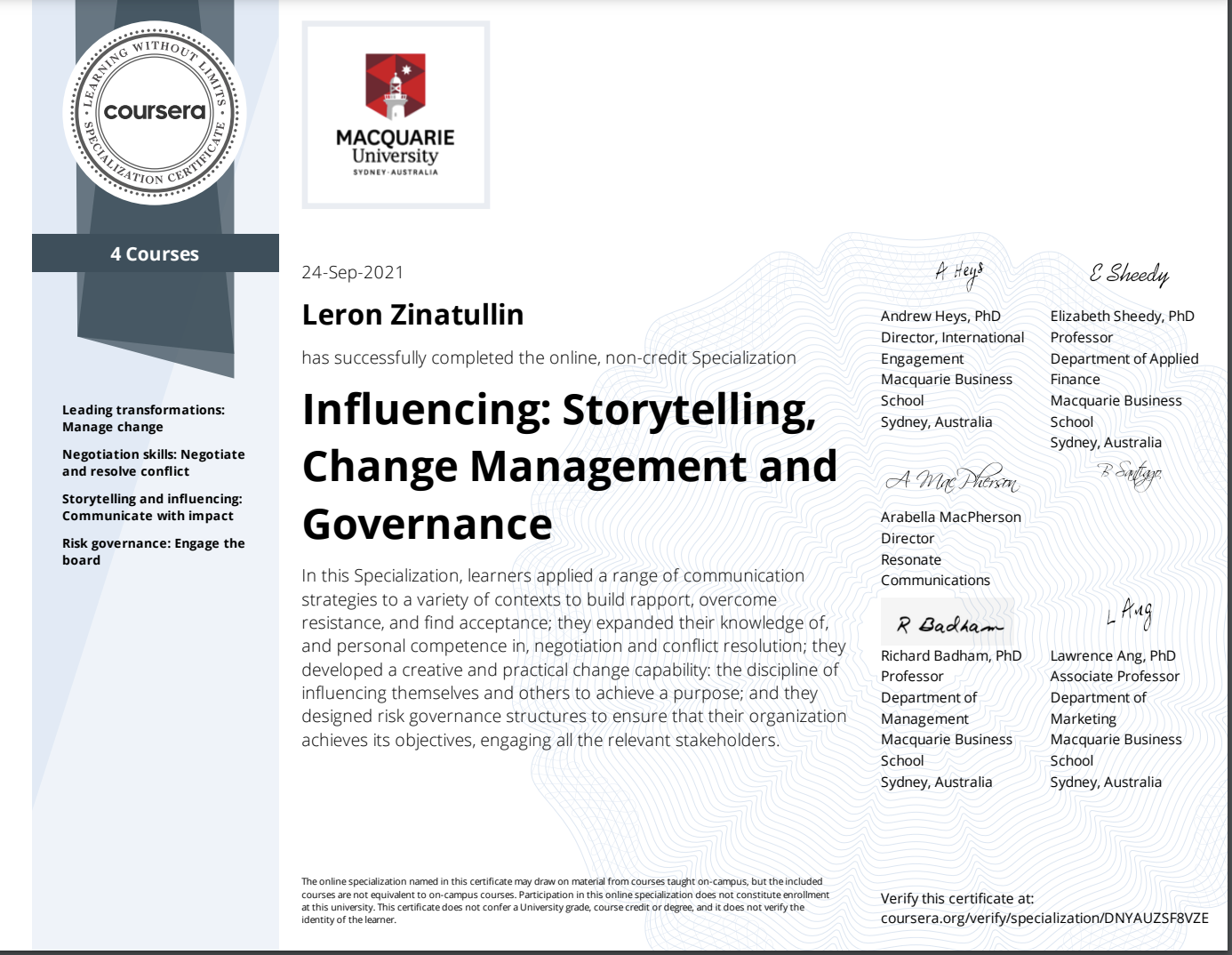
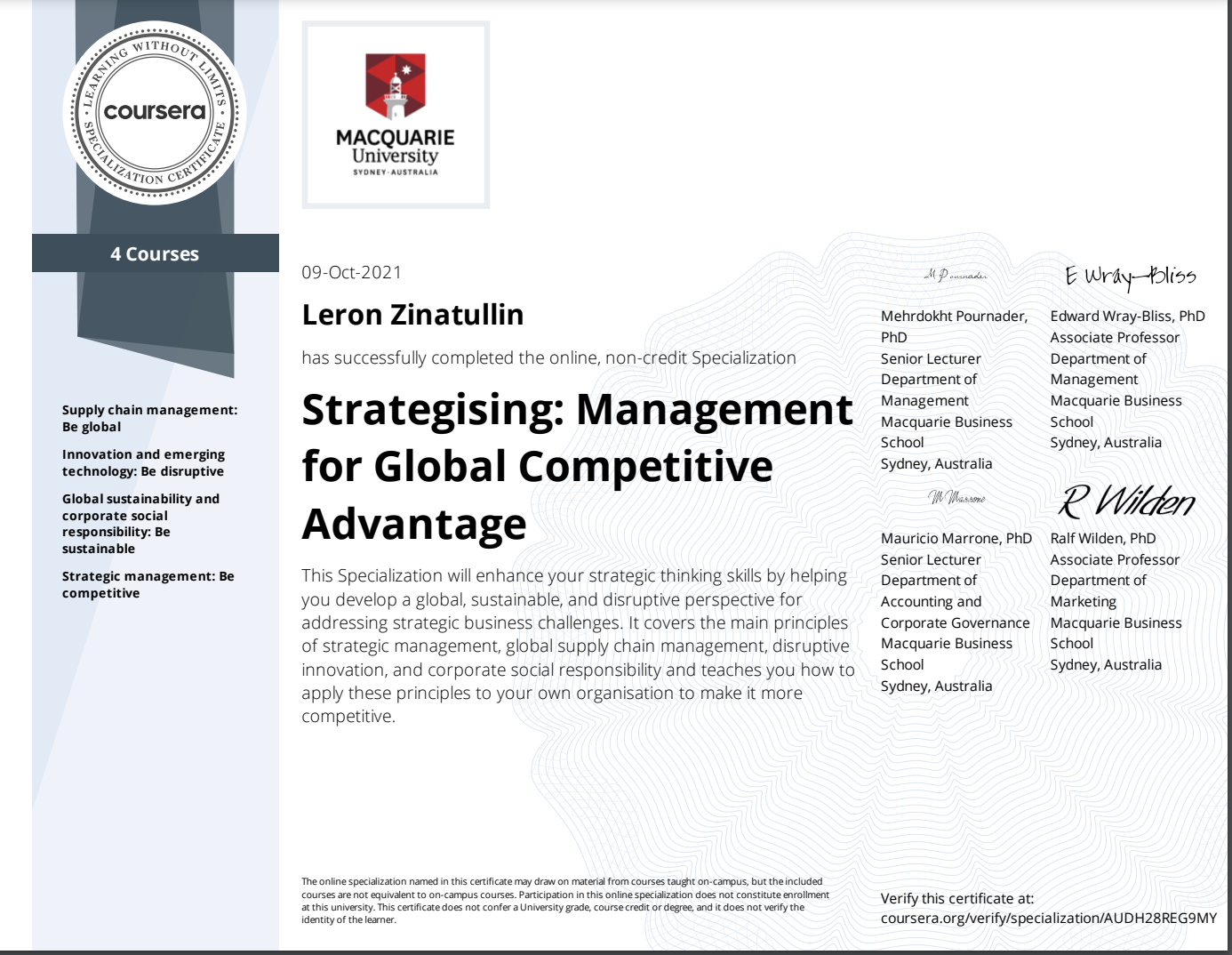
I completed two specialisation tracks on Coursera offered by Macquarie Business School as part of their Global MBA programme. The courses covered a variety topics, including negotiations, change management, storytelling, board engagement, innovation, strategic management, sustainability, supply chains and more.
The worst time to write a security incident response plan is during an incident itself. Anticipating adverse events and preparing playbooks for likely scenarios and testing them in advance are important facets of a wider cyber resilience strategy.
Incident response, however, is not only about technology, logs and forensic investigation – managing communication is equally important. It is often a compliance requirement to notify the relevant regulator and customers about a data breach or a cyber incident, so having a plan, as well as an internal and external communication strategy, is key.
Security incidents can quickly escalate into a crisis depending on their scale and impact. There are lessons we can learn from other disciplines when it comes to crisis communication.
One of the best example is offered by the Centers for Disease Control and Prevention (CDC). The resources, tools and training materials they have created and made available online for free have been tested in emergency situations around the world, including the latest Covid-19 pandemic.
CDC’s Crisis and Emergency Risk Communication (CERC) manuals and templates emphasise the six core principles of crisis communication:
1. Be first. Quickly sharing information about an incident can help stop the spread, and prevent or reduce impact. Even if the cause is unknown, share facts that are available.
2. Be right. Accuracy establishes credibility. Information should include what is known, what is not known, and what is being done to fill in the information gaps.
3. Be credible. Honesty, timeliness, and scientific evidence encourage the public to trust your information and guidance. Acknowledge when you do not have enough information to answer a question and then work with the appropriate experts to get an answer.
4. Express empathy. Acknowledging what people are feeling and their challenges shows that you are considering their perspectives when you give recommendations.
5. Promote action. Keep action messages simple, short, and easy to remember.
6. Show respect. Respectful communication is particularly important when people feel vulnerable. Respectful communication promotes cooperation and rapport.
Cyber security professionals can adopt the above principles in crisis situations during a cyber incident, demonstrating commitment and competence and communicating with transparency and empathy both inside and outside of the organisation.
Being a security leader is first and foremost acting as a trusted advisor to the business. This includes understanding its objectives and aligning your efforts to support and enable delivery on the wider strategy.
It is also about articulating cyber risks and opportunities and working with the executive team on managing them. This doesn’t mean, however, that your role is to highlight security weaknesses and leave it to the board to figure it all out. Instead, being someone they can turn to for advice is the best way to influence the direction and make the organisation more resilient in combating cyber threats.
For your advice to be effective, you first need to earn the right to offer it. One of the best books I’ve read on the subject is The Trusted Advisor by David H. Maister. It’s not a new book and it’s written from the perspective of a professional services firm but that doesn’t mean the lessons from it can’t be applied in the security context. It covers the mindset, attributes and principles of a trusted advisor.
Unsurprisingly, the major focus of this work is on developing trust. The author summarises his views on this subject in the trust equation:
It’s a simple yet powerful representation of what contributes to and hinders the trust building process.
It’s hard to trust someone’s recommendations when they don’t put our interests first and instead are preoccupied with being right or jump to solutions without fully understanding the problem.
Equally, as important credibility is, the long list of your professional qualifications and previous experience on its own is not sufficient to be trustworthy. Having courage and integrity, following through on your promises and active listening, among other things are key. In the words of Maister, “it is not enough to be right, you must also be helpful”.
In my previous blogs on the role of the CISO, CISO’s first 100 days and developing security strategy and architecture, I described some of the points a security leader should consider initially while formulating an approach to supporting an organisation. I wanted to build on this and summarise some of the business parameters in a high-level framework that can be used as a guide to learn about the company in order to tailor a security strategy accordingly.
This framework can also be used as a due diligence cheat sheet while deciding on or prioritising potential opportunities – feel free to adapt it to your needs.
I’m often asked what the responsibilities of a CISO or Head of Information Security are. Regardless of the title, the remit of a security leadership role varies from organisation to organisation. At its core, however, they have one thing in common – they enable the businesses to operate securely. Protecting the company brand, managing risk and building customer trust through safeguarding the data they entrusted you with are key.
There are various frameworks out there that can help structure a security programme but it is a job of a security leader to understand the business context and prioritise activities accordingly. I put the below diagram together (inspired by Rafeeq Rehman) to give an idea of some of the key initiatives and responsibilities you could consider. Feel free to adapt and tailor to the needs of your organisation.
In the past year I had the opportunity to help a tech startup shape its culture and make security a brand differentiator. As the Head of Information Security, I was responsible for driving the resilience, governance and compliance agenda, adjusting to the needs of a dynamic and growing business.
General Douglas MacMarthur said “never give an order that can’t be obeyed”. This is sound advice, as doing so can diminish the commander’s authority. If people want to do what you are asking them to do, but can’t, they would doubt your judgement in the future.
Despite the fact that most of us operate in commercial organisations rather than the US Army, there are some lessons to be learned from this.
Security professionals don’t need to rally their troops and rarely operate in command-and-control environments. Their role has largely shifted to the one of an advisor to the business when it comes to managing cyber risk. Yet all too often advice they give is misguided. In an effort to protect the business they sometimes fail to grasp the wider context in which it operates. More importantly, they rarely consider their colleagues who will have to follow their guidance.
Angela Sasse gives a brilliant example of this when she talks about phishing. Security professionals expect people to be able to identify a phishing email in order to keep the company secure. Through numerous awareness sessions they tell them how dangerous it is to click on a link in a phishing email.
Although it makes sense to some extent, it’s not helpful to expect people to be able to recognise a phishing email 100% of the times. In fact, a lot of information security professionals might struggle to make that distinction themselves, especially when it comes to more sophisticated cases of spear phishing. So how can we expect people who are not information security specialists to measure up?
To make matters worse, most of modern enterprises depend on email with links to be productive. It is considered normal and part of business as usual to receive an email and click on the link in it. I heard of a scenario where a company hired an external agency and paid good money for surveying their employees. Despite advance warnings, the level of engagement with this survey was reduced as people were reporting these external emails as “phishing attempts”. The communications team was not pleased and that certainly didn’t help establish the productive relationship with the security team.
The bottom line is that if your defences depend on people not clicking on links, you can do better than that. The aim is not to punish people when they make a mistake, but to build trust. The security team should therefore be there to support people and recognise their challenges rather than police them.
After all, when someone does eventually click on a malicious link, it’s much better if they pick up the phone to the security team and admit their mistake rather than hope it doesn’t get noticed. Not only does this speed-up incident response, it fosters the role of the security professional as a business enabler, rather than a commander who keeps giving orders that can’t be obeyed.