Transparency in security

Transparent

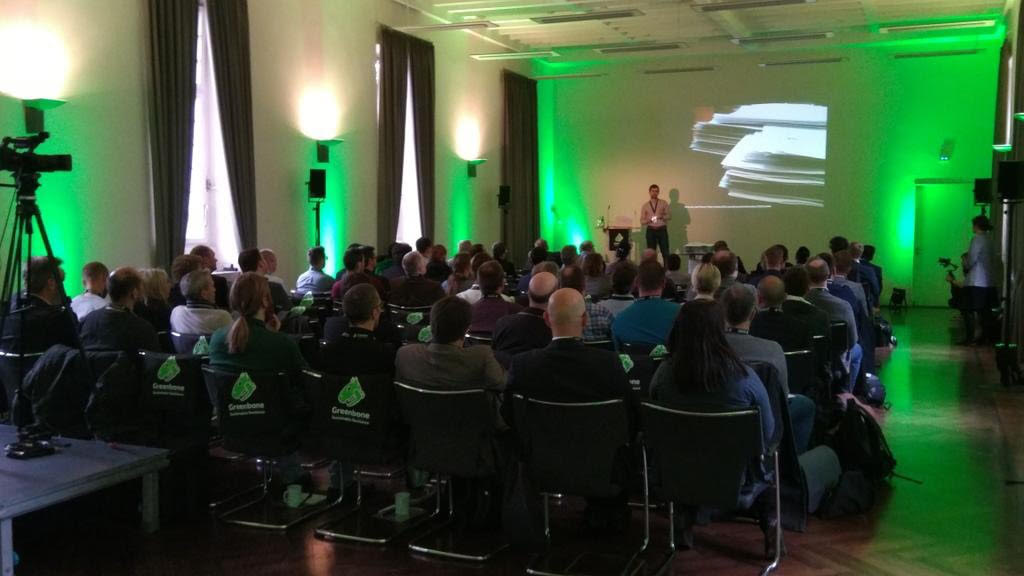
I was asked to deliver a keynote in Germany at the Security Transparent conference. Of course, I agreed. Transparency in security is one of the topics that is very close to my heart and I wish professionals in the industry not only talked about it more, but also applied it in practice.

Back in the old days, security through obscurity was one of the many defence layers security professionals were employing to protect against attackers. On the surface, it’s hard to argue with such a logic: the less the adversary knows about our systems, the less likely they are to find a vulnerability that can be exploited.

There are some disadvantages to this approach, however. For one, you now need to tightly control the access to the restricted information about the system to limit the possibility of leaking sensitive information about its design. But this also limits the scope for testing: if only a handful of people are allowed to inspect the system for security flaws, the chances of actually discovering them are greatly reduced, especially when it comes to complex systems. Cryptographers were among the first to realise this. One of Kerckhoff’s principles states that “a cryptosystem should be secure even if everything about the system, except the key, is public knowledge”.

Modern encryption algorithms are not only completely open to public, exposing them to intense scrutiny, but they have often been developed by the public, as is the case, for example, with Advanced Encryption Standard (AES). If a vendor is boasting using their own proprietary encryption algorithm, I suggest giving them a wide berth.

Cryptography aside, you can approach transparency from many different angles: the way you handle personal data, respond to a security incident or work with your partners and suppliers. All of these and many more deserve attention of the security community. We need to move away from ambiguous privacy policies and the desire to save face by not disclosing a security breach affecting our customers or downplaying its impact.

The way you communicate internally and externally while enacting these changes within an organisation matters a lot, which is why I focused on this communication element while presenting at Security Transparent 2019. I also talked about friction between security and productivity and the need for better alignment between security and the business.

I shared some stories from behavioural economics, criminology and social psychology to demonstrate that challenges we are facing in information security are not always unique – we can often look at other seemingly unrelated fields to borrow and adjust what works for them. Applying lessons learned from other disciplines when it comes to transparency and understanding people is essential when designing security that works, especially if your aim is to move beyond compliance and be an enabler to the business.

Remember, people are employed to do a particular job: unless you’re hired as an information security specialist, your job is not to be an expert in security. In fact, badly designed and implemented security controls can prevent you from doing your job effectively by reducing your productivity.

After all, even Kerckhoff recognised the importance of context and fatigue that security can place on people. One of his lesser known principles states that “given the circumstances in which it is to be used, the system must be easy to use and should not be stressful to use or require its users to know and comply with a long list of rules”. He was a wise man indeed.


Understanding your threat landscape

Identifying applicable threats is a good step to take before defining security controls your organisation should put in place. There are various techniques to help you with threat modelling but I wanted to give you some high-level pointers in this blog to get you started. Of course, all of these should be tailored to your specific business.

I find it useful to think about potential attacks as three broad categories:

1. Commoditised attacks. Usually not targeted and involve off-the-shelf-malware. Examples include:

2. Tailored attacks. As the name suggests, these are tailored and can vary in degree of sophistication. Examples include:

3. Accidental. Not every data breach is triggered by a malicious actor. Therefore, it is important to recognise that mistakes happen. Unfortunately sometimes they lead to undesired consequences, like the below:

Information security professionals can use the above examples in communications with their business stakeholders not to spread fear, but to present certain security challenges in context.

It’s often helpful to make it a bit more personal, defining specific threat actors, their target, motivation and impact on the business. Again, the below table serves as an example and can be used as a starting point for you define your own.

Threat actor Description Motivation Target Impact on business
Organised crime International hacking groups Financial gain Commercial data, personal data for identity fraud Reputational damage, regulatory fines, loss of customer trust
Insider Intentional or unintentional Human error, grudge, financial gain Intellectual property, commercial data Destruction or alteration of information, theft of information, reputational damage, regulatory fines
Competitors Espionage and sabotage Competitive advantage Intellectual property, commercial information Disruption or destruction, theft of information, reputational damage, loss of customer
State-sponsored Espionage Political Intellectual property, commercial data, personal data Theft of information, reputational damage

You can then use your understanding of assets and threats relevant to your company to identify security risks. For instance:

  • Failure to comply with relevant regulation – revenue loss and reputational damage due to fines and unwanted media attention as a result of non-compliance with GDPR, PCI DSS, etc.
  • Breach of personal data – regulatory fines, potential litigation and loss of customer trust due to accidental mishandling, external system compromise or insider threat leading to exposure of personal data of customers
  • Disruption of operations – decreased productivity or inability to trade due to compromise of IT systems by malicious actor, denial of service attacks, sabotage or employee error

Again, feel free to use these as examples, but always tailor them based on what’s important you your business. It’s also worth remembering that this is not a one-off exercise. Tracking your assets, threats and risks should be part of your security management function and be incorporated in operational risk management and continuous improvement cycles.

This will allow you to demonstrate the value of security through pragmatic and prioritised security controls, focusing on protecting the most important assets, ensuring alignment to business strategy and embedding security into the business.

Behavioural science in cyber security

Why your staff ignore security policies and what to do about it.               

Dale Carnegie’s 1936 bestselling self-help book How To Win Friends And Influence People is one of those titles that sits unloved and unread on most people’s bookshelves. But dust off its cover and crack open its spine, and you’ll find lessons and anecdotes that are relevant to the challenges associated with shaping people’s behaviour when it comes to cyber security.

In one chapter, Carnegie tells the story of George B. Johnson, from Oklahoma, who worked for a local engineering company. Johnson’s role required him to ensure that other employees abide by the organisation’s health and safety policies. Among other things, he was responsible for making sure other employees wore their hard hats when working on the factory floor.

His strategy was as follows: if he spotted someone not following the company’s policy, he would approach them, admonish them, quote the regulation at them, and insist on compliance. And it worked — albeit briefly. The employee would put on their hard hat, and as soon as Johnson left the room, they would just as quickly remove it.  So he tried something different: empathy. Rather than addressing them from a position of authority, Johnson spoke to his colleagues almost as though he was their friend, and expressed a genuine interest in their comfort. He wanted to know if the hats were uncomfortable to wear, and that’s why they didn’t wear them when on the job.

Instead of simply reciting the rules as chapter-and-verse, he merely mentioned it was in the best interest of the employee to wear their helmets, because they were designed to prevent workplace injuries.

This shift in approach bore fruit, and workers felt more inclined to comply with the rules. Moreover, Johnson observed that employees were less resentful of management.

The parallels between cyber security and George B. Johnson’s battle to ensure health-and-safety compliance are immediately obvious. Our jobs require us to adequately address the security risks that threaten the organisations we work for. To be successful at this, it’s important to ensure that everyone appreciates the value of security — not just engineers, developers, security specialists, and other related roles.

This isn’t easy. On one hand, failing to implement security controls can result in an organisation facing significant losses. However, badly-implemented security mechanisms can be worse: either by obstructing employee productivity or by fostering a culture where security is resented.

To ensure widespread adoption of secure behaviour, security policy and control implementations not only have to accommodate the needs of those that use them, but they also must be economically attractive to the organisation. To realise this, there are three factors we need to consider: motivation, design, and culture.

More

NIS Directive: are you ready?

UNADJUSTEDNONRAW_thumb_3de4

Governments across Europe recognised that with increased interconnectiveness a cyber incident can affect multiple entities spanning across a number of countries. Moreover, impact and frequency of cyber attacks is at all-time high with recent examples including:

  • 2017 WannaCry ransomware attack
  • 2016 attacks on US water utilities
  • 2015 attack on Ukraine’s electricity network

In order to manage cyber risk, the European Union introduced the Network and Information Systems (NIS) Directive which requires all Member States to protect their critical national infrastructure by implementing cyber security legislation.

Each Member State is required to set their own rules on financial penalties and must take the necessary measures to ensure that they are implemented. For example, in the UK fines, can be up to £17 million.

And yes, in case you are wondering, the UK government has confirmed that the Directive will apply irrespective of Brexit (the NIS Regulations come into effect before the UK leaves the EU).

Who does the NIS Directive apply to?

The law applies to:

  • Operators of Essential Services that are established in the EU
  • Digital Service Providers that offer services to persons within the EU

The sectors affected by the NIS Directive are:

  • Water
  • Health (hospitals, private clinics)
  • Energy (gas, oil, electricity)
  • Transport (rail, road, maritime, air)
  • Digital infrastructure and service providers (e.g. DNS service providers)
  • Financial Services (only in certain Member States e.g. Germany)

NIS Directive objectives

In the UK the NIS Regulations will be implemented in the form of outcome-focused principles rather than prescriptive rules.

National Cyber Security Centre (NCSC) is the UK single point of contact for the legislation. They published top level objectives with underlying security principles.

Objective A – Managing security risk

  • A1. Governance
  • A2. Risk management
  • A3. Asset management
  • A4. Supply chain

Objective B – Protecting against cyber attack

  • B1. Service protection policies and processes
  • B2. Identity and access control
  • B3. Data security
  • B4. System security
  • B5. Resilient networks and systems
  • B6. Staff awareness

Objective C – Detecting cyber security events

  • C1. Security monitoring
  • C2. Proactive security event discovery

Objective D – Minimising the impact of cyber security incidents

  • D1. Response and recovery planning
  • D2. Lessons learned

Table view of principles and related guidance is also available on the NCSC website.

Cyber Assessment Framework

The implementation of the NIS Directive can only be successful if Competent Authorities  can adequately assess the cyber security of organisations is scope. To assist with this, NCSC developed the Cyber Assessment Framework (CAF).

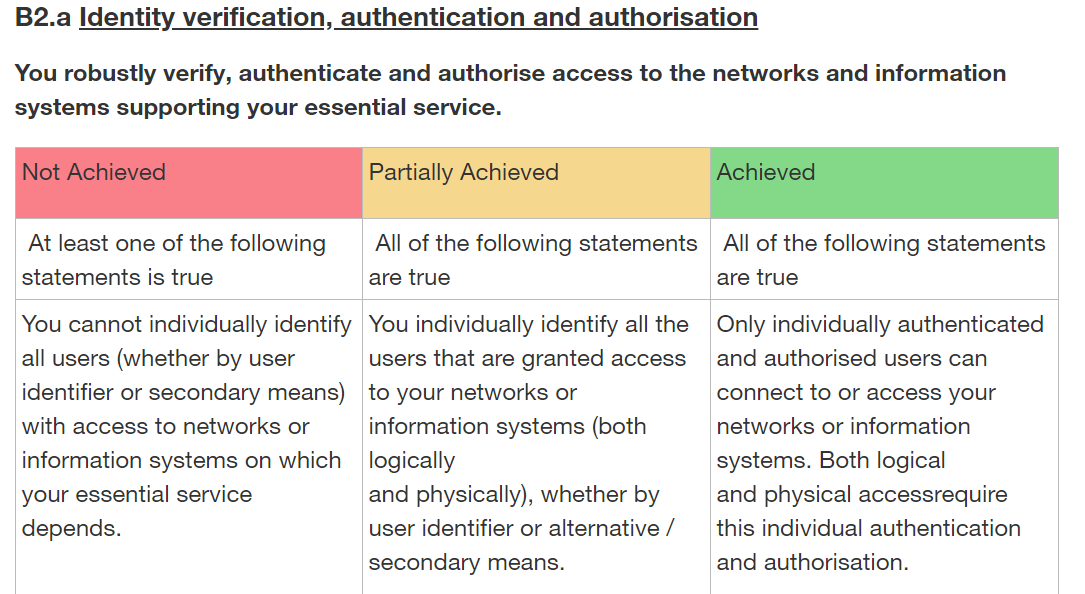
The Framework is based on the 14 outcomes-based principles of the NIS Regulations outlined above. Adherence to each principle is determined based on how well associated outcomes are met. See below for an example:

NIS

Each outcome is assessed based upon Indicators of Good Practice (IGPs), which are statements that can either be true or false for a particular organisation.

Whats’s next?

If your organisation is in the scope of the NIS Directive, it is useful to conduct an initial self-assessment using the CAF described above as an starting point of reference. Remember, formal self-assessment will be required by your Competent Authority, so it is better not to delay this crucial step.

Establishing an early dialogue with the Competent Authority is essential as this will not only help you establish the scope of the assessment (critical assets), but also allow you to receive additional guidance from them.

Initial self-assessment will most probably highlight some gaps. It is important to outline a plan to address these gaps and share it with your Competent Authority. Make sure you keep incident response in mind at all times. The process has to be well-defined to allow you report NIS-specific incidents to your Competent Authority within 72 hours.

Remediate the findings in the agreed time frames and monitor on-going compliance and potential changes in requirements, maintaining the dialogue with the Competent Authority.

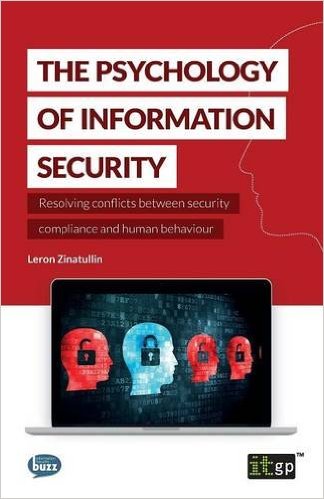
Augusta University’s Cyber Institute adopts my book

jsacacalog

Just received some great news from my publisher.  My book has been accepted for use on a course at Augusta University. Here’s some feedback from the course director:

Augusta University’s Cyber Institute adopted the book “The Psychology of Information Security” as part of our Masters in Information Security Management program because we feel that the human factor plays an important role in securing and defending an organisation. Understanding behavioural aspects of the human element is important for many information security managerial functions, such as developing security policies and awareness training. Therefore, we want our students to not only understand technical and managerial aspects of security, but psychological aspects as well.

Delivering a guest lecture at California State University, Long Beach

CSU Long Beach

I’ve been invited to talk to Masters students at the California State University, Long Beach about starting a career in cyber security.  My guest lecture at the Fundamentals of Security class was well received. Here’s the feedback I received from the Professor:

Leron, thank you so much for talking to my students. We had a great session and everybody was feeling very energised afterwards. It always helps students to interact with industry practitioners and you did a fantastic job inspiring the class. I will be teaching this class next semester, too. Let’s keep in touch and see if you will be available to do a similar session with the next cohort. Again, thank you very much for your time – I wish we could have more time available to talk!

The Psychology of Information Security Culture

logo

In order to reduce security risks within an enterprise, security professionals have traditionally attempted to guide employees towards compliance through security training. However, recurring problems and employee behaviour in this arena indicate that these measures are insufficient and rather ineffective.

Security training tends to focus on specific working practices and defined threat scenarios, leaving the understanding of security culture and its specific principles of behaviour untouched. A security culture should be regarded as a fundamental matter to address. If neglected, employees will not develop habitually secure behaviour or take the initiative to make better decisions when problems arise.

In my talk I will focus on how you can improve security culture in your organisation. I’ll discuss how you can:

  • Understand the root causes of a poor security culture within the workplace
  • Aligning a security programme with wider organisational objectives
  • Manage and communicate these changes within an organisation

The goal is not to teach tricks, but to create a new culture which is accepted and understood by everyone. Come join us at the Security Awareness Summit on 11 Nov for an amazing opportunity to learn from and share with each other. Activities include show-n-tell, 306 Lightening Talks, video wars, group case studies and numerous networking activities. Learn more and register now for the Summit.

Original

How to conduct a cyber security assessment

NIST SCF

I remember conducting a detailed security assessment using the CSET (Cybersecurity Evaluation Tool) developed by the US Department of Homeland Security for UK and US gas and electricity generation and distribution networks. The question set contained around 1200 weighted and prioritised questions and resulted in a very detailed report.

Was it useful?

The main learning was that tracking every grain of sand is no longer effective after a certain threshold.

The value add, however, came from going deeper into specific controls and almost treating it as an audit where a certain category is graded lower if none or insufficient evidence was provided.  Sometimes this is the only way to provide an insight into how security is being managed across the estate.

Why?

What’s apparent in some companies – especially in financial services – is that they conduct experiments often using impressive technology. But have they made it into a standard and consistently rolled it out across the organisation? The answer is often ‘no’. Especially if the company is geographically distributed.

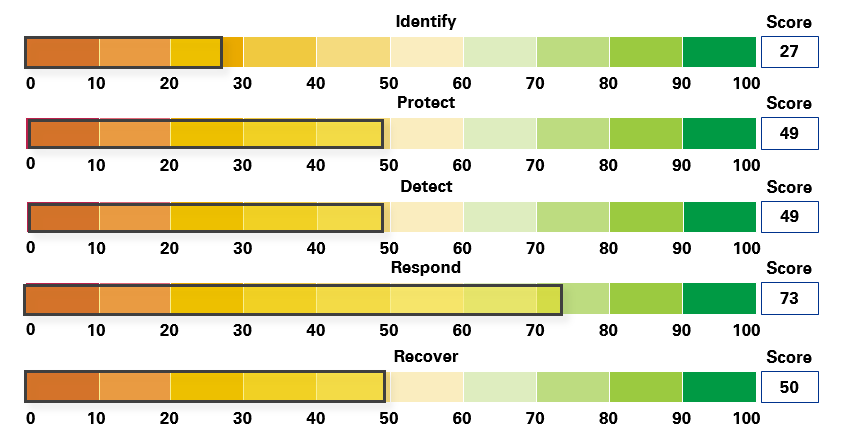
I’ve done a lot of assessments and benchmarking exercises against NIST CSF, ISO 27001, ISF IRAM2 and other standards since that CSET engagement and developed a set of questions that cover the areas of the NIST Cybersecurity Framework.

I felt the need to streamline the process and developed a tool to represent the scores nicely and help benchmark against the industry. I usually propose a tailor-made questionnaire that would include 50-100 suitable questions from the bank. From my experience in these assessments, the answers are not binary. Yes, a capability might be present but the real questions are:

  • How is it implemented?
  • How consistently it is being rolled out?
  • Can you actually show me the evidence?

So it’s very much about seeking the facts.

As I’ve mentioned, the process might not be the most pleasant for the parties involved but it is the one that delivers the most value for the leadership.

What about maturity?

I usually map the scores to the CMMI (Capability Maturity Model Integration) levels of:

  • Initial
  • Managed
  • Defined
  • Quantitatively managed and
  • Optimised

But I also consider NIST Cybersecurity framework implementation tiers that are not strictly considered as maturity levels, rather the higher tiers point to a more complete implementation of CSF standards. They go through Tiers 1-4 from Partial through to Risk Informed, Repeatable and finally Adaptive.

The key here is not just the ultimate score but the relation of the score to the coverage across the estate.

The Psychology of Information Security book reviews

51enjkmw1ll-_sx322_bo1204203200_

I wrote about my book  in the previous post. Here I would like to share what others have to say about it.

“So often information security is viewed as a technical discipline – a world of firewalls, anti-virus software, access controls and encryption. An opaque and enigmatic discipline which defies understanding, with a priesthood who often protect their profession with complex concepts, language and most of all secrecy.

Leron takes a practical, pragmatic and no-holds barred approach to demystifying the topic. He reminds us that ultimately security depends on people – and that we all act in what we see as our rational self-interest – sometimes ill-informed, ill-judged, even downright perverse.

No approach to security can ever succeed without considering people – and as a profession we need to look beyond our computers to understand the business, the culture of the organisation – and most of all, how we can create a security environment which helps people feel free to actually do their job.”
David Ferbrache OBE, FBCS
Technical Director, Cyber Security
KPMG UK

“This is an easy-to-read, accessible and simple introduction to information security.  The style is straightforward, and calls on a range of anecdotes to help the reader through what is often a complicated and hard to penetrate subject.  Leron approaches the subject from a psychological angle and will be appealing to both those of a non-technical and a technical background.”
Dr David King
Visiting Fellow of Kellogg College
University of Oxford

More