Gamification for security

Oxford dictionary defines gamification as the application of typical elements of game playing (e.g. point scoring, competition with others, rules of play) to other areas of activity to encourage engagement with a product or service:

Bringing an element of fun helps to achieve lasting change in human behaviour, as demonstrated by The Fun Theory project. Here are some videos to get an idea how gamification can drive behavioural change to address social and business challenges:

Gamification can also be a powerful learning tool when applied to information security.

For example, CyberCIEGE enhances information assurance and cyber security education and training through the use of computer gaming techniques such as those employed in SimCity™. In the CyberCIEGE virtual world, users spend virtual money to operate and defend their networks, and can watch the consequences of their choices, while under attack.

In its interactive environment, CyberCIEGE covers  significant aspects of computer and network security and defense. Players of this video game purchase and configure workstations, servers, operating systems, applications, and network devices. They make trade offs as they struggle to maintain a balance between budget, productivity, and security. In its longer scenarios, users advance through a series of stages and must protect increasingly valuable corporate assets against escalating attacks.

CyberCIEGE includes configurable firewalls, VPNs, link encryptors and access control mechanisms.  It includes identity management components such as biometric scanners and authentication servers.   Attack types include corrupt insiders, trap doors, Trojan horses, viruses, denial of service, and exploitation of weakly configured systems.   Attacker motives to compromise assets differ by asset and scenario, thereby supporting scenarios ranging from e-mail attachment awareness to cyber warfare.

More information along with introduction and demonstration movies are also available on the official website.

Cybersecure: Your Medical Practice is another example of using gamification to educate people but not in the context of the HIPAA regulation compliance.

hipaa

This web-based security training module uses a game format that requires users to respond to privacy and security challenges often faced in a typical small medical practice.  Users choosing the right response earn points and see their virtual medical practices flourish.  But users making the wrong security decisions can hurt their virtual practices.  In this version, the wrong decisions lead to floods, server outages, fire damage and other poor outcomes related to a lack of contingency planning.

Gamification can also be applied in user awareness training to change the behaviour of users in the organisation. One instance of this might be helping to recognize phishing links.

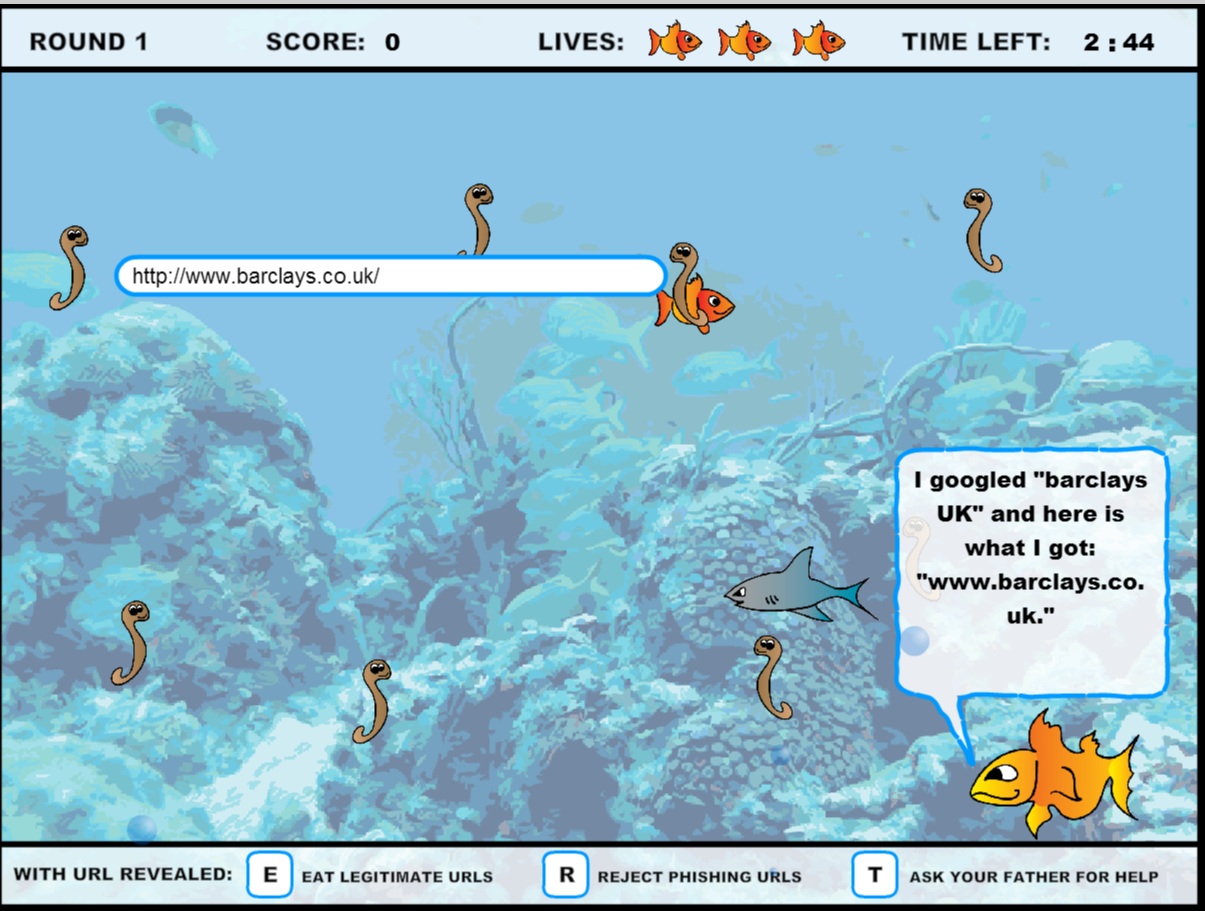
Anti-Phishing Phil is an interactive game that teaches users how to identify phishing URLs, where to look for cues in web browsers, and how to use search engines to find legitimate sites.
phil

User studies have found that user education can help prevent people from falling for phishing attacks. However, it is hard to get users to read security tutorials, and many of the available online training materials make users aware of the phishing threat but do not provide them with enough information to protect themselves. Studies demonstrate that Anti-Phishing Phil is an effective approach to user education.

Apozy and Wombat Security Technologies also focus on gamification in raising awareness about security risks.

There is a free online course on gamification available. This course will teach you the mechanisms of gamification, why it has such tremendous potential, and how to use it effectively.


PCI Data Security Standards Rock

The PCI Security Standards Council is an open global forum, launched in 2006, that is responsible for the development, management, education, and awareness of the PCI Security Standards, including the Data Security Standard (PCI DSS), Payment Application Data Security Standard (PA-DSS), and PIN Transaction Security (PTS) requirements.

The PCI Security Standards Council also develops and manages a number of programs to build awareness and to train, test, and qualify organizations and individuals to assess and validate adherence to PCI Security Standards.

They put together a short video explaining the basic principles.

Cake and Security

There is no doubt that security is necessary, but why is it so unpleasant to follow a security policy? Reminding yourself to stick to the rules feels like your partner telling you…. to eat your salad. You know they are right, but anticipating that bland taste and mindless chewing that awaits you simply puts you off. You decide to leave it for tomorrow, so much so that you never get to it.

Cakes, on the other hand, are yummy and require no effort whatsoever to indulge in our cravings for them. Nobody needs to force us to eat a piece.

In our day-to-day lives we prefer to do “cake” tasks without giving it a second’s thought. Things like storing confidential files on Dropbox or emailing them to our personal accounts…. you know, taking a little bite here and there. It’s “only for today”, “no biggie”… This one-time thing is so harmless, it’s like a comfort snack. We might later feel guilty that we bypassed a few “salad” controls. Maybe we used our personal USB drive instead of a company-issued encrypted one, but at the end of the day… who cares? Who will notice? As long as there is no dramatic impact on our health, a bite here or a bite there won’t cause any harm.

reward

And one day we realise that it’s not all rosy. The result of our laziness or lack of willpower eventually rears its ugly head when the doctor makes us stand on the scales and has a look at our blood pressure. So to add to your partner’s words of wisdom, is the doctor’s warning of an unhealthy present and a bleak future; something that would sound very similar during the company’s security audit.

“You have got to eat more salad and lay off the cakes!”

To make matters worse, even with our best intentions to have the salad at the office cafeteria, we discover that the one available is practically inedible. Pretty much like finding that the company’s secure shared drive doesn’t have the necessary space to store our files or that the encrypted pen drive is not compatible with the client’s Mac.

So if there are chefs coming up with ways to make salads more appealing, what can security professionals do to help us, the employees, maintain our “security diet”?

They could aim at making security more like a cake – effortless, even attractive, but still keep it as healthy as a salad. Sound simple? Perhaps not so much, but they should invest in usability studies to make sure that the secure solution is the easiest to use. It might involve discovering an entirely new culinary art on how to make a cake-tasting salad altogether. But if they fail to realise just how unpalatable the salads are to begin with, we should let them know. Security professionals need employees’ support.

Organisations are like families: everyone has to stay healthy, otherwise when a single member gets sick, the whole family is at risk of getting sick as well, whether it be catching an infectious disease or adopting an unhealthy lifestyle. It’s like having the slimmest, fittest family member refrain from adding biscuits to the grocery list in order not to tempt the couch-potatoes. It’s a team effort. In order for a company to stay healthy, everyone has to keep a healthy lifestyle of eating salad regularly, even when it is not that pleasant.

unpleasant but necessary measures

The whole company needs to know that security is important for achieving its goals -not as something that gets in the way-, just as we should all know that having a healthy diet of greens will guarantee a sound body. Employees contribute to the efficient operation of the business when they comply with security policies. Not only does security ensure confidentiality and the integrity of information, but it also guarantees that the resources are available for employees to complete their primary tasks.

We need to realise that we contribute to security; and we can inflict serious damage on a company when we don’t comply with security policies, no matter how insignificant or harmless they may seem. As employees, we are individually responsible for the organisation’s exposure to security risks just as we are responsible for exposing ourselves to illness. Our behaviour and daily regime significantly shape our quality of life, and our practices shape the quality of our business.

The health of the company is everyone’s business. Let’s all eat our salad while helping the security specialists to come up with better tasting ones.

Giving a talk on information security

Met

I delivered a talk at the London Metropolitan University today where I was invited to share my story and participate in the university’s mentoring scheme. Although there were many students from different fields present, I focused on the computer science and information security area.

I elaborated on the possible and the transferable skills that young students can develop and apply during their undergraduate and postgraduate programmes. We also talked about job search, the general application process and the various career paths available to students in the information security and computer science areas.

Cyber Insurance: Managing the Risk

ID-100178628

Cyber insurance is a hot topic of many debates today. It is believed to be the long-awaited cure for high-impact security risks, especially in light of constantly evolving privacy legislation and disclosure obligations. But what actually is it?

Simply put, cyber insurance is a tool intended to mitigate the loss from information security incidents.  The decision to use it, however, should be based on rigorous risk management. Firstly, a company performs a risk assessment, during which information security risks are identified and logged. This can help the business to prioritise from a cost-benefit perspective. The company can then choose a risk treatment option: it can decide to accept, mitigate, avoid or transfer the risk.

Mitigation and acceptance are quite common approaches in the information security domain. Security professionals can implement a countermeasure to reduce the likelihood and impact of the threat. However, if it is not feasible to do so for economic reasons then the risk can be accepted. In the case of avoidance, businesses can decide not to perform the activity that exposes them to the risk. Lastly, information security risk can be transferred to a third party. This is where cyber insurance can be useful.

The ownership of risk, however, can’t be transferred fully. In the case of cyber insurance, it is more about risk sharing. Both parties should understand their accountability, liability and risk allocation.

Cyber insurance should be cost-effective. But how can one calculate the cost of such product?  To understand this, we might want to look how insurance brokers work in more traditional areas. Insurance companies rely heavily on historical data, demographics and averages. The car insurance industry, for example, has evolved over many years to collate accurate statistics of the frequency of accidents per driver based on age, season, car type, country etc. in order to predict the likelihood and cost impact on a case by case basis.

For cyber insurance, however, historical data is not always readily available. Understanding the business becomes key to determining the cost. There are many parameters which can define the premium: size, territory, type of business, human errors and other unknown factors can all contribute to the price. Premiums rely on the maturity of the information security programme.

But is it possible to reduce this cost?

Yes, there are many ways to achieve cost reduction. In general, it is required for the business to demonstrate that some measures have already been taken to reduce the likelihood and impact of a potential cyber security incident. Certifications, such as ISO 27001 can be one of the ways to do so. Or for instance, having an incident response team can drive the premium down. Otherwise the insurer would have to provide its own service, hence charge the client extra. In a nutshell, premiums are never fixed. It has to be a dialogue between the company and the insurance broker. If a company adequately understands its risk, the insurance premium can and should be negotiated.

It is important to mention the importance of a holistic approach to risk treatment. Implementing controls to prevent security incidents and purchasing cyber insurance are not mutually exclusive strategies. If cost-effective, risk management and treatment should be a combination of both methods. Consider health and safety policies as an example. Safety coordinators invest in fire extinguishers minimise the impact of fire. Just like information security professionals deploy firewalls to keep malicious intruders out of the company’s network. Additionally, the building is also almost always insured. Maybe it is time to consider a similar approach to information systems.

Image courtesy of Stuart Miles / FreeDigitalPhotos.net

Presenting at the ISACA London Chapter event

Goal

I shared some research findings with the ISACA London Chapter members at the November event. We discussed resolving conflicts between security compliance and human behaviour. The talk was followed by a panel discussion with other presenters, where I answered questions regarding human aspects of information security.

During the networking session after the presentation I’ve had many other interesting conversations with the participants. People were sharing their stories and experiences implementing and auditing security controls.

The video of the talk is available on the ISACA London Chapter website.

Poker and Security

Good poker players are known to perform well under pressure. They play their cards based on rigorous probability analysis and impact assessment. Sounds very much like the sort of skills a security professional might benefit from when managing information security risks.

What can security professionals learn from a game of cards? It turns out, quite a bit. Skilled poker players are very good at making educated guesses about opponents’ cards and predicting their next moves. Security professionals are also required to be on the forefront of emerging threats and discovered vulnerabilities to see what the attackers’ next move might be.

At the beginning of a traditional Texas hold’em poker match, players are only dealt two cards (a hand). Based on this limited information, they have to try to evaluate the odds of winning and act accordingly. Players can either decide to stay in the game – in this case they have to pay a fee which contributes to the overall pot – or give up (fold). Security professionals also usually make decisions under a high degree of uncertainty. There are many ways they can treat risk: they can mitigate it by implementing necessary controls, avoid, transfer or accept it. Costs of such decisions vary as well.

ID-10042164

Not all cards, however, are worth playing. Similarly, not all security countermeasures should be implemented. Sometimes it is more effective to fold your cards and accept the risk rather than pay for an expensive control. When the odds are right a security professional can start a project to implement a security change to increase the security posture of a company.

When the game progresses and the first round of betting is over, the players are presented with a new piece of information. The poker term flop is used for the three additional cards that the dealer places on the table. These cards can be used to create a winning combination with each player’s hand. When the cards are revealed, the player has the opportunity to re-assess the situation and make a decision. This is exactly the way in which the changing market conditions or business requirements provide an instant to re-evaluate the business case for implementing a security countermeasure.

ID-10058910

There is nothing wrong with terminating a security project. If a poker player had a strong hand in the beginning, but the flop shows that there is no point in continuing, it means that conditions have changed. Maybe engaging key stakeholders revealed that a certain risk is not that critical and the implementation costs might be too high. Feel free to pass. It is much better to cancel a security project rather than end up with a solution that is ineffective and costly.

However, if poker players are sure that they are right, they have to be ready to defend their hand. In terms of security, it might mean convincing the board of the importance of the countermeasure based on the rigorous cost-benefit analysis. Security professionals can still lose the game and the company might get breached, but at least they did everything in their power to proactively mitigate that.

It doesn’t matter if poker players win or lose a particular hand as long as they make sound decisions that bring desired long-term results. Even the best poker player can’t win every hand. Similarly, security professionals can’t mitigate every security risk and implement all the possible countermeasures. To stay in the game, it is important to develop and follow a security strategy that will help to protect against ever-evolving threats in a cost-effective way.

Images courtesy of Mister GC / FreeDigitalPhotos.net

Find out how security controls affect productivity in your company


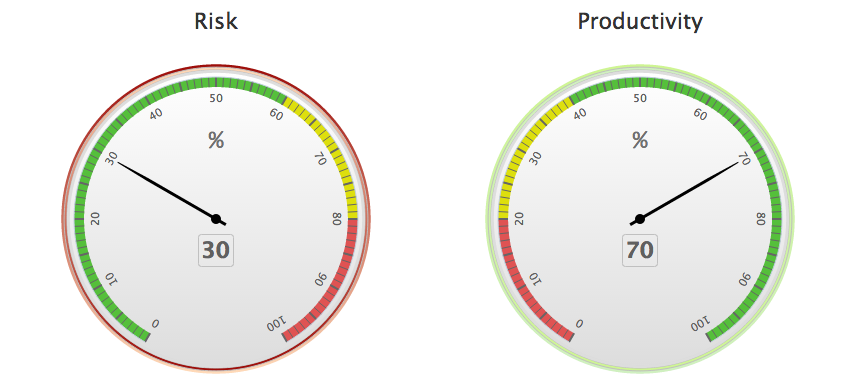
speedometer

To expand on my research on the human aspect of security, I created a simplified model to highlight the relationship between productivity and security. The main hypothesis, is that there is a productivity cost associated with the security controls.

The interactive simulation was created to allow users to implement their own security policies and observe the relationship between risk reduction and impact on productivity cost. Easy to understand visual feedback is available immediately for the users. This helps to understand security managers’ perspective when implementing security controls in a company.

The creation of the model was inspired by research conducted by Angela Sasse and her colleagues at the University College London.

Please get in touch if you have any feedback or would like to discuss the underlying research findings.

Teaching Information Security Concepts at KPMG

KPMG1

I delivered a 1,5-day Information Security Concepts course at KPMG UK.

We covered a wide range of topics, including information security risk management, access control, threat and vulnerability management, etc.

According to the feedback I received after the course, the participants were able to understand the core security concepts much better and, more importantly, apply their knowledge in practice.

Leron is very engaging and interesting to listen to
Leron has the knowledge and he’s very effective making simple delivery of a complex topic
Leron is an effective communicator and explained everything that he was instructing on in a clear and concise manner

There will be continuous collaboration with the Learning and Development team to deliver this course to all new joiners to the Information Protection and Business Resilience team at KPMG.