Security dashboard

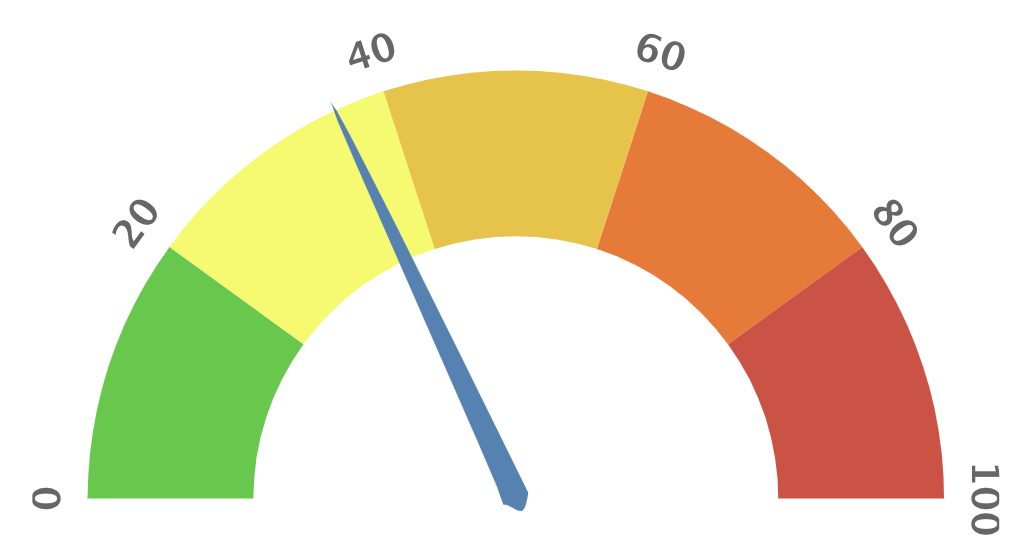
Building on my previous blogs on CISO responsibilities, initial priorities and developing information security strategy, I wanted to share an example of what a security dashboard might look like. It is important to communicate regularly with your stakeholders and sharing a status update like this might be one way of doing it. The dashboard incorporates a high-level view of a threat landscape, top risks and security capabilities to address these risks (with maturity and projected progression for each). Feel free to use this as a starting point and adjust to your needs.

The dashboard above aligns to the NIST Cybersecurity Framework functions as structuring your security programme activities in this way, in my experience, allows for better communication with business stakeholders. However, capabilities can be adjusted to align with any other framework or your control set of choice. Some of the elements can be deliberately simplified further depending on your target audience.

Feel free to refer to my previous blogs on developing security metrics and KPIs and maturity assessment for more information.

How to develop a culture of security

Managing change and improving security culture should start with understanding the organisation, the people in it and what drives them. 

In the case of cyber security, this begins with understanding why current security practices might not be effective and why people often find workarounds rather than follow security processes. 

More

Cyber security metrics and KPIs

Security professionals have access to the amounts of data never seen before. Antivirus software, firewalls, data loss prevention solutions – they all generate a staggering amount of alerts.

Security operation centres and the underlying SIEM technology allow us to aggregate, correlate and make sense of these vast troves of data. We can create dashboards and metrics that might look slick and even be useful to security teams but do such data add value to business stakeholders? Do they tell a story to the Board?

More

Cyber security lessons from across the industries

I have been fortunate to help and collaborate with a wide variety of organisations during my cyber security career to date. These companies range from large multinationals that are household names to small tech startups that you probably haven’t even heard of.

Although the regulatory landscape, security maturity and key risks often vary dramatically between industries, there are common themes that both an upstart FinTech and an energy giant can benefit from.

Being able to see what works, for example, in the world of Operational Technology and apply some of the learnings to an insurance company and vice versa can bring a fresh perspective and result in unique solutions that can be easily overlooked in traditional sector-specific paradigms. Identifying these synergies and collaboration opportunities between organisations of different sizes, industries, cultures and technological stacks has allowed me to better understand specific issues, challenge the conventional thinking and tailor my advice to fit the overall strategy of a given organisation for best results.

How to be a trusted advisor

Being a security leader is first and foremost acting as a trusted advisor to the business. This includes understanding its objectives and aligning your efforts to support and enable delivery on the wider strategy.

It is also about articulating cyber risks and opportunities and working with the executive team on managing them. This doesn’t mean, however, that your role is to highlight security weaknesses and leave it to the board to figure it all out. Instead, being someone they can turn to for advice is the best way to influence the direction and make the organisation more resilient in combating cyber threats.

For your advice to be effective, you first need to earn the right to offer it. One of the best books I’ve read on the subject is The Trusted Advisor by David H. Maister. It’s not a new book and it’s written from the perspective of a professional services firm but that doesn’t mean the lessons from it can’t be applied in the security context. It covers the mindset, attributes and principles of a trusted advisor.

Unsurprisingly, the major focus of this work is on developing trust. The author summarises his views on this subject in the trust equation:

Trust = (Credibility + Reliability + Intimacy) / Self-Orientation

It’s a simple yet powerful representation of what contributes to and hinders the trust building process.

It’s hard to trust someone’s recommendations when they don’t put our interests first and instead are preoccupied with being right or jump to solutions without fully understanding the problem.

Equally, as important credibility is, the long list of your professional qualifications and previous experience on its own is not sufficient to be trustworthy. Having courage and integrity, following through on your promises and active listening, among other things are key. In the words of Maister, “it is not enough to be right, you must also be helpful”.

Business alignment framework for security

In my previous blogs on the role of the CISO, CISO’s first 100 days and developing security strategy and architecture, I described some of the points a security leader should consider initially while formulating an approach to supporting an organisation. I wanted to build on this and summarise some of the business parameters in a high-level framework that can be used as a guide to learn about the company in order to tailor a security strategy accordingly.

This framework can also be used as a due diligence cheat sheet while deciding on or prioritising potential opportunities – feel free to adapt it to your needs.

More

The role of a CISO

I’m often asked what the responsibilities of a CISO or Head of Information Security are. Regardless of the title, the remit of a security leadership role varies from organisation to organisation. At its core, however, they have one thing in common – they enable the businesses to operate securely. Protecting the company brand, managing risk and building customer trust through safeguarding the data they entrusted you with are key.

There are various frameworks out there that can help structure a security programme but it is a job of a security leader to understand the business context and prioritise activities accordingly. I put the below diagram together (inspired by Rafeeq Rehman) to give an idea of some of the key initiatives and responsibilities you could consider. Feel free to adapt and tailor to the needs of your organisation.

You might also find my previous blogs on the first 100 days as a CISO and developing an information security strategy useful.

More

How to select cyber insurance

I wrote previously about how cyber insurance can be a useful addition to your risk management program.

Unlike more established insurance products, cyber doesn’t have the same amount of historical data, so approaches to underwriting this risk can vary. Models to quantify it usually rely on a number of high-level factors (the industry your organisation is in, geography, applicable regulation, annual revenue, number of customers and employees, etc.) and questions aimed at evaluating your security capabilities.

You are usually asked to complete a self-assessment questionnaire to help the underwriter quantify the risk and come up with an appropriate policy. Make sure the responses you provide are accurate as discrepancies in the answers can invalidate the policy. It’s also a good idea to involve your Legal team to review the wording. 

While you can’t do much about the wider organisational factors, you could potentially reduce the premium, if you are able to demonstrate the level of security hygiene in your company that correlates with risk reduction.

To achieve this, consider implementing measures aimed at mitigating some of the more costly cyber risks. What can you do to prevent and recover from a ransomware attack, for example? Developing and testing business continuity and disaster recovery plans, enabling multi factor authentication, patching your systems and training your staff all make good sense from the security perspective. They can also save your business money when it comes to buying cyber insurance.

If possible, offer to take the underwriter through your security measures in more detail and play around with excess and deductibles. Additionally, higher cover limits will also mean higher premiums and these are not always necessary. Know what drives your business to get cyber cover in the first place. Perhaps, your organisation can’t afford to hire a full time incident response manager to coordinate the activities in the event of a breach or manage internal and external communication. These are often included in cyber insurance products, so taking advantage of them doesn’t necessarily mean you need to pay for a high limit. While it is tempting to seek insurance against theft of funds and compensation for business interruption, these can drive the premium up significantly. 

It’s worth balancing the cost of the insurance with the opportunity cost of investing this sum in improving cyber security posture. You might not be able to hire additional security staff but you may be able to formulate a crisis communication plan, including various notification templates and better prepare with an incident simulation exercise, if you haven’t already. These are not mutually exclusive, however, and best used in conjunction. 

Remember, risk ownership cannot be transferred: cyber insurance is not a substitute for security controls, so even the best cover should be treated as an emergency recovery measure.

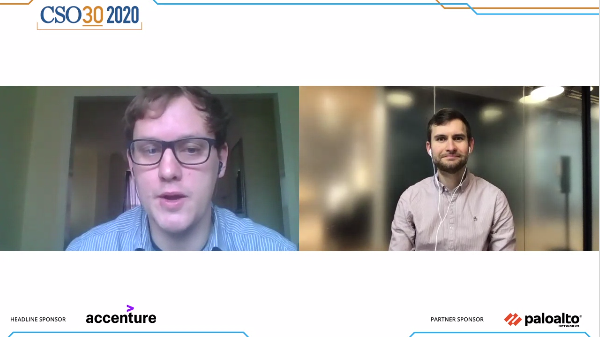
CSO30 Conference – behavioural science in cyber security

I’ve been invited to speak at the CSO30 Conference today on applying behavioural science to cyber security.

I talked about the role behavioural science plays in improving cybersecurity in organisations, the challenges of applying academic theory in practice and how to overcome them.

I shared some tips on how to build the culture of security and measure the success of your security programme.

We also spoke about the differences in approaches and scalability of your security programme depending on the size and context you organisation, including staffing and resourcing constraints.

Overall, I think we covered a lot of ground in just 30 minutes and registration is still open if you’d like to watch a recording.

Royal Holloway University of London adopts my book for their MSc Information Security programme

Photo by lizsmith

One of the UK’s leading research-intensive universities has selected The Psychology of Information Security to be included in their flagship Information Security programme as part of their ongoing collaboration with industry professionals.

Royal Holloway University of London’s MSc in Information Security was the first of its kind in the world. It is certified by GCHQ, the UK Government Communications Headquarters, and taught by academics and industrial partners in one of the largest and most established Information Security Groups in the world. It is a UK Academic Centre of Excellence for cyber security research, and an Engineering and Physical Sciences Research Council (EPSRC) Centre for Doctoral Training in cyber security.

Researching and teaching behaviours, risk perception and decision-making in security is one of the key components of the programme and my book is one of the resources made available to students.

“We adopted The Psychology of Information Security book for our MSc in Information Security and have been using it for two years now. Our students appreciate the insights from the book and it is on the recommended reading list for the Human Aspects of Security and Privacy module. The feedback from students has been very positive as it brings the world of academia and industry closer together.”

Dr Konstantinos Mersinas,
Director of Distance Learning Programme and MSc Information Security Lecturer.