I recently completed a masterclass on embedding sustainable leadership in organisations. The best part was the interactive simulation to identify the trade-offs necessary to achieve a balanced approach to decision making for both immediate business goals and long-term sustainability.
I have a keen interest in the not-for-profit sector because its commitment to mission aligns with my personal values and goals. As part of my Executive MBA studies, I completed the Social Impact course that provided me with an insight into complex problems in society and how I can leverage my skills to help tackle them.
One of my biggest learnings from this course relates to demonstrating social impact.
I previously viewed social impact measurement as a distraction from doing actual work imposed by funders and regulators. It was easier for me to focus on outputs rather than long-term outcomes and impact, because they were readily available and straightforward to report on. This course broadened my perspective and helped me distinguish between outputs and lasting social, economic and environmental effects.
Applying course concepts, particularly Theory of Change and Logic Models helped me see the benefits of social impact measurement like learning and personal development, increased accountability, transparency and trust and overall organisational improvement.
In this blog I’ll share some of the tools that can be used to analyse a particular problem. We will use homelessness as an example and compare how two organisations tackle this problem and demonstrate social impact.
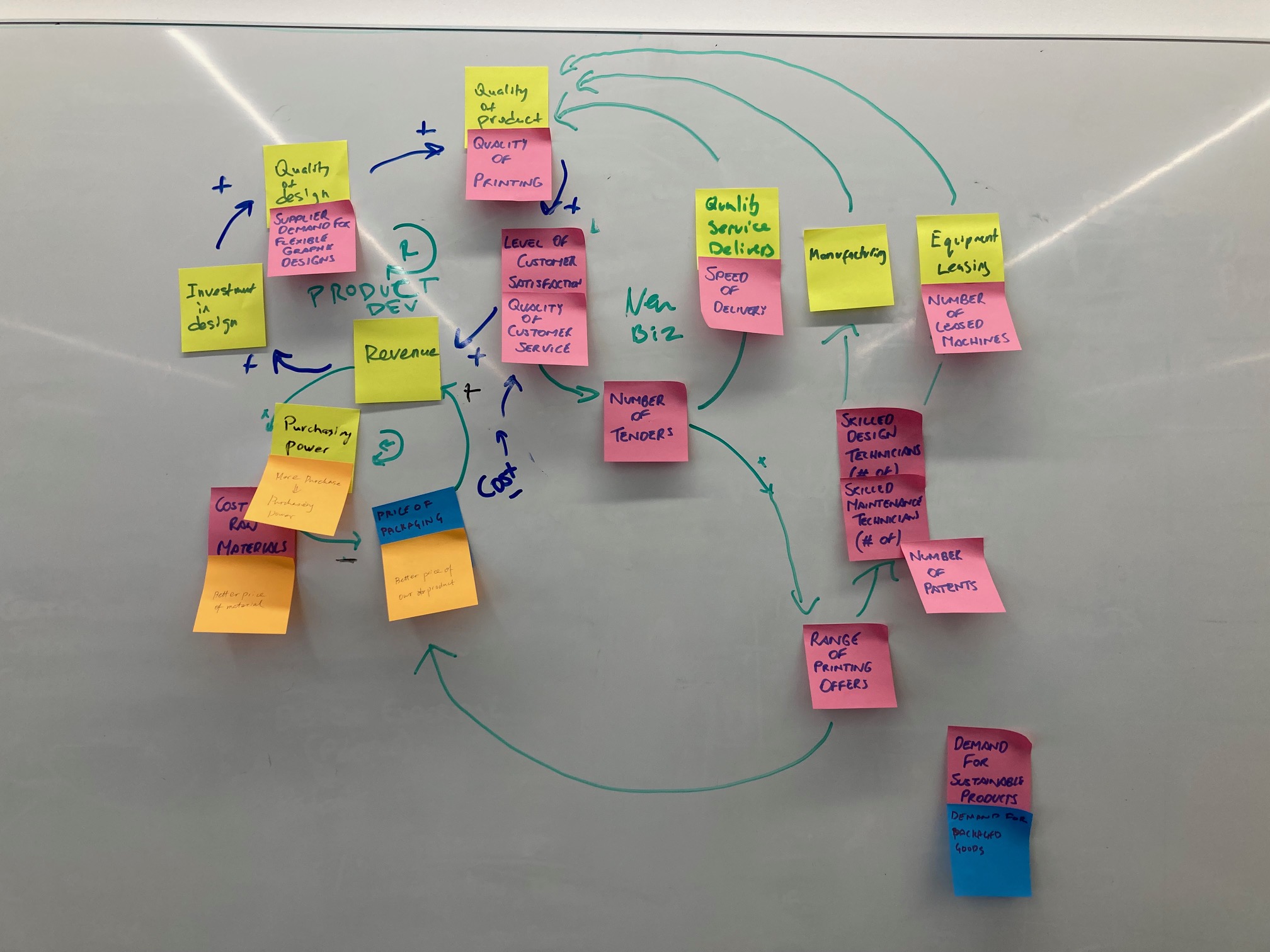
Cyber security leaders deal with complex problems all the time, but only a few are well equipped to deal with such challenges effectively. Systems thinking is a discipline that can help CISOs improve their ability to see the bigger picture and move beyond simplistic linear cause-effect relationships and point-in-time snapshots.
Systems thinking is a mindset that encourages you to see interdependencies, processes and patterns of complex systems. Complex systems contain multiple interacting feedback loops and it is this feature that make them so challenging to understand, diagnose and improve.
In this blog I outline some examples of complex systems, recommend tools to begin to understand and influence them and demonstrate how these techniques can be applied to improve digital safety and security.
I completed the Data Analytics and Decision Making course as part of my Executive MBA. In this blog, I summarise some of the insights and learnings that you can apply in your work too.
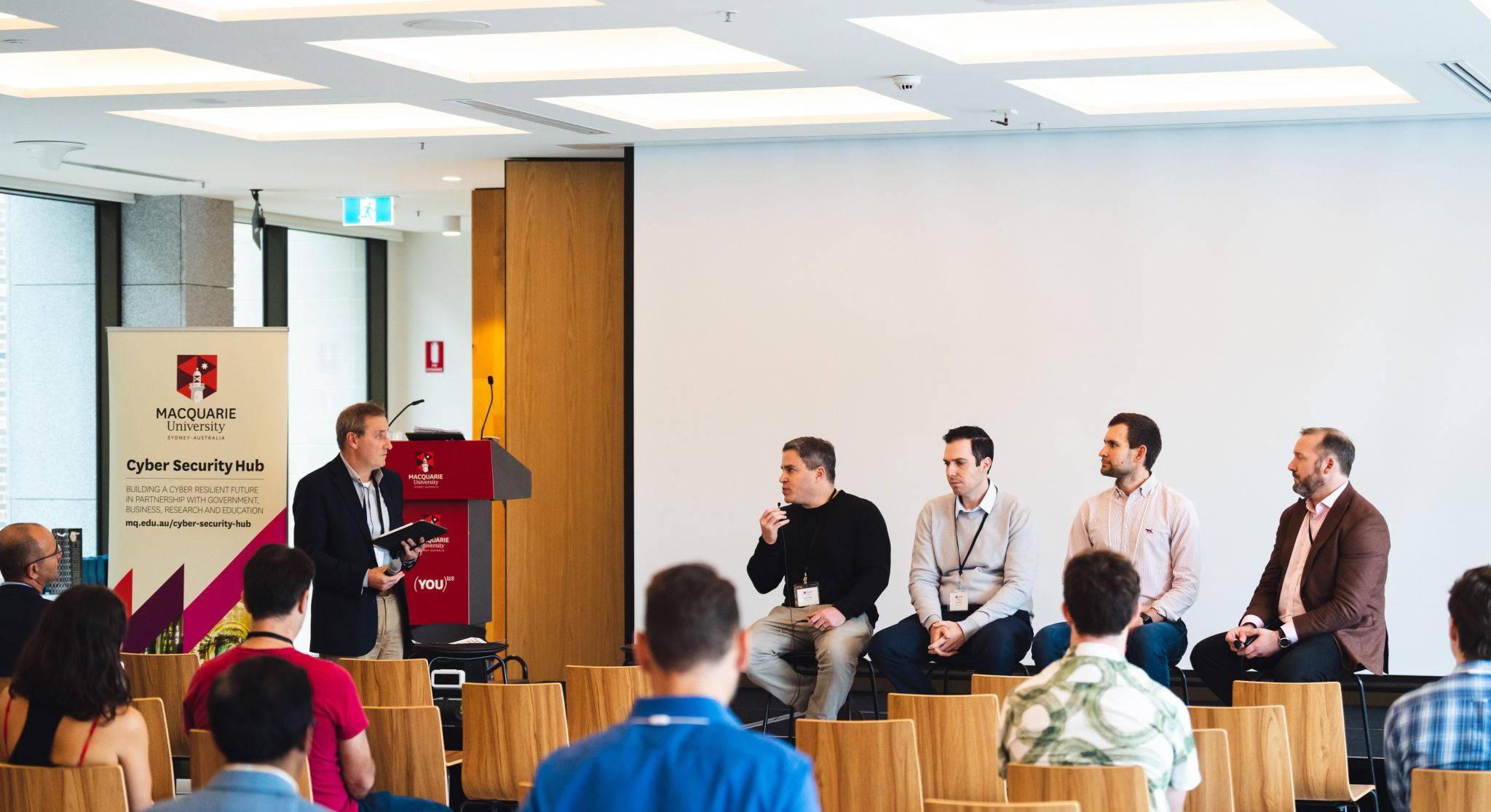
I’ve been invited to to share my thoughts on human-centric security at the Macquarie University Cyber Security Industry Workshop.
Drawing on insights from The Psychology of Information Security and my experience in the field, I outlined some of the reasons for friction between security and business productivity and suggested a practical approach to a building a better security culture in organisations.
It was great to be able to contribute to the collaboration between the industry, government and academia on this topic.
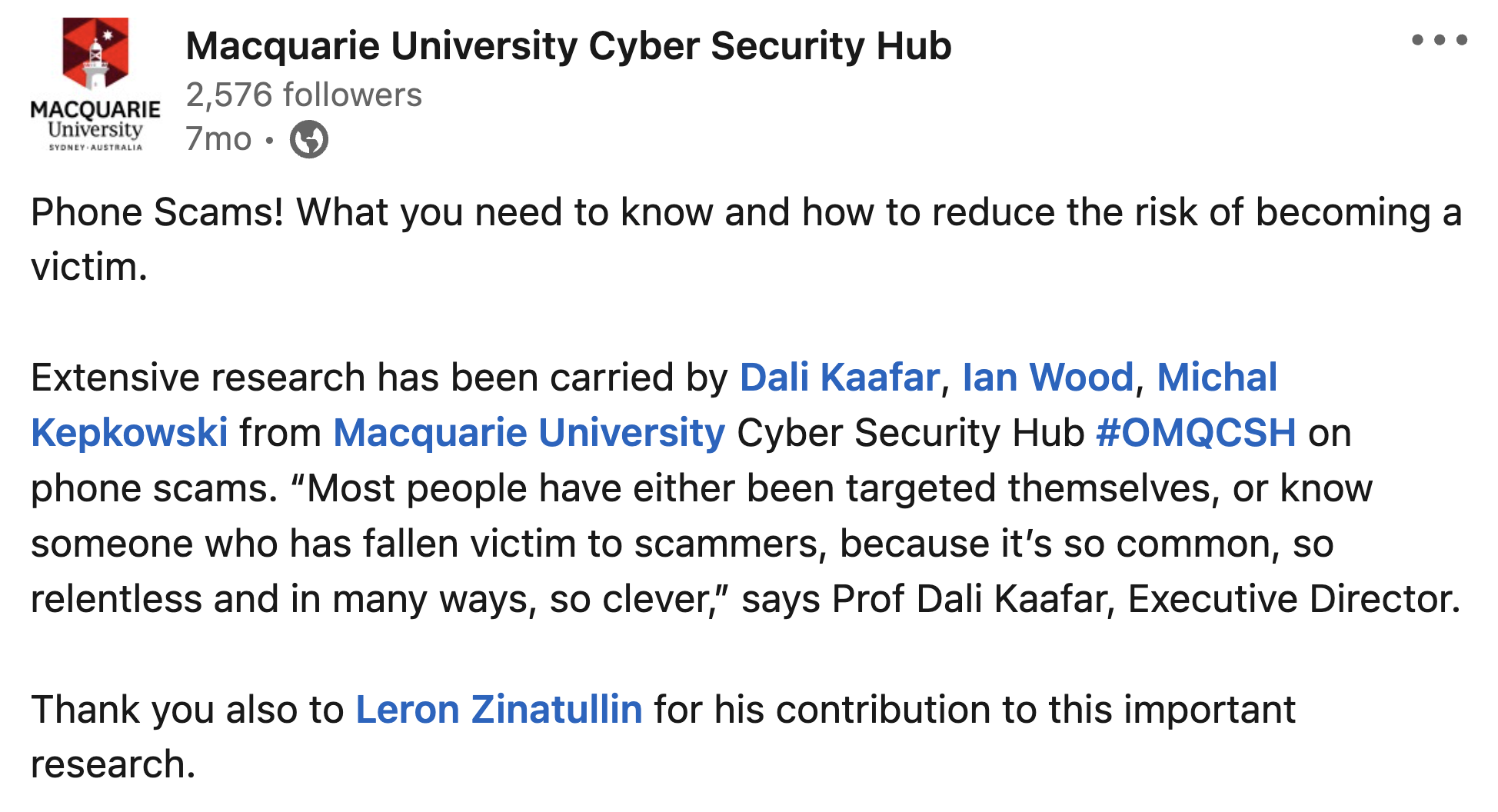
I recently had a chance to collaborate with researchers at The Optus Macquarie University Cyber Security Hub. Their interdisciplinary approach brings industry practitioners and academics from a variety of backgrounds to tackle the most pressing cyber security challenges our society and businesses face today.
Both academia and industry practitioners can and should learn from each other. The industry can guide problem definition and allow access to data, but also learn to apply the scientific method and test their hypotheses. We often assume the solutions we implement lead to risk reduction but how this is measured is not always clear. Designing experiments and using research techniques can help bring the necessary rigour when delivering and assessing outcomes.
I had an opportunity to work on some exciting projects to help build an AI-powered cyber resilience simulator, phone scam detection capability and investigate the role of human psychology to improve authentication protocols. I deepened my understanding of modern machine learning techniques like topic extraction and emotion analysis and how they can be applied to solve real world problems. I also had a privilege to contribute to a research publication to present our findings, so watch this space for some updates next year.
I’ve been exploring the current application of machine learning techniques to cybersecurity. Although, there are some strong use cases in the areas of log analysis and malware detection, I couldn’t find the same quantity of research on applying AI to the human side of cybersecurity.
Can AI be used to support the decision-making process when developing cyber threat prevention mechanisms in organisations and influence user behaviour towards safer choices? Can modelling adversarial scenarios help us better understand and protect against social engineering attacks?
To answer these questions, a multidisciplinary perspective should be adopted with technologists and psychologists working together with industry and government partners.
While designing such mechanisms, consideration should be given to the fact that many interventions can be perceived by users as negatively impacting their productivity, as they demand additional effort to be spent on security and privacy activities not necessarily related to their primary activities [1, 2].
A number of researchers use the principles from behavioural economics to identify cyber security “nudges” (e.g. [3], [4]) or visualisations [5,6]. This approach helps them make better decisions and minimises perceived effort by moving them away from their default position. This method is being applied in the privacy area, for example for reduced Facebook sharing [7] and improved smartphone privacy settings [8]. Additionally there is greater use of these as interventions, particularly with installation of mobile applications [9].
The proposed socio-technical approach to the reduction of cyber threats aims to account for the development of responsible and trustworthy people-centred AI solutions that can use data whilst maintaining personal privacy.
A combination of supervised and unsupervised learning techniques is already being employed to predict new threats and malware based on existing patterns. Machine learning techniques can be used to monitor system and human activity to detect potential malicious deviations.
Building adversarial models, designing empirical studies and running experiments (e.g. using Amazon’s Mechanical Turk) can help better measure the effectiveness of attackers’ techniques and develop better defence mechanisms. I believe there is a need to explore opportunities to utilise machine learning to aid the human decision-making process whereby people are supported by, and work together with, AI to better defend against cyber attacks.
We should draw upon participatory co-design and follow a people-centred approach so that relevant stakeholders are engaged in the process. This can help develop personalised and contextualised solutions, crucial to addressing ethical, legal and social challenges that cannot be solved with AI automation alone.
One of the UK’s leading research-intensive universities has selected The Psychology of Information Security to be included in their flagship Information Security programme as part of their ongoing collaboration with industry professionals.
Royal Holloway University of London’s MSc in Information Security was the first of its kind in the world. It is certified by GCHQ, the UK Government Communications Headquarters, and taught by academics and industrial partners in one of the largest and most established Information Security Groups in the world. It is a UK Academic Centre of Excellence for cyber security research, and an Engineering and Physical Sciences Research Council (EPSRC) Centre for Doctoral Training in cyber security.
Researching and teaching behaviours, risk perception and decision-making in security is one of the key components of the programme and my book is one of the resources made available to students.
“We adopted The Psychology of Information Security book for our MSc in Information Security and have been using it for two years now. Our students appreciate the insights from the book and it is on the recommended reading list for the Human Aspects of Security and Privacy module. The feedback from students has been very positive as it brings the world of academia and industry closer together.”
Dr Konstantinos Mersinas, Director of Distance Learning Programme and MSc Information Security Lecturer.
Thank you for visiting my website. I’m often asked how I started in the field and what I’m up to now. I wrote a short blog outlining my career progression.