How to adopt NIST CSF 2.0

CSF 2.0 Functions. Source: NIST

NIST released a new version of the Cybersecurity Framework with a few key changes:

  • It now can be applied beyond critical infrastructure, making it more versatile and straightforward to adopt.
  • It introduces a new core “Govern” function that includes categories from other sections, with increased focus on supply chain risk management and accountability.
  • It highlights synergies with the NIST Privacy Framework.

I often use this framework to develop and deliver information security strategy. Although, other methodologies exist, I find its layout and functions facilitate effective communication with various stakeholder groups, including the Board.


More

Cyber security for social impact

As a cyber security leader, I feel strongly about social issues related to human rights in the context of privacy, data protection and safe use of technology. I believe technology can be an enabler but also a potential cause of harm that needs to be considered.

I started volunteering with the CyberPeace Institute to leverage my cyber and technology skills to empower not-for-profit organisations to combat cyber threats and protect the communities they serve.

More

Systems thinking in cyber security

Cyber security leaders deal with complex problems all the time, but only a few are well equipped to deal with such challenges effectively. Systems thinking is a discipline that can help CISOs improve their ability to see the bigger picture and move beyond simplistic linear cause-effect relationships and point-in-time snapshots.

Systems thinking is a mindset that encourages you to see interdependencies, processes and patterns of complex systems. Complex systems contain multiple interacting feedback loops and it is this feature that make them so challenging to understand, diagnose and improve.

In this blog I outline some examples of complex systems, recommend tools to begin to understand and influence them and demonstrate how these techniques can be applied to improve digital safety and security.

More

Inclusion and accessibility: shaping culture and driving business outcomes

I’m grateful to have had an opportunity to continue to learn and contribute to the important discussion on building the culture of diversity, inclusion and accessibility in cyber security.

I like being on panels like this because it gives me an opportunity to share my views and continue to educate myself not only through research but also through lived experiences.

I believe shaping the inclusive culture begins with creating awareness about the barriers to diversity and inclusion. Accessibility is an important consideration. Testing new systems and processes with people with accessibility needs is key to discovering where issues may exist.

The best way to make security more accessible is to engage with the people who interact with it. Treating usability and accessibility together with other security requirements rather than a separate item is useful to ensure it gets built-in from the start.

Developing effective negotiation skills

Negotiation is a core skill that can make or break your success as a CISO.

While technical expertise is important, it’s equally critical to recognise the value of negotiation skills in cyber security leadership. By developing and applying strong negotiation skills, you’ll be better equipped to lead your organisation in an increasingly complex and challenging cyber security landscape.

I recently completed a negotiations workshop by Filip Hron and highly recommend him as a facilitator and his book ‘Negotiations Evolved’. I particularly appreciate his focus on ethics and value creation.

In this blog, I outline how some of the skills can be applied to the cybersecurity context.

More

How to maximise the return on security investment

Not every conversation a CISO is having with the Board should be about asking for a budget increase or FTE uplift. On the contrary, with the squeeze on security budgets, it can be an opportunity to demonstrate how you do more with less.

To demonstrate business value and achieve desired impact, a CISO’s cyber security strategy should go beyond cyber capability uplift and risk reduction and also improve cost performance.

Security leaders don’t have unlimited resources. Significant security transformation, however, can be achieved leveraging existing investment and security resource levels.

More

Implementing cyber security strategy

Illustrative example: cyber roadmap

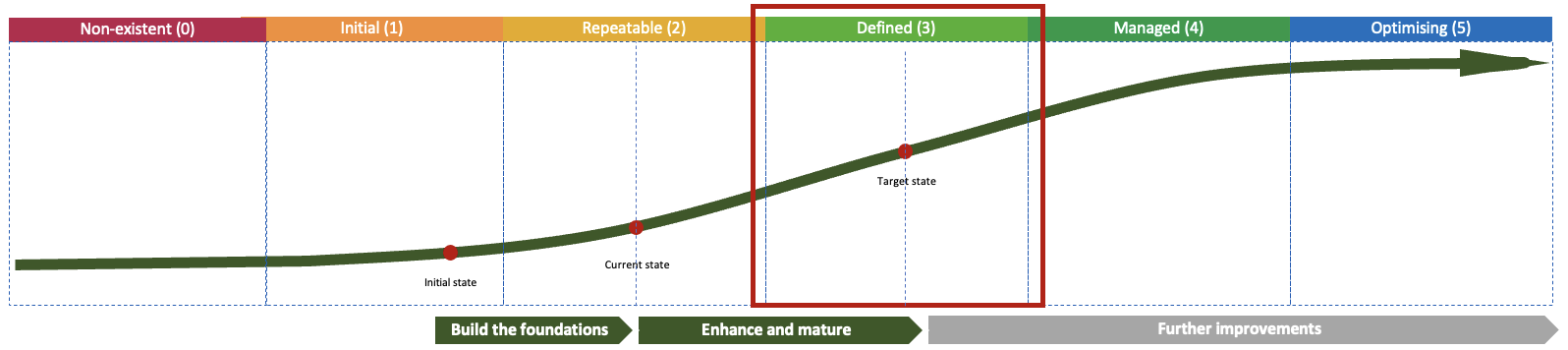
CISOs and security leaders are often called upon to develop a security strategy. It’s an important step to understand what your current state is, in what direction you’re going and the roadmap to get there. It’s also an opportunity to demonstrate how cyber security activities and programs align to business objectives.

There is more to the CISO role than just setting the direction, however. It’s also about execution. As a security leader, it’s key to take ownership of the strategy and deliver on its promise. It’s useful, therefore, to be able to track progress against your objectives and demonstrate to the executive leadership team and the Board the impact the security team is making in enabling the business.

More