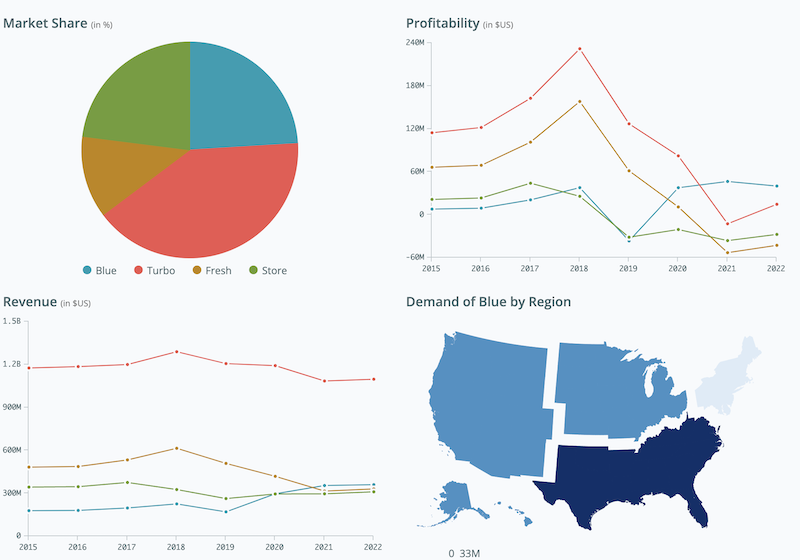
I completed the Data Analytics and Decision Making course as part of my Executive MBA. In this blog, I summarise some of the insights and learnings that you can apply in your work too.
A practical approach
I completed the Data Analytics and Decision Making course as part of my Executive MBA. In this blog, I summarise some of the insights and learnings that you can apply in your work too.

During one of my dives I pondered if there are any parallels we can draw between scuba diving and cyber security. They may seem like vastly different activities, but they share many important similarities. Both are dealing with unknown and often rapidly changing environments, where careful preparation, attention to detail and a focus are critical for success. I list some themes in this blog, feel free leave a comment to add your own.
Picture an easy Sunday morning. It’s sunny and quiet with only birds chirping outside. You make yourself a cup of coffee and sit on the sofa to catch-up on what’s happening in the world. You open your favourite news site and here it is – first story of the day in large font.
Breaking news: massive data breach! It’s your company in the headline.
This is the modern reality, cyber attacks are becoming increasingly common and it’s no longer a matter of if but when.
How do you manage this PR nightmare? What do you tell the media? Can you regain the trust of your customers and partners?
These are not the questions you want to be thinking about in the middle of a crisis. The real story begins way before that. It starts with responsible data management practices and securing people’s information.
I’m thrilled to join an exclusive cybersecurity investment community – Cyber Club London . CCL is a group of cybersecurity experts and leaders who have access to new and innovative early-stage startups, the opportunity to invest in them privately, and use their expertise and connections to help these startups succeed.
The community was established to provide a platform where cybersecurity leaders, executives, startups, and venture capitalists can share knowledge and work together to invest in promising early-stage companies. This closely aligns to my goals of contributing to the community and helping ventures thrive in the cyber space, serving as a Board Advisor and Non-Executive Director.
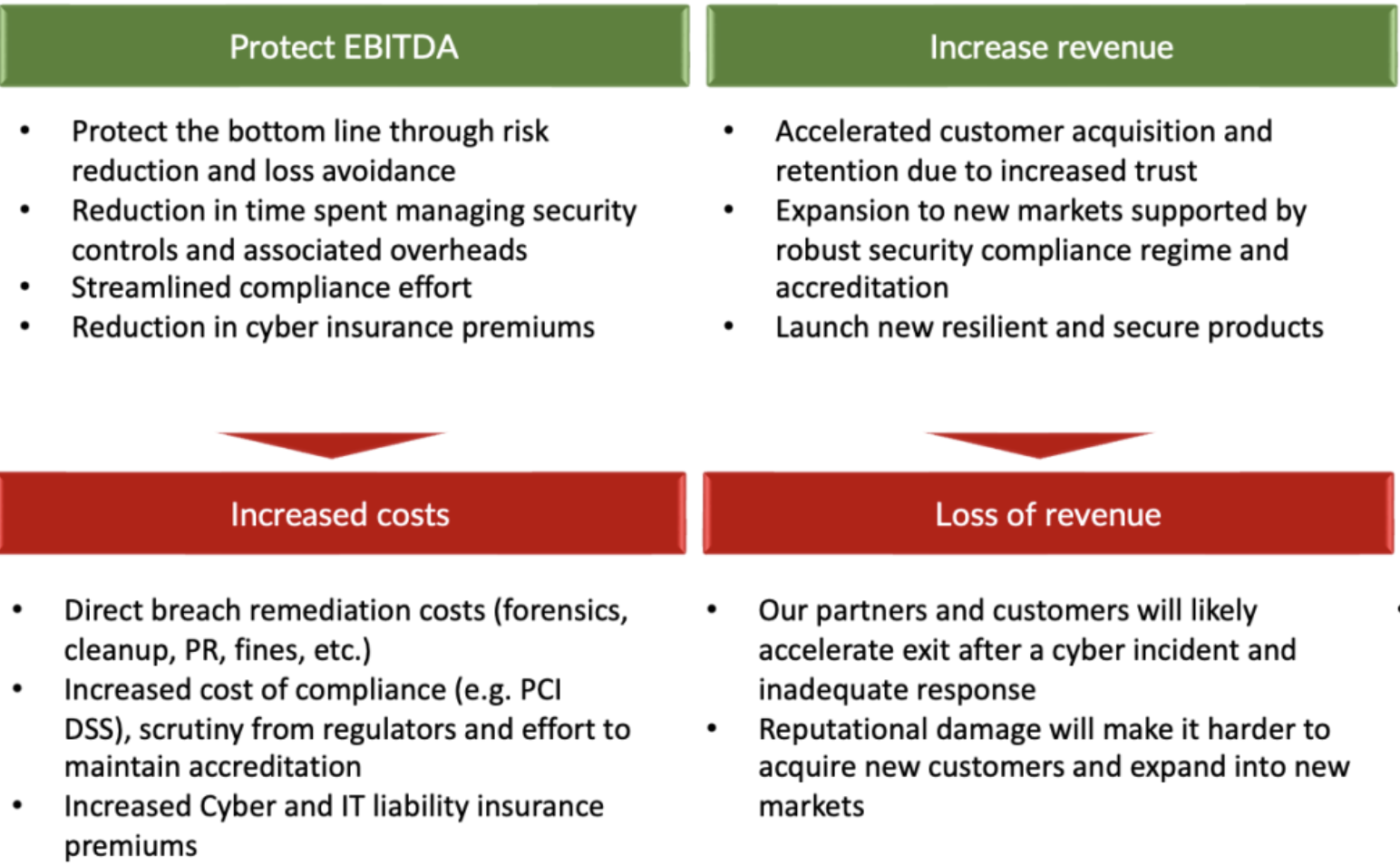
How can security support the business? To answer this question in financial terms, I outline two sides of the story. On one hand, CISOs can demonstrate positive impact on the EBITDA through elevating security capabilities. On the other hand, we can list potential downsides of poor security practices from both revenue and cost perspectives.
It’s not about carrots and sticks, it’s about seeing the full picture of opportunity and risk.

I previously wrote about building security culture in the organisation, in this blog, I look at the security team itself and share some tips for CISOs to develop a culture of performance for their teams.
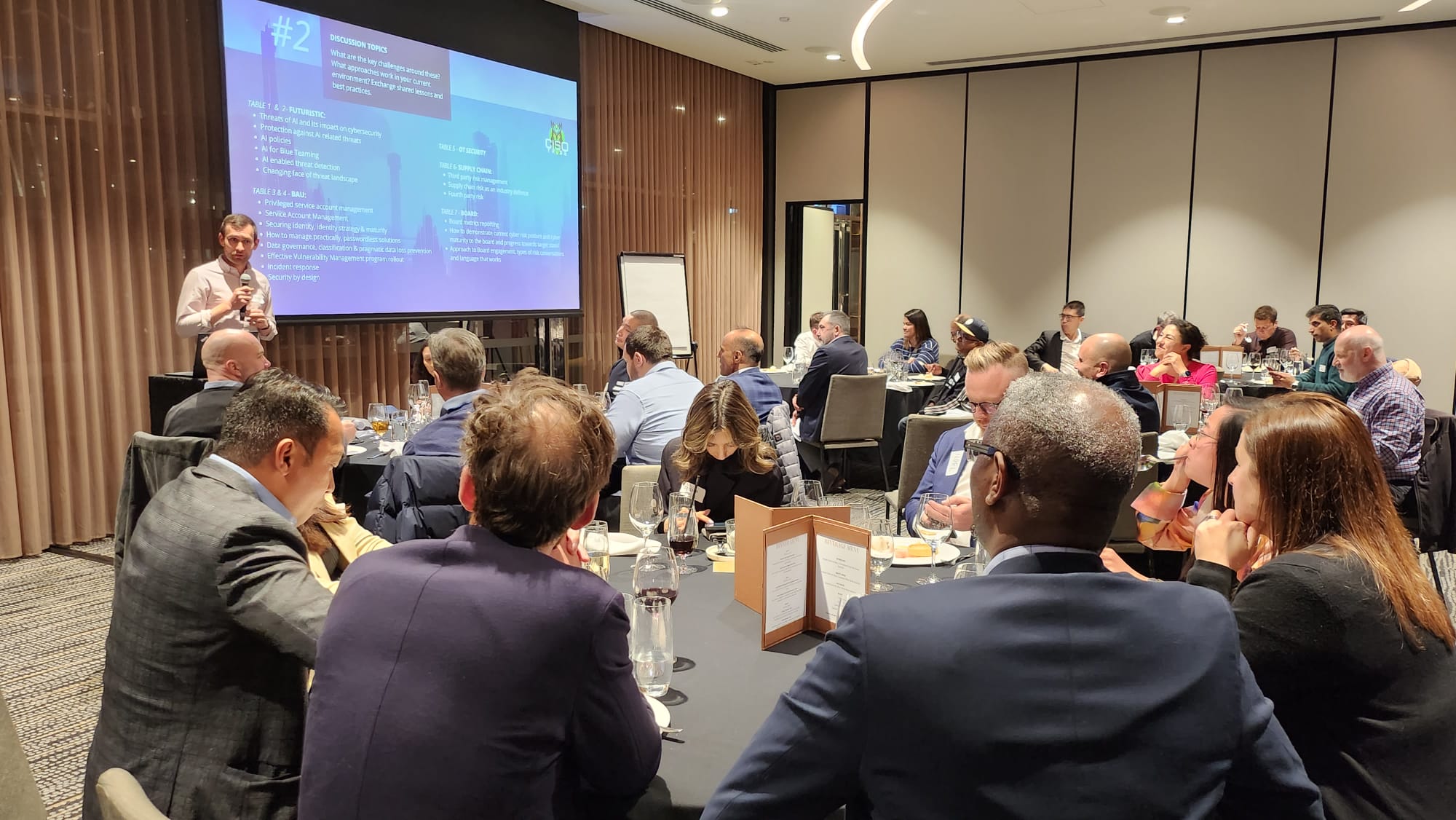
The CISO role can be stressful at times, so it’s important to have the right support network around you. The cyber security industry is still relatively small and some great communities have emerged around professional certification bodies and special interest groups.
Wherever you are in the world, it’s likely there will be a security meetup around you. And if there isn’t you should definitely start one! These social gatherings don’t have to be face-to-face – online and fully remote options also exist.
Over the years I’ve been fortunate to be a member of some outstanding security leadership communities. It’s very rewarding to be able to share your experience and also learn from your peers. Feel free to reach out if you’d like an introduction.

I had an opportunity to follow the Lean Silver Belt pathway of Cardiff University’s Lean Competency System and work with a coach to deliver measurable business process improvement in the workplace. This resulted in significant cost savings for the business and was supported by the official accreditation.
A lot of it is to do with the mindset: spotting inefficiencies, eliminating waste and continuous improvement are at the core of the approach. It’s also about applying these concepts and techniques to real world challenges.
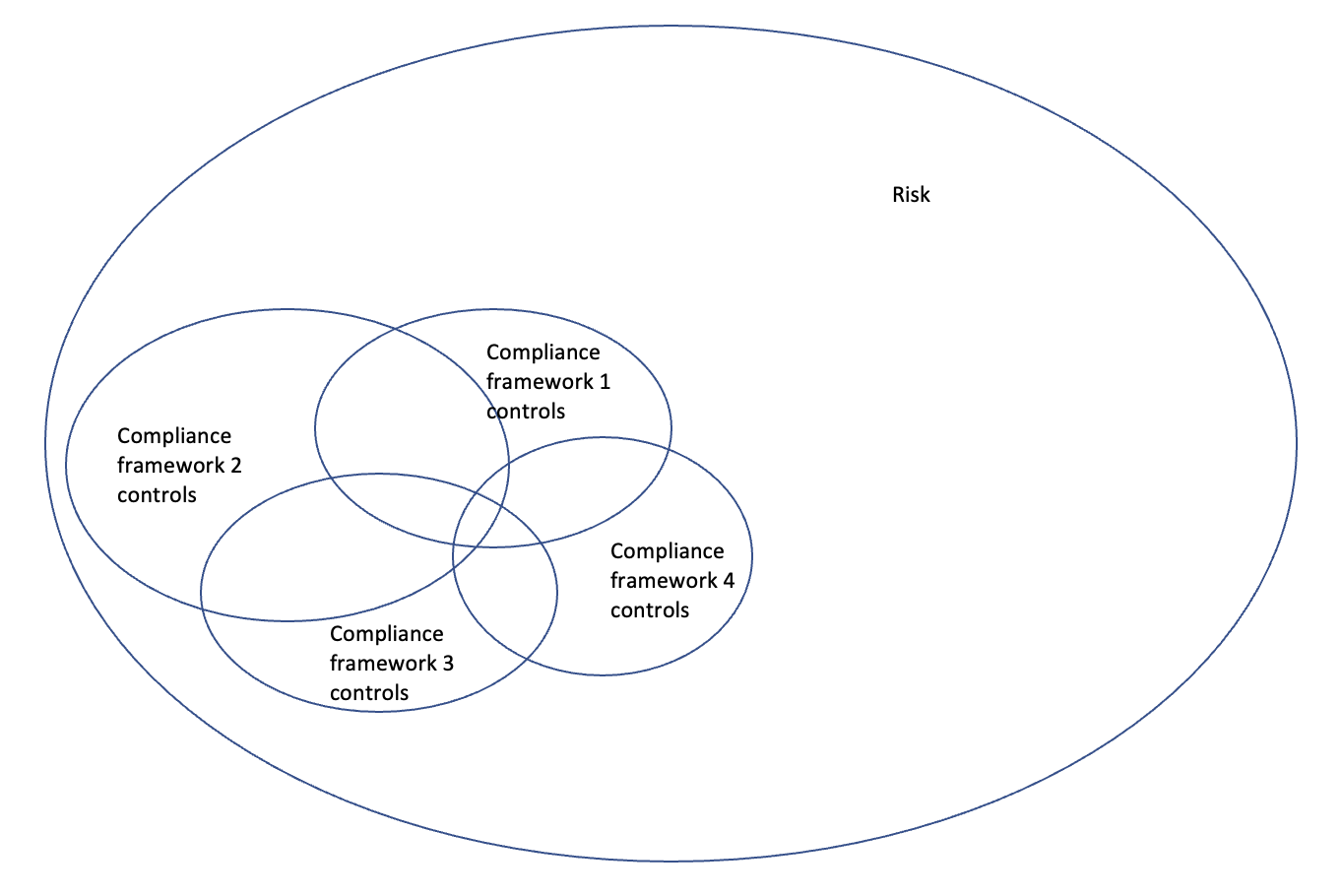
I’m often asked what security control framework is the best. Spoiler alert – I don’t think there is one! No single framework is a silver bullet – they all have pros and cons. Some frameworks are highly-prescriptive and have a narrow scope – cardholder and account data for PCI DSS, for example.
SOC 2, on the other hand is more principled-based and doesn’t mandate specific controls but rather a Trust Services Criteria.
ISO 27001 is another popular choice: it’s a risk-based framework, although also has a set of example controls in the standard that many people chose to adopt.
NIST Cybersecurity Framework and its functions (Identify, Protect, Detect, Respond and Recover) can aid communication with business stakeholders but it has its limitations too.
Your particular industry may have other specialised sets of requirements, like NERC CIP for electric power grid in North America. The list goes on.
Many organisations are subject to multiple regulation and legislation simultaneously, having to adopt multiple frameworks and compliance regimes. If not managed appropriately, this can be labour-intensive to maintain and demonstrate compliance. It helps to recognise that often, although worded differently, controls from different frameworks aim to achieve the same objective, so it pays to maintain cross-framework control mapping to streamline your compliance program.
While achieving compliance with a security framework is often a necessary step in establishing a baseline level of security, it’s often not sufficient to mitigate modern threats.
Compliance frameworks were developed with a specific objective in mind – to reduce risk. And they can get you part of the way there, just not all the way. An organisation can be compliant but still insecure. Security leaders should go beyond compliance and move towards actively identifying and managing risks, focusing on the overall security posture and risk reduction to survive and thrive in the digital world.

While working as a consultant, I had an opportunity to serve as an Interim Head of Enterprise Architecture for one of the banks in the Middle East. The objective was to set up an Enterprise Architecture function at the company and demonstrate its benefits. It was a rare chance to build a capability from the ground up and I wanted to share some of my learnings in this blog. I hope this will help people looking for their next opportunity.

