I recently completed a six week secondment, working in an Aboriginal community organisation on the Far West Coast of South Australia. I had the privilege to listen, learn and understand some of the challenges faced by Indigenous communities across Australia and apply my skills to contribute to their long-term success.
Transferring my knowledge and skills to these communities was a very enriching experience both personally and professionally and something I would like to continue being involved with in the future.
In this blog I would like to summarise my experience participating in this Jawun secondment.
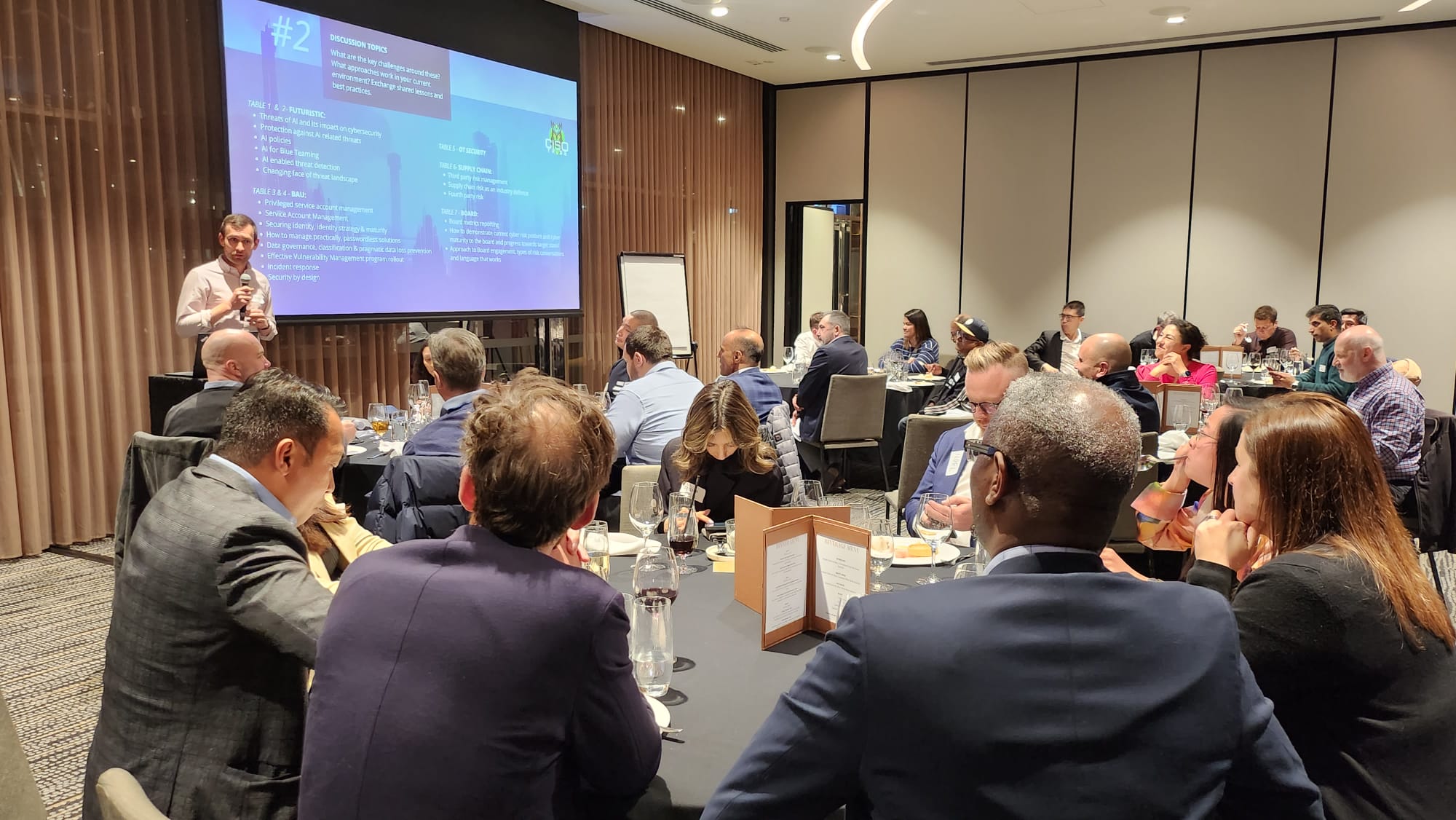
I previously wrote about building security culture in the organisation, in this blog, I look at the security team itself and share some tips for CISOs to develop a culture of performance for their teams.
The CISO role can be stressful at times, so it’s important to have the right support network around you. The cyber security industry is still relatively small and some great communities have emerged around professional certification bodies and special interest groups.
Wherever you are in the world, it’s likely there will be a security meetup around you. And if there isn’t you should definitely start one! These social gatherings don’t have to be face-to-face – online and fully remote options also exist.
Over the years I’ve been fortunate to be a member of some outstanding security leadership communities. It’s very rewarding to be able to share your experience and also learn from your peers. Feel free to reach out if you’d like an introduction.
I had an opportunity to follow the Lean Silver Belt pathway of Cardiff University’s Lean Competency System and work with a coach to deliver measurable business process improvement in the workplace. This resulted in significant cost savings for the business and was supported by the official accreditation.
A lot of it is to do with the mindset: spotting inefficiencies, eliminating waste and continuous improvement are at the core of the approach. It’s also about applying these concepts and techniques to real world challenges.
Scaled Agile Framework (SAFe) provides a way for the entire organisation to work in an agile way, not only software engineers. Security professionals, lawyers, compliance specialists and procurement teams are encouraged to engage in sprints (or ‘iterations’) too. You don’t have to write code to participate in a retrospective.
I recently had an opportunity to apply some of the Agile practices in my latest cyber security projects while going through formal Leading SAFe training at work.
Many ideas are not new, especially if you worked with Scrum previously, but they don’t have to be in order to be effective. The framework serves more as a collection of principles and a menu of techniques that can be used to transform large organisations that have ‘always done things that way’.
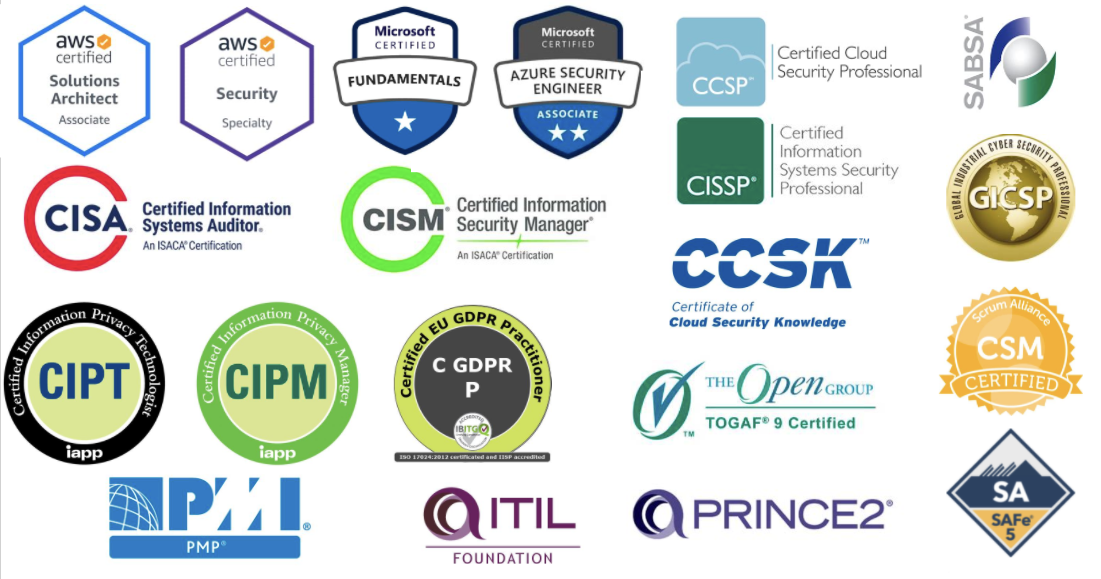
Over the years I’ve had the opportunity to acquire multiple professional certifications in cloud security, project management, industrial control systems security, data privacy, architecture and more.
Passing an exam, of course, doesn’t make you an expert: a credential itself doesn’t always guarantee skill. However, I found the process of studying for one rewarding in itself.
It helps structure your existing knowledge and learn a few new things that you could’ve otherwise missed along the way. Combining your prior practical skills with some of the good practices at the heart of these certification paths also allows for continuous improvement.
I write about how to pass some of these exams on this site, so feel free to get in touch if you would like to discuss my preparation strategies and exam tips.
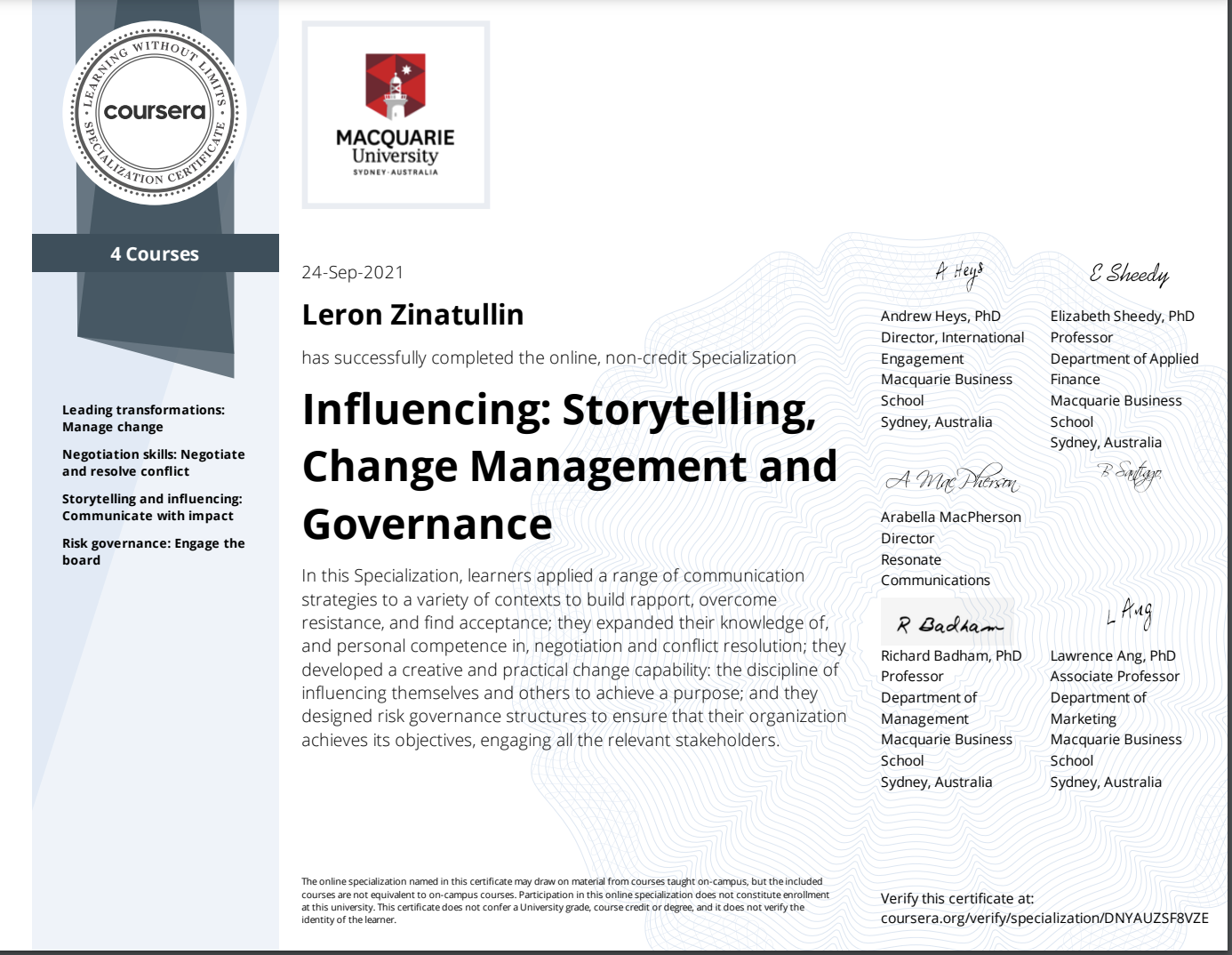
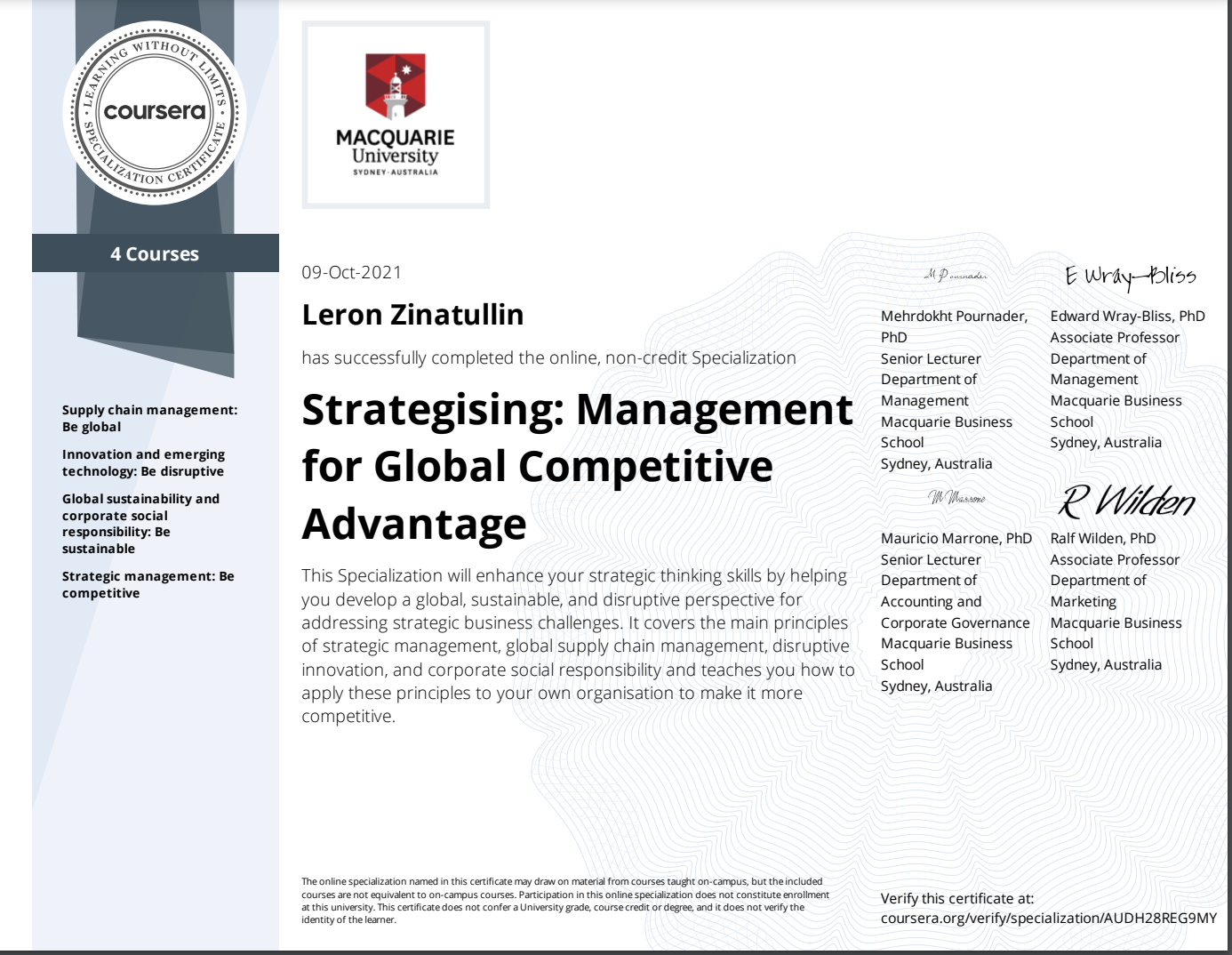
While in quarantine after arriving in Australia, I had a chance to catch-up on some learning.
I completed two specialisation tracks on Coursera offered by Macquarie Business School as part of their Global MBA programme. The courses covered a variety topics, including negotiations, change management, storytelling, board engagement, innovation, strategic management, sustainability, supply chains and more.
There is a strong correlation between code quality and security: more bugs lead to more security vulnerabilities. Simple coding mistakes can cause serious security problems, like in the case of Apple’s ‘goto fail’ and OpenSSL’s ‘Heartbleed‘, highlighting the need for disciplined engineering and testing culture.
An open source tool that is gaining a lot of momentum in this space is Semgrep. It supports multiple languages and integrates well in the CI/CD pipeline. You can run Semgrep out of a Docker container and the test results are conveniently displayed in the command line interface.
The rule set is still relatively limited compared to other established players and it might find fewer issues. You can write your own rules, however, and things are bound to improve as the tool continues to develop with contributions from the community.
A more well-known tool in this space is SonarQube. You can still use a free Community Edition for basic testing but advanced enterprise-level features would require a paid subscription. CI/CD integration is possible, inter plugins (like the one for ESLint) are also available.
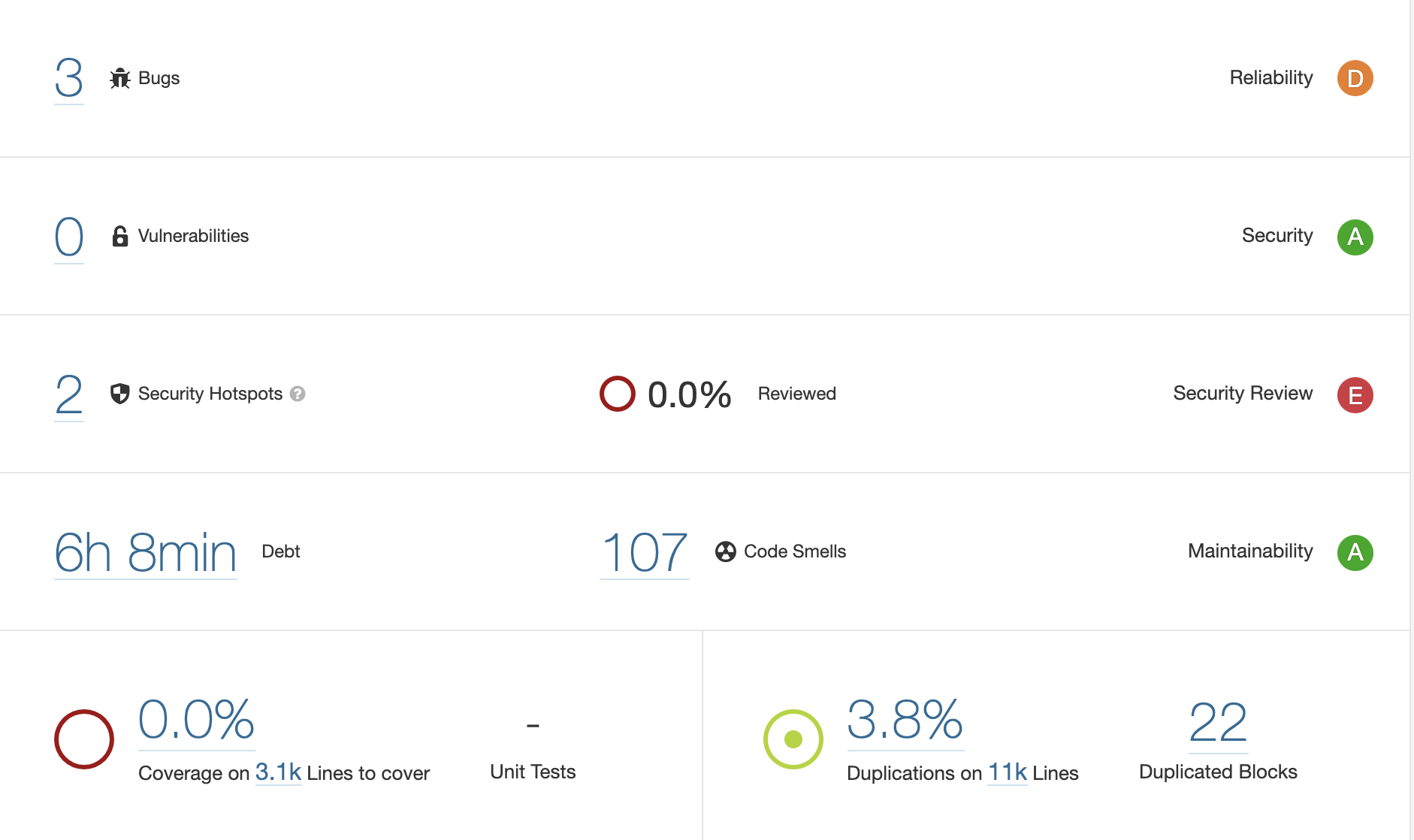
SonarQube has a dashboard view which scores your code across reliability, security, maintainability and other metrics.
As with any tool of this type, to get the best use out of it, some initial configuration is required to reduce the number of false positives, so don’t be discouraged by the high number of bugs or “code smells” being discovered initially.
Keeping in mind the fact that no amount of automation can guarantee finding all the vulnerabilities, I found SonarQube’s analysis around Security Hotspots particularly interesting. It also estimates a time required to pay down the tech debt which can serve as a good indicator of maintainability of your codebase.
It is important to remember that static code analysis tools are not a substitute for the testing culture, code reviews, threat modelling and secure software engineering. They can, however, be a useful set of guardrails for engineers and act as an additional layer in your defence in depth strategy. Although these tools are unlikely to catch all the issues, they can certainly help raise awareness among software developers about quality and security improvements, alert about potential vulnerabilities before they become a problem and prevent the accumulation of tech and security debt in your company.
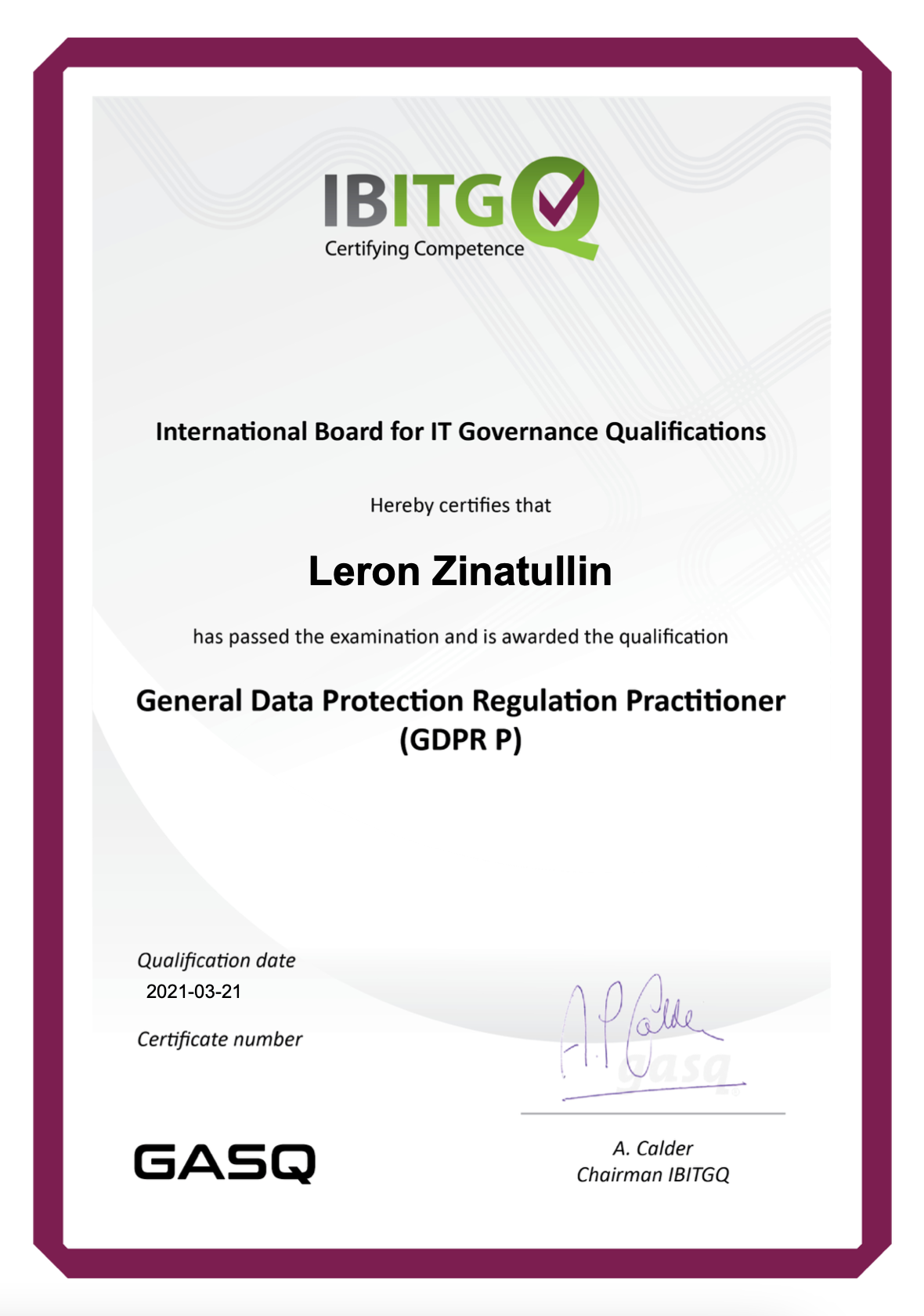
I completed my GDPR Foundation and Practitioner courses and passed the exams to earn this certification.
I’ve been helping organisations with GDPR compliance for several years now and it’s great to finally be able to validate my knowledge and experience with this credential.
Security professionals have access to the amounts of data never seen before. Antivirus software, firewalls, data loss prevention solutions – they all generate a staggering amount of alerts.
Security operation centres and the underlying SIEM technology allow us to aggregate, correlate and make sense of these vast troves of data. We can create dashboards and metrics that might look slick and even be useful to security teams but do such data add value to business stakeholders? Do they tell a story to the Board?